
八年级英语新目标下Unit9课件
- 格式:ppt
- 大小:293.02 KB
- 文档页数:36

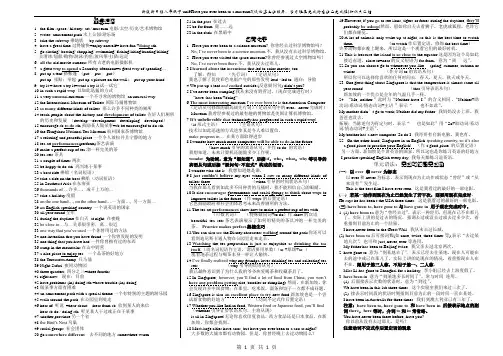
新版新目标八年级下uni9Have you ever been to a museum?(谈论过去的经历、学习现在完成时态的已完成性)知识点总结
第 1 页 共 1 页 重点短语
1. the film /space / history/ art / museum电影/太空/历史/艺术博物馆
2. water/ amusement park水上公园/游乐场
3. take the subway乘地铁----by subway
4. have a great time过得愉快=enjoy oneself= have fun +doing sth
5. go skating/ boating/ shopping/ swimming/ fishing/kiting/hunting/hiking
去滑冰/划船/购物/游泳/钓鱼/放风筝/打猎/远足
6. all the old movie cameras所有古老的电影摄影机
7. a great way to spend a Saturday afternoon=a great way of spending…
8. put up a tent搭帐篷 (put ---put----put)
put up 张贴;举起 put up a picture on the wall ; put up your hand
9. try it = have a try it=want a try it试一试它
10. in such a rapid way 以如此迅猛的方式
11. a very unusual museum一个不寻常的博物馆 an unusual way
12. the International Museum of Toilets国际马桶博物馆
13. so many different kinds of toilets 那么许多不同种类的厕所

1 / 7
新目标八年级下册
Unit 9 Have you ever been to a museum ?讲义
一、 重点单词
1. amusement n. 娱乐; 游戏
2. somewhere adv. 在某处; 到某处
3. camera n. 照相机; 摄影机; 摄像机
4. invention n. 发明物
5. invent v. 发明; 创造
1. unbelievable adj. 难以置信的; 不真实的
2. progress n. 进步; 进展
3. rapid adj. 迅速的; 快速的
4. unusual adj. 特别的; 不寻常的
5. toilet n. 坐便器; 厕所
6. encourage v. 鼓励
7. social adj. 社会的
8. peaceful adj. 和平的; 安宁的
9. performance n. 表演; 演出
10. perfect adj. 完美的; 完全的
11. itself pron.(it的反身代词) 它自己
12. collect v. 收集; 采集
13. German adj. 德国的; 德语的; 德国人的n. 德语; 德国人
14. theme n. 主题
15. ride n. 供乘骑的游乐设施; 短途旅程
16. province n. 省份
17. simply adv. 仅仅; 只; 不过
18. fear v. & n. 害怕; 惧怕 19. whether conj. 不管......;还是); 或者......(或者); 是否
20. Indian adj.印度的 n. 印度人
21. Japanese adj.;日本的; 日本人的; 日语的n. 日本人; 日语
22. equator n. 赤道

1 Unit9 知识点和练习附详细参考答案
1. invent
(1)invent 作动词,意为“发明;创造”。
例如:
Edison invented the light bulb. 爱迪生发明了电灯。
(2)invent还可以表示“虚构”。
例如:
The whole story was invented. 整个故事是虚构的。
(3)invent的名词形式有两个,一个是inventor(发明者;发明家),另一个是invention(发明物)。
例如:
Edison is a great inventor in history.
爱迪生是历史上伟大的发明家。
Human history is also a history of great inventions.
人类的历史也是一个伟大发明的历史。
【拓展】
invent和discover的辨析:
(1)invent 意为“发明,发明之物”指“从无到有”。
例如:
Alexander Graham Bell invented the telephone in 1876.
亚历山大•格雷厄姆•贝尔在1876年发明了电话。
(2)discover 意为“发现”,指“本来就已经存在,但不为人知”的事物。
例如:
Columbus discovered America in 1492. 哥伦布在1492年发现了美洲。
2. unbelievable
unbelievable作形容词,意为“难以置信的;不真实的”,是由believable“可相信的;可信任的”加否定前缀un-派生而来的。其动词形式为believe,意为“相信;以为”。
例如:
It's unbelievable that you are a writer. 我难相信你是一个作家。
【拓展】
Unit 9 Have you ever been to a museum
一、 必背短语
1.一年到头;终年 all year round
2.离……远 be far from
3.在黑暗中 in the dark 4.在过去 in the past
5.去过某地 have been to sp.
6. 游乐园 amusement park
7.搭帐篷 put up a tent 8.在大山里露营 camp in the mountains
9.了解有关…的情况 learn about sth. 10.以如此迅猛的方式 in such a rapid way
11.社会团体 social groups 12.数以千计的 thousands of
13.四分之三 three quarters 14.一个讲英语的国家 an English-speaking country
15.在白天 during the daytime 16.好几次 a couple of times
17. 现在;目前 right now 18. 在公园里到处走 walk around the park
19.兜风 take a ride 20.听说 hear of
21鼓励某人做某事 encourage sb. to
do sth. 22.遗留、留下 leave behind
23.在某方面取得进步 make progress in... 24.一方面 on the one hand
25.另一方面 on the other hand
【教材内容解析】
Section A
1. Me neither (P. 65)
me neither意为“我也不……”,表示前者的否定情况也适用于我,反义词为me too。
---Susan can’t play the piano at all.