pep小学英语总复习(句型短语语法)
- 格式:doc
- 大小:76.50 KB
- 文档页数:6
学习好资料 欢迎下载
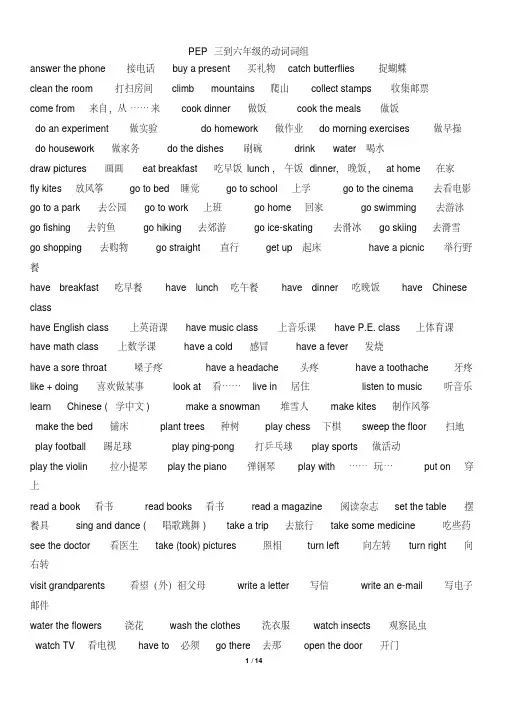
PEP 三到六年级的动词词组
answer the phone接电话 buy a present买礼物 catch butterflies捉蝴蝶 clean the room 打扫房间 climb mountains爬山 collect stamps收集邮票
come from来自,从……来 cook dinner做饭 cook the meals做饭 do an experiment做实验 do homework做作业 do morning exercises做早操
do housework做家务 do the dishes 刷碗 drink water喝水 draw pictures画画 eat breakfast吃早饭lunch ,午饭 dinner,晚饭, at home 在家
fly kites放风筝 go to bed睡觉 go to school上学 go to the cinema去看电影 go to a park 去公园 go to work上班 go home 回家 go swimming 去游泳
go fishing 去钓鱼 go hiking 去郊游 go ice-skating 去滑冰 go skiing 去滑雪 go shopping 去购物 go straight 直行 get up起床 have a picnic举行野餐
have breakfast吃早餐 have lunch吃午餐 have dinner吃晚饭 have Chinese class have English class上英语课 have music class上音乐课 have P.E. class上体育课
have math class上数学课have a cold 感冒 have a fever 发烧 have a sore throat 嗓子疼 have a headache 头疼 have a toothache 牙疼 like + doing 喜欢做某事
look at看…… live in 居住 listen to music听音乐 learn Chinese (学中文) make a snowman堆雪人 make kites制作风筝 make the bed铺床 plant trees种树
play chess下棋 sweep the floor扫地 play football踢足球 play ping-pong 打乒乓球 play sports做活动 play the violin拉小提琴 play the piano弹钢琴
play with…… 玩… put on 穿上 read a book看书 read books看书 read a magazine阅读杂志 set the table摆餐具 sing and dance (唱歌跳舞) take a
trip去旅行
take some medicine 吃些药 see the doctor看医生 take (took) pictures照相 turn left 向左转 turn right向右转 visit grandparents看望(外)祖父母 write a letter写信
write an e-mail写电子邮件 water the flowers浇花 wash the clothes洗衣服 watch insects观察昆虫 watch TV看电视 have to必须 go there去那 open the
door开门
close the window关窗 by bike骑车 in the morning在早晨 in the afternoon在下午 at night在晚上 in the evening在夜晚 last Sunday上个星期天 on the
weekend在周末
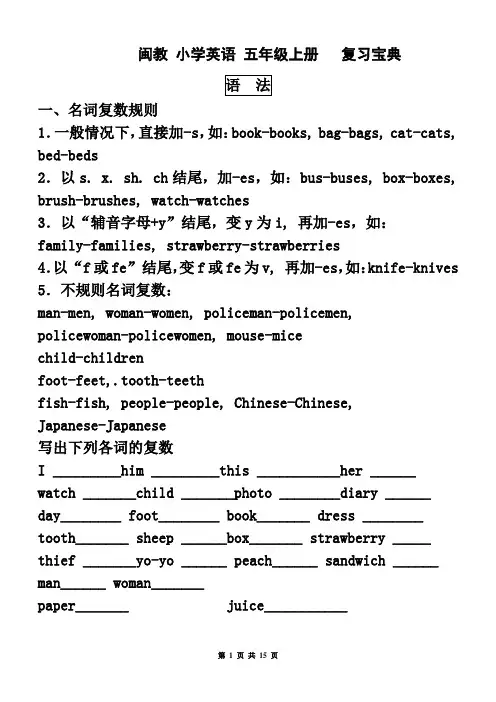
小学英语 四种时态复习。(一般过去时,一般现在时,现在进行时,一般将来时)
㈠、一般过去时
定义:表示过去发生的事,过去做过的事。
时间状语:yesterday昨天, the day before yesterday前天, last + 时间 比如(last year去年)
时间段+ago 比如(one year ago一年前),in +表示过去的时间 比如(in 1996),还有依据会话情景的具体时间,比如 on Monday在星期一,this morning今天早上 等。
句式:肯定句:①主语 + be动词的过去式 + 过去时间。 (is, am用was 过去是) / are用were过去是
②主语 + 实意动词过去式 + 过去时间
否定句: 一般过去时中变否定句,有be动词时,在was或were后面加not,变成wasn’t或者weren’t;在有实意动词的句子中在实意动词前加didn’t,将实意动词过去式改为实意动词的原形即可。
一般疑问句:有be动词的句子中,把be动词提前即可,回答时用be动词回答;有实意动词时,需要助动词did的帮助,将did提前即可,回答时用did回答,注意人称的变化及将实意动词过去式改为实意动词的原形
例如:
She was happy two days ago. She wasn’t happy two days ago. They were taller than you last year. They weren’t taller than you last year.
Was she happy two days ago? 两天前她高兴吗? Were they taller than you last year? 他们去年比你高
Yes, she was. 是的,她是。 No, she wasn’t. 不,她不是。 Yes, they were. 是的,他们是。 No, they weren’t.不,他们不是
They went fishing on Saturday. They didn’t go fishing on Saturday.
Did they go fishing on Saturday? 他们有在星期六去钓鱼吗?Yes, they did. 是的,他们有。 No, they didn’t. 不,他们没有。
一般动词过去式变化规则: 一般直接加ed
以e结尾的单词直接加d 以辅音字母加y结尾的单词,将y变i再加ed 以元音字母加y结尾的单词,直接加ed 以辅音字母加元音字母加辅音字母结尾的单词,双写最后一个辅音字母加ed
不规则变化:is/are—was are—were do—did Take—took come—came give—gave tell—told win—won make—made run—ran sit—sat
drink—drank go—went eat—ate buy—bought fly—flew swim—swam get—got have—had read—read see—saw sing—sang
㈡ 一般现在时:定义:表经常发生的事。表自然公理。
时间状语:usually通常,often常常.always 总是, never从不,sometimes有时every每次+时间。还有依据会话情景的具体时间,比如 on Monday在星期一,at night在晚上,on the weekend在周末 等。
还有依据会话情景的具体时间,比如 on Monday在星期一,this morning今天早上 等。
一般现在时态的句型:
(1)肯定句: I /You like it . 我/你喜欢它. He/ She likes it . 他/她喜欢它. We /You /They like it.我们 /你们 /他们喜欢它.
(2)否定句: I /You don’t like it .我/你不喜欢它 He/She doesn’t like it .他/她不喜欢它 We/You /They don’t like it .我们/你们/他们不喜欢它.
(3)一般疑问句: Do I /you like it?我/你不喜欢它吗? Does he /she like it ?他/她不喜欢它吗? Do we /you /they like it ?我们/你们/他们喜欢它吗?
一般现在时中动词第三人称单数形式的构成:
动词原形 构成方法 例词
一般情况 加—s Likes,reads
以ch ,sh ,s ,x 或o结尾的词 加—es Teaches,goes
以“辅音字母+y”结尾的词 变y为I,再加—es Carries,tries
㈢、现在进行时 定义:表示现在正在进行的动作或状态。
时间状语:now现在,Look看或Listen 听 放在句子前时。 It is raining .天正在下雨。
现在进行时态的句型:
(1)肯定句: I am/You are working.我/你正在工作。 He /She is working .他/她正在工作。 We/You/They are working.我们/你们/他们正在工作。
(2)否定句: I am not /You are not working.我/你没在工作。 He/She is not working.他/她没在工作。 We/You/They are not working.我们/你们/他们没在工作。
(3)一般疑问句 Are you working?你正在工作吗? Yes, I am. No, I am not. Is he/she working?他/她正在工作吗?Yes, he is. No, he isn’t.
Are you/they working?你们/他们正在工作吗?
动词变成ing形式的变化规则: 学习好资料 欢迎下载
1\一般直接加ing 2\以不发音的e结尾的,去掉e加ing 例 make-making, have-having, 3\以元音字母加辅音字母结尾的,双写辅音字母加ing例 run-running, swim-swimming
4\以ie结尾的单词,将ie变y加ing,比如:die︵dying
㈣ 一般将来时 定义:表将要发生的事情,可能发生的事情。想要做的事情,