
人教版七年级下册英语课本Unit 3 words
- 格式:docx
- 大小:13.53 KB
- 文档页数:2


Words and Expressions in Each Unit 七年级上册英语单词表Starter Unit 1good /gud/ adj. 好的morning /'mɔ:niŋ/ n. 早晨;上午Good morning! 早上好!hi /hai/ interj. (用于打招呼)嗨;喂hello /hə'ləu/ interj. 你好;喂afternoon /,a:ftə'nu:n/ n. 下午Good afternoon! 下午好!evening /'i:vniŋ/ n. 晚上;傍晚Good evening! 晚上好!how /hau/ adv. 怎样;如何are /a:/ v. 是you /ju:/ pron. 你;你们How are you? 你好吗?I /ai/ pron. 我am /æm/ v. 是fine /fain/ adj. 健康的;美好的thanks /θæŋks/ interj.&n. 感谢;谢谢OK /əu'kei/ interj.& adv. 好;可以Starter Unit 2what /wɔt/ pron.&adj. 什么is /iz/ v. 是this /ðis/ pron. 这;这个in /in/ prep. (表示使用语言、材料等)用;以English /'iŋgliʃ/ n. 英语adj. 英格兰的;英语的in English 用英语map /mæp/ n. 地图cup /kʌp/ n. 杯子ruler /'ru:lə/ n. 尺;直尺pen /pen/ n. 笔;钢笔orange /'ɔrindʒ/ n. 橙子jacket /'dʒækit/ n. 夹克衫;短上衣key /ki:/ n. 钥匙quilt /kwilt/ n. 被子;床罩it /it/ pron. 它a /ə/ art. (用于单数可数名词前)一(人、事、物) that /ðæt/ pron. 那;那个spell /spel/ v. 用字母拼;拼写please /pli:z/ interj. (用于客气地请求或吩咐)请Starter Unit 3color /'kʌlə/ n. (=colour) 颜色red /red/ adj.& n. 红色(的)yellow /'jeləu/ adj.& n. 黄色(的)green /gri:n/ adj.& n. 绿色(的)blue /blu:/ adj.& n. 蓝色(的)black /blæk/ adj.& n. 黑色(的)white /wait/ adj.& n. 白色(的)purple /'pə:pl/ adj.& n. 紫色(的)brown /braun/ adj.& n. 棕色(的);褐色(的)the /ði; ðə/ art. 指已提到或易领会到的人或事now /nau/ adv. 现在;目前see /si:/ v. 理解;明白can /kæn/ modal v. 能;会say /sei/ v. 说;讲my /mai/ pron. 我的Unit 1name /neim/ n. 名字;名称nice /nais/ adj. 令人愉快的;宜人的to /tu:/ 常用于原形动词之前,该动词为不定式meet /mi:t/ v. 遇见;相逢too /tu:/ adv. 也;又;太your /jɔ:/ pron. 你的;你们的Ms. /miz/ (于女子的姓名前,不指明婚否)女士his /hiz/ pron. 他的and /ænd/ conj. 和;又;而her /hə:/ pron, 她的yes /jes/ interj. 是的;可以she /ʃi:/ pron. 她he /hi:/ pron. 他no /nəu/ interj. 不;没有;不是not /nɔt/ adv. 不;没有zero /'ziərəu/ num. 零one /wʌn/ num. 一two /tu:/ num. 二three /θri:/ num. 三four /fɔ:/ num. 四five /faiv/ num. 五six /siks/ num. 六seven /'sevn/ num. 七eight /eit/ num. 八nine /nain/ num. 九telephone /'telifəun/ n. 电话;电话机number /'nʌmbə/ n. 号码;数字phone /fəun/ n. 电话;电话机telephone/phone number 电话号码first /fə:st/ adj. 第一first name 名字last /la:st/ adj. 最后的;末尾的last name 姓friend /frend/ n. 朋友China /'tʃainə/ 中国middle /'midl/ adj. 中间的;中间school /sku:l/ n. 学校middle school 中学;初中Unit 2sister /'sistə/ n. 姐;妹mother /'mʌðə/ n. 母亲;妈妈father /'fa:ðə/ n. 父亲;爸爸parent /'peərənt/ n. 父(母)亲brother /'brʌðə/ n. 兄;弟grandmother /'grænmʌðə/ n.(外)grandfather /'grænfa:ðə/ n. (外)祖父;爷爷;grandparent/'grænpeərənt/ n.祖父(母);family /'fæməli/ n. 家;家庭those /ðəuz/ pron. 那些who /hu:/ pron. 谁;什么人oh /əu/ interj. 哦;啊these /ði:z/ pron. 这些they /ðei/ pron. 他(她、它)们well /wel/ interj. 嗯;好吧have /hæv/ v. 经受;经历Have a good day! (表示祝愿)过得愉快!bye /bai/ interj. (=goodbye)再见son /sʌn/ n. 儿子cousin /'kʌzn/ n. 堂兄(弟、姐、妹);表兄grandpa /'grænpa:/ n. (外)祖父;爷爷;外公mom /mɔm/, /ma:m/ n. (=mum)妈妈aunt /a:nt/ n. 姑母;姨母;伯母;婶母;舅母grandma /'grænma:/ n.(外)祖母;奶奶;外婆;dad /dæd/ n. 爸爸uncle /'ʌŋkl/ n. 舅父;叔父;伯父;姑父;舅父daughter /'dɔ:tə/ n. 女儿here /hiə/ adv. (用以介绍人或物)这就是;在这里photo /'fəutəu/ n. 照片of /ɔv, əv/ prep. 属于(人或物);关于(人或物) next /nekst/ adj.&n. 下一个(的);接下来(的)picture /'piktʃə/ n. 照片;图画girl /gə:l/ n. 女孩dog /dɔg/ n. 狗Unit 3pencil /'pensl/ n. 铅笔book /buk/ n. 书eraser /i'reizə/ n. 橡皮box /bɒks/ n. 箱;盒pencil box 铅笔盒;文具盒schoolbag /'sku:lbæg/ n. 书包dictionary /'dikʃənəri/ n. 词典;字典his /hiz/ pron. 他的mine /main/ pron. 我的hers /hə:z/ pron. 她的excuse /ik'skju:z/ v. 原谅;宽恕me /mi:/ pron. (I的宾格)我excuse me 劳驾;请原谅thank /θæŋk/ v. 感谢;谢谢teacher /'ti:tʃə/ n. 老师;教师about //ə'baut/ prep. 关于What about...?(询问消息或提出建议..怎么样?yours /jɔ:z/ pron. 你的;你们的for /fɔ:/ prep. 为了;给;对thank you for... 为......而感谢help /help/ v.&n. 帮助;援助baseball /'beisbɔ:l/ n. 棒球watch /wɒtʃ/ n. 表;手表game /geim/ n. 游戏;运动;比赛card /kɑ:d/ n. 卡片ID card 学生卡;身份证notebook /'nəutbuk/ n. 笔记本ring /riŋ/ n. 戒指bag /bæg/ n. 袋;包in /in/ prep. 在......里library /'laibrəri/ n. 图书馆ask /ɑ:sk/ v. 请求;要求;询问ask... for... 请求;恳求(给予)find /faind/ v. (过去分词found)找到;发现some /sʌm/ adj. 一些;某些classroom /'klɑ:sru:m/ n. 教室e-mail /'emeil/ n. (=email)电子邮件at /æt/ prep. 按照;根据;在(某处、某时间时刻) call /kɔ:l/ v. (给......)打电话lost /lɒst/ v. (动词lose的过去式)遗失;丢失must /mʌst/ modal v. 必须set /set/ n. 一套;一副;一组a set of 一套;一副;一组Unit 4where /weə/ adv. 在哪里;到哪里table /'teibl/ n. 桌子bed /bed/ n. 床bookcase /'bukkeis/ n. 书架;书柜sofa /'səufə/ n. 沙发chair /tʃeə/ n. 椅子on /ɔn/ prep. 在.......上under /'ʌndə/ prep. 在.......下desk /desk/ n. 书桌think /θiŋk/ n. 认为;想;思考room /ru:m/ n. 房间their /ðeə/ pron. 他(她、它)们的hat /hæt/ n. 帽子head /hed/ n. 头yeah /jeə/ interj. 是的;对know /nəu/ v. 知道;了解radio /'reidiəu/ n. 收音机;无线电广播clock /klɔk/ n. 时钟tape /teip/ n. 磁带;录音带;录像带player /pleiə/ n.播放机tape player 录音机model /'mɔdl/ n. 模型plane /plein/ n. 飞机model plane 飞机模型tidy /'taidi/ adj. 整洁的;井井有条的but /bʌt/ conj. 但是our /'auə/ pron. 我们的everywhere /'evriweə/ adv. 处处;到处;各地always /'ɔ:lweiz/ adv. 总是Unit 5do /du:/ aux v. &v. 用于否定句疑问句;做;干have /hæv/ v. 有tennis /'tenis/ n. 网球ball /bɔ:l/ n. 球ping-pong /'piŋpɔŋ/ n. 乒乓球bat /bæt/ n. 球棒;球拍soccer /'sɔkə/ n. (英式)足球soccer ball (英式)足球volleyball /'vɔlibɔ:l/ n. 排球basketball /'ba:skitbɔ:l/ n. 篮球hey /hei/ interj. 嘿;喂let /let/ v. 允许;让us /ʌs/ pron. (we的宾格)我们let's = let us 让我们(一起)go /gəu/ v. 去;走we /wi:/ pron. 我们late /leit/ adj. 迟到has /hæz/ v. (have的第三人称单数形式)有get /get/ v. 去取(或带来);得到great /greit/ adj. 美妙的;伟大的play /plei/ v. 参加(比赛或运动);玩耍sound /saund/ v. 听起来好像interesting /'intrəstiŋ/ adj. 有趣的boring /'bɔ:riŋ/ adj. 没趣的;令人厌倦的fun /fʌn/ adj. 有趣的;使人快乐的n.乐趣;快乐difficult /'difikəlt/ adj. 困难的relaxing /ri'læksiŋ/ adj. 轻松的;令人放松的watch /wɔtʃ/ v. 注视;观看TV /ti:'vi:/ n. (=television) 电视;电视机watch TV 看电视same /seim/ adj. 相同的love /lʌv/ v.&n. 爱;喜爱with /wið/ prep. 和......在一起;带有;使用sport /spɔ:t/ n. 体育运动them /ðem/ pron. (they的宾格)他(她、它)们only /'əunli/ adv. 只;仅like /laik/ v. 喜欢;喜爱easy /'i:zi/ adj. 容易的;不费力的after /'a:ftə/ prep. 在......以后class /kla:s/ n. 班级;课classmate /'kla:smeit/ n. 同班同学Unit 6banana /bə'na:nə/ n. 香蕉hamburger /'hæmbə:gə/ n. 汉堡包tomato /tə'ma:təu/ n. 西红柿ice-cream /ais'kri:m/ n. 冰激凌salad /'sæləd/ n. 沙拉strawberry /'strɔ:bəri/ n. 草莓pear /peə/ n. 梨milk /milk/ n. 牛奶bread /bred/ n. 面包birthday /'bə:θdai/ n. 生日dinner /'dinə/ n. (中午或晚上吃的)正餐week /wi:k/ n. 周;星期think about 思考;思索food /fu:d/ n. 食物sure /ʃuə/ adv. 当然;肯定;一定How about...? (提出建议)......怎么样?burger /'bə:gə/ n. (=hamburger)汉堡包vegetable /'vedʒtəbl/ n. 蔬菜fruit /fru:t/ n. 水果right /rait/ adj. 正确的;适当的apple /'æpl/ n. 苹果then /ðen/ adv. 那么egg /eg/ n. 蛋;鸡蛋carrot /'kærət/ n. 胡萝卜rice /rais/ n. 大米;米饭chicken /'tʃikin/ n. 鸡肉so /səu/ conj. (引出评论或问题)那么breakfast /'brekfəst/ n. 早餐;早饭lunch /lʌntʃ/ n. 午餐star /sta:/ n. 明星;星星eat /i:t/ v. 吃well /wel/ adv. 好;令人满意地habit /'hæbit/ n. 习惯healthy /'helθi/ adj. 健康的really /'ri:əli/ adv. 真正地question /'kwestʃən/ n. 问题want /wɔnt/ v. 需要;想要be /bi:/ v. 变成fat /fæt/ adj. 肥的;肥胖的Unit 7much /mʌtʃ/ pron.&adj. 许多;大量;多少How much...? (购物时)......多少钱?sock /sɔk/ n. 短袜T-shirt /'ti:ʃə:t/ n. T恤衫shorts /ʃɔ:ts/ n. (pl.) 短裤sweater /'swetə/ n. 毛衣trousers /'trauzəz/ n. (pl.) 裤子shoe /ʃu:/ n. 鞋skirt /skə:t/ n. 裙子dollar /'dɔlə/ n. 元(美国、等国的货币符号为$) big /big/ adj. 大的;大号的small /smɔ:l/ adj. 小的;小号的short /ʃɔ:t/ adj. 短的;矮的long /lɔ:ŋ/ adj. 长的woman /'wumən/ n. 女子Can I help you? 我能帮您吗?need /ni:d/ v. 需要look /luk/ v. 看;看上去pair /peə/ n. 一双;一对take /teik/ v. 买下;拿;取Here you are. 给你。

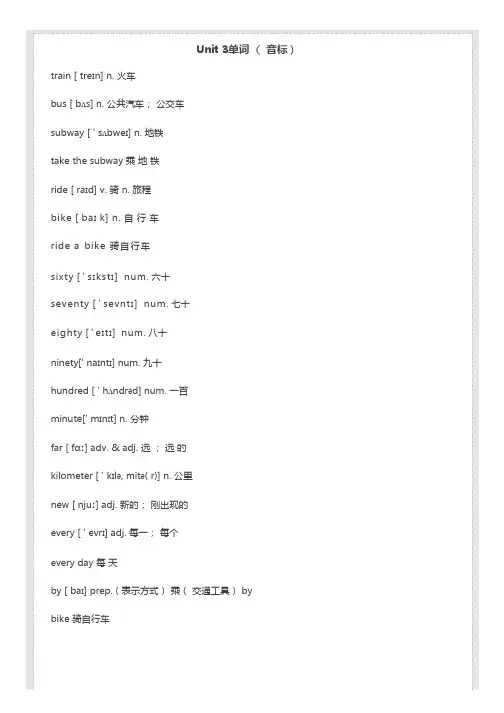
七年级下册英语单词unit3Unit3 How do you get to school (你怎么去上学)1.train [treɪn] n. 火车2.bus [bʌs] n. 公交车3.subway ['sʌbweɪ] n. 地铁4.ride [raɪd] v. 骑n. 旅行5.bike [baɪk] n. 自行车6.sixty ['sɪksti]num. 六十7.seventy ['sevnti] num. 七十8.eighty ['eɪti]num. 八十9.ninety ['naɪnti]num. 九十10.hundred ['hʌndrəd] num. 一百11.minute ['mɪnɪt] n. 分钟12.kilometer ['kɪləˌmiːtə] n. 公里13.new [njuː] adj. 新的;刚出现的14.every ['evri] adj. 每一;每个15.far [fɑː(r)] adv. & adj. 远;远的16.by [baɪ] prep.(表示方式)乘(交通工具)17.drive [draɪv]v. 开车18.car [kɑː(r)] n. 小汽车;轿车19.live [lɪv] v.居住;生活20.stop [stɒp] n. 车站;停止21.cross [krɒs] v. 横过;越过22.river ['rɪvə(r)] n. 河;江23.many ['meni] adj. & pron. 许多24.village ['vɪlɪdʒ] n. 村庄;村镇25.between [bɪ'twiːn] prep. 介于......之间26.bridge [brɪdʒ] n. 桥27.boat [bəʊt] n. 小船28.Ropeway ['rəʊpweɪ] n. 索道29.year [jɪə(r)] n. 年;岁30.afraid [ə'freɪd] adj. 害怕;惧怕31.like [laɪk] prep. 像;怎么样32.leave [liːv] v. 离开33.dream [driːm] n. 梦想;睡梦v. 做梦34.true [truː] adj. 真的;符合事实的35.take the subway 乘地铁36.ride a bike 骑自行车37.every day 每天38. by bike 骑自行车39.think of 认为40.between...and... 在......和......之间e true实现;成为现实42.Dave戴夫(男名)。
drive [ draɪv] v. 开车car [ kɑː]n. 小汽车;轿车l ive[ l ɪv]v. 居住;生活stop [ stɑ: p][ stɒp] n. 车站; v. 停止think of 认为cross [ krɒs] v. 横过;越过river [ ' rɪvə] n. 河;江many [ ' menɪ] adj. & pron. 许多village [ ' vɪlɪdʒ] n. 村庄;村镇between [ bɪ' twiːn] prep. 介于…之间between… and…在……和……之间bridge [ brɪdʒ] n. 桥boat [ bəʊt] n. 小船ropeway [ ' rəʊpweɪ]n. 索道year [ j ɪə][jɜː]n. 年;岁afraid [ ə' freɪd]adj. 害怕;惧怕l ike [ laɪk]prep. 像;leave [ l iːv]v. 离开dream [ driːm] n. 梦想;睡梦 v. 做梦true [ truː] adj. 真的;符合事实的come true实现;成为现实Dave[ deiv]戴夫(男名)••••• • • • •••• H ow do you get to schoolsHow d o y ou get to s chool? How d oes she g et t o t ooI7 I ride my bike, ”" ../:’yShe usually takes the WHow l ong d oes”it téke t o g et t o school7 It takes about 1S min’utes.Does Jane walk to sdiool? No. she doesn t. Sf›e.go4s:by bike.0o they take the bus to school? Ha, they don*t) III1. How does Mike get to school* a. Yes. they do.2. How long does it take to get home? b. No, he doem't..3. How far is it from here? c. He rides hts bike.4. Do your friends go to schonl by bus? d. Its five kilometers.5. D•e -s your dad drive his car to wnrk!' e. Akout I S m inutes.t. school / you / get to / do / bow2. to / xcltool / get to / door / huw long / taLc / it4.you/ to/ walL / do / schoolS- ride / Lheir bike / no / sc?fool / your kic=ds / t• "lives about Fwe kilometers from school.walk$ io srhool.makes a bus to school.goes to school by bike.needs about an hour to get to school.needs ahou\ t0 minutes to get to school.Hew far it from yota- home fa schoollTett youz paztoer bowyoo get to ecfzool. Imagtzze you uae two types obtzanapoztaöon.A: How do yc•u get to school ?B: Well, I ride rriy bike tti the subway station. ’Fiien I take the subway.Listen and check (w'•) the things ttiat h4ary wants io know.Mary wants to know ..,wlierv• Bob lives.how far he lives from his grandparents' latrine.how he gets to hix grandparents’ home.how long it takes to Act to his grandparents’ home.what he thinks of the trip.Listen agaim. How docs Bob get tes his grandpnrents’ home ? Check (w )1 or z. › . - - ' ß-k- - ws-&Ma2cb ibe woras w›c› tJae ptmuxea.e e e + + • • r • e • e •/@gn d Q$j \Q r)/r e r r•r a r r•o e e • • r e e r e •• e • • •e e / • r••• •xkook p2 the ptctuze aod ttMc betow. Gaess wknt cke paaeage ia akoot•Crossing the River to SchoolHow do you get to school? Do you walk orride a bike? Du you go by bus nr by train? Formany students, it is easy to get to school. Butfor the students in one sma!l village in Chinn,it is difficult The s r e is very big river betweentheir school and the village. there is no bridgeand the river runs too quickly (or boats. SoGcscztudcntsgoonaropewaytocrossthcriver to school.One 11 year-old boy, Liangliang, crosses theriver every school day. But he is not afraid. ‘I love to play with my cram.smates.Artd ) lovc my tmchcr. ) (cs )ikc a fath42r tO mWMany of the students ant) villagers never leave the villn lt is their dreamter love a bridge. Can their dream coiiie true:I.HC›tV dU t hc S1tt€)€*E3£k il? t hc YINI @t›tt›1€Ic›l•2.Wit}' do Lh go to sChcol lilce this*3.Uoes the boy like Izts school? Why*4.¥S’kat i; thc villagers' tJrcanl? l1n you think tJlcir chin c ancome true? Whyur why nut?Read tbe passage agn£a. Cozoplete the sentences with wozde frozn tbe1.For die students in the v itkige, it is to get to school.2.They have to cross a very river between their scboo! a nd the village..3. They cannot go by boat Esc thc river r 1xs t oo4. It is n ot easy to cross the river on a ropeway, but the boy is n ot.$. the studnnis and villagers want to have a bridge. Can their dream comeUnit3 知识梳理◆短语归纳1.get to school 到达学校2.take the subway 乘地铁3.ride a bike 骑自行车4.how far 多远5.from home to school 从家到学校6.every day 每天7.take the bus 乘公共汽车8.by bike 骑自行车9.bus stop 公共汽车站10.think of 认为11.between…and…在…和…之间12.one 11-year-old boy 一个11岁的男孩 13.play with…和…玩e true 实现15.have to 不得不◆用法集萃1.take…to…= go to…by…乘…去…2.How do/does sb get to…? 某人是怎样到…的?3.How far is it from…to…? 从…到…有多远?4.It takes sb. some time to do sth. 做某事花费某人多长时间。

七年级下册英语unit3单词知识点【Introduction】Unit 3 is a very important unit for junior high school students who are learning English. In this unit, students will learn a lot of new words that will help them to expand their vocabulary and communicate more effectively in English. In this article, we will be discussing the key vocabulary points that students need to know in order to succeed in this unit.【Vocabulary】1. Ability: the power or skill to do something2. Accomplish: to successfully complete a task or a goal3. Attitude: a settled way of thinking or feeling about someone or something4. Behavior: the way in which one acts or conducts oneself, especially towards others5. Challenge: a task or mission that is difficult and requires effort to complete6. Confident: feeling or showing assurance in oneself, one's abilities, and one's qualities7. Encourage: to give support, confidence, or hope to someone8. Expect: to regard something as likely to happen9. Failure: an instance or situation where one does not succeed10. Goal: something that one aims for or achieves11. Influence: the capacity to have an effect on the character, development, or behavior of someone or something12. Mistake: an action, decision, or judgment that is misguided or wrong13. Negative: expressing or implying the opposite of something14. Positive: expressing or implying the presence or existence of something15. Respect: a feeling of deep admiration for someone or something elicited by their abilities, qualities, or achievements16. Responsibility: the state or fact of having a duty to deal with something or someone17. Talent: a natural aptitude or skill18. Trust: firm belief in the reliability, truth, ability, or strength of someone or something【Conclusion】In conclusion, these are the key vocabulary points that will help students to understand and communicate effectively in unit 3 of their English textbook. By learning these words and their meanings, studentswill be better equipped to handle the challenges of this unit and to succeed in their English studies. Keep practicing and studying, and don't forget to use your new vocabulary words in your everyday life!。