不锈钢钢板厚度 标准
- 格式:doc
- 大小:16.42 KB
- 文档页数:8
不锈钢钢板厚度 标准
英文回答:
Stainless Steel Sheet Thickness Standards.
Stainless steel sheet metal is a versatile and widely
used material in various industries due to its corrosion
resistance, strength, and durability. The thickness of
stainless steel sheets is a critical factor that affects
its properties and performance. Several standards define
the thickness requirements for stainless steel sheets.
ASTM A240/A240M.
The American Society for Testing and Materials (ASTM)
standard ASTM A240/A240M provides specifications for
stainless steel sheets and plates. It includes a table that
specifies the standard thicknesses for hot-rolled and cold-rolled stainless steel sheets. The thicknesses range from
0.010 inches (0.25 mm) to 0.500 inches (12.7 mm) for hot-rolled sheets and 0.010 inches (0.25 mm) to 0.250 inches
(6.35 mm) for cold-rolled sheets.
EN 10088-2。
The European standard EN 10088-2 specifies the
requirements for stainless steel flat products, including
sheets. It provides a table with standard thicknesses for
cold-rolled stainless steel sheets, ranging from 0.5 mm to
10 mm.
JIS G4303。
The Japanese Industrial Standard (JIS) G4303 defines
the specifications for stainless steel sheets. It includes
a table that specifies the standard thicknesses for hot-rolled and cold-rolled stainless steel sheets. The
thicknesses range from 0.3 mm to 3.2 mm for hot-rolled
sheets and 0.1 mm to 1.2 mm for cold-rolled sheets.
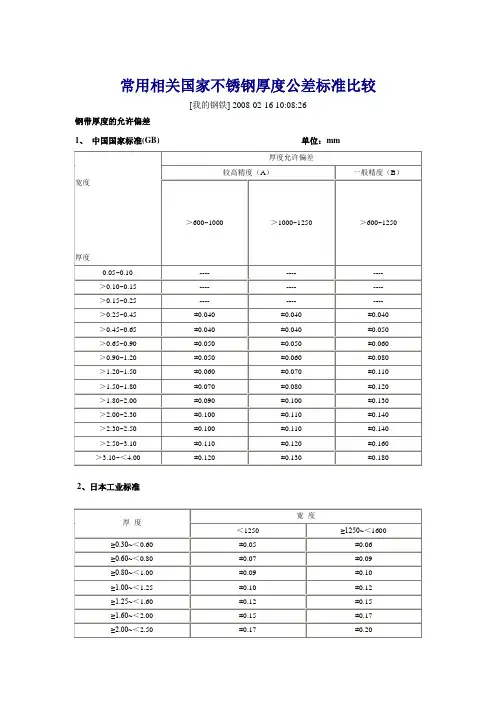
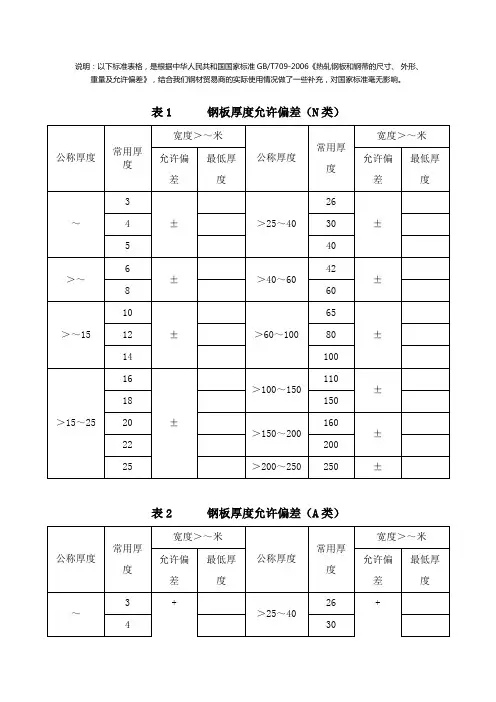
Thickness Tolerances.
In addition to the standard thicknesses, the standards
also specify the allowable tolerances for the thickness of
stainless steel sheets. These tolerances vary depending on
the thickness and the manufacturing process.
Importance of Thickness.
The thickness of stainless steel sheets is important
for several reasons:
Strength: Thicker sheets provide greater strength and
rigidity.
Corrosion resistance: Thicker sheets have a higher
resistance to corrosion, especially in harsh environments.
Formability: Thinner sheets are easier to form and
shape.
Weight: Thicker sheets weigh more, which affects
transportation and handling costs.
Cost: Thicker sheets are generally more expensive than
thinner sheets.
Choosing the Right Thickness.
Selecting the appropriate thickness for stainless steel
sheets depends on the specific application requirements.
Factors to consider include:
Load: The load that the sheet will be subjected to.
Corrosion environment: The severity of the corrosive
environment.
Formability: The complexity of the desired shape.
Weight: The weight constraints of the application.
Budget: The available budget for the project.
By carefully considering these factors, engineers can
select the optimal thickness for stainless steel sheets that meets the performance and cost requirements of their
applications.
中文回答:
不锈钢钢板厚度标准。
不锈钢钢板是一种用途广泛、性能优异的材料,由于其耐腐蚀性、强度和耐用性,在各个行业中得到广泛应用。不锈钢钢板的厚度对其性能和使用寿命至关重要。目前,有多个标准对不锈钢钢板的厚度要求进行了规定。
ASTM A240/A240M.
美国材料试验协会 (ASTM) 颁布的 ASTM A240/A240M 标准对不锈钢钢板和钢板进行了详细的规定。其中包括一张表格,明确规定了热轧和冷轧不锈钢钢板的标准厚度。热轧钢板的厚度范围为
0.010 英寸 (0.25 毫米) 至 0.500 英寸 (12.7 毫米),而冷轧钢板的厚度范围为 0.010 英寸 (0.25 毫米) 至 0.250 英寸 (6.35
毫米)。
EN 10088-2。
欧洲标准 EN 10088-2 规定了不锈钢板材(包括钢板)的要求。其中提供了一张表格,明确规定了冷轧不锈钢钢板的标准厚度,范围从 0.5 毫米到 10 毫米。
JIS G4303。
日本工业标准 (JIS) G4303 定义了不锈钢钢板的具体要求。其中包括一张表格,明确规定了热轧和冷轧不锈钢钢板的标准厚度。热轧钢板的厚度范围为 0.3 毫米至 3.2 毫米,而冷轧钢板的厚度范围为 0.1 毫米至 1.2 毫米。
厚度公差。
除了标准厚度外,这些标准还规定了不锈钢钢板厚度允许的公差。这些公差根据厚度和制造工艺而有所不同。
厚度的重要性。
不锈钢钢板的厚度至关重要,原因如下:
强度,较厚的钢板能提供更高的强度和刚度。
耐腐蚀性,较厚的钢板具有更高的耐腐蚀性,尤其是在恶劣的环境中。
成型性,较薄的钢板更容易进行弯曲和成型。
重量,较厚的钢板重量更大,会影响运输和搬运成本。
成本,较厚的钢板通常比较薄的钢板更昂贵。
选择合适的厚度。
选择合适厚度的不锈钢钢板取决于具体的应用要求。需要考虑的因素包括:
载荷,钢板承受的载荷。
腐蚀环境,腐蚀环境的严重程度。
成型性,所需形状的复杂性。
重量,应用的重量限制。
预算,项目的可用预算。
通过仔细考虑这些因素,工程师们可以选择最优的不锈钢钢板厚度,以满足其应用的性能和成本要求。