must的用法总结
- 格式:docx
- 大小:37.59 KB
- 文档页数:3
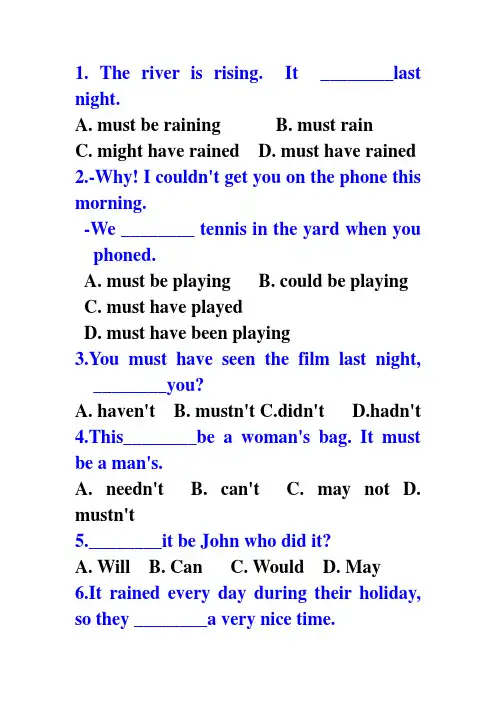
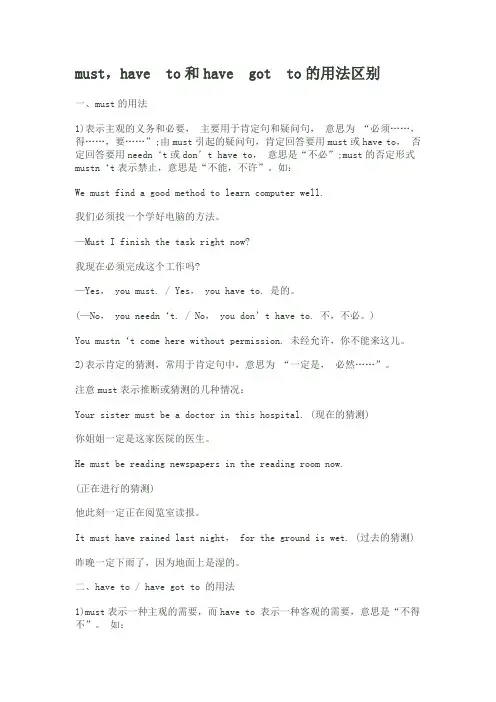
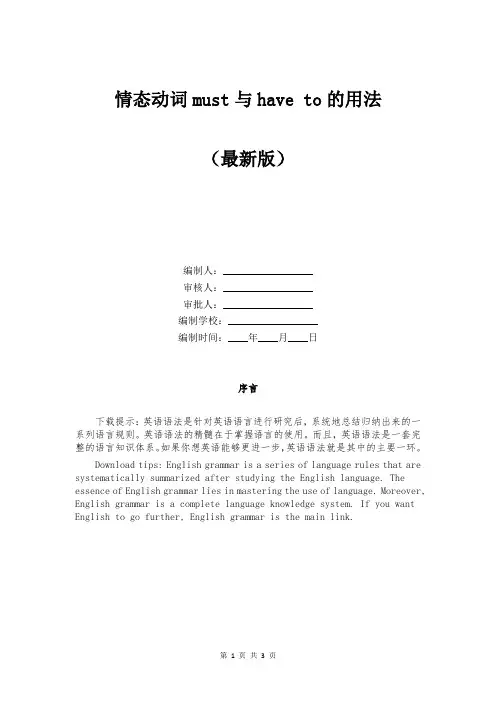
must的用法总结
一、Must的基本用法
Must是一个英语情态动词,用于表示强烈建议、必须或者应该做某事。在句子中通常用作情态动词,可以和动词原形一起构成肯定句、否定句、疑问句等各种句式。
1. 肯定句:
Must + 动词原形
例如:
- You must arrive on time for the meeting tomorrow.
明天开会你必须准时到达。
- We must study hard for the upcoming exam.
我们必须为即将来临的考试努力学习。
2. 否定句:
Must + not + 动词原形
例如:
- You must not miss the deadline for submitting the report.
你不能错过提交报告的截止日期。
- They must not forget to lock the door when they leave.
离开时他们不要忘记锁门。
3. 疑问句: Must + 主语 + 动词原形?
例如:
- Must we finish this task by tomorrow?
我们必须明天完成这项任务吗?
- Must I bring my own laptop to the workshop?
我必须带自己的笔记本电脑参加研讨会吗?
二、Must的用法总结
1. 表示根据道德规范或者法律规定必须做或者不做某事。
例如:
- You must obey the rules of the library.
你必须遵守图书馆的规定。
- Citizens must pay taxes on time.
公民必须按时缴纳税款。
2. 表示根据逻辑、常识或者经验判断,某种行为是非常确凿的真理或者必然的结果。
例如:
- The sun must rise in the east and set in the west.
太阳肯定从东方升起,西方落下。
- You must be tired after working for such a long time.
在工作了这么长时间之后,你一定累了。 3. 表示强烈建议或者坚决要求对方做某事。
例如:
- You must try this new restaurant! The food is amazing.
你一定要去试一试这家新餐厅!食物太棒了。
- We must take immediate action to address this issue.
我们必须立即采取行动来解决这个问题。
4. 表示推断过去发生的事件或者情况。(用法较少)
例如:
- She's wearing a wedding ring. She must be married.
她戴着结婚戒指,她一定是已婚的。
5. 注意:Must在口语中使用较少,较为正式和有礼貌,可以用其他情态动词替代。
例如:
- You should study harder.(建议)
你应该更加努力学习。
总结:
以上是关于Must的基本用法的总结。它可以表示强烈建议、必须或者应该做某事。在肯定句、否定句和疑问句中的使用方式有所不同。此外,它还可以表示一种确凿或者推断过去发生的事件。在口语中,我们更常使用其他情态动词来表达相似的意思。但对于书面英语或者正式场合,正确使用Must依然很重要。