
SubmergedAquatic Vegetation
- 格式:ppt
- 大小:1.68 MB
- 文档页数:21

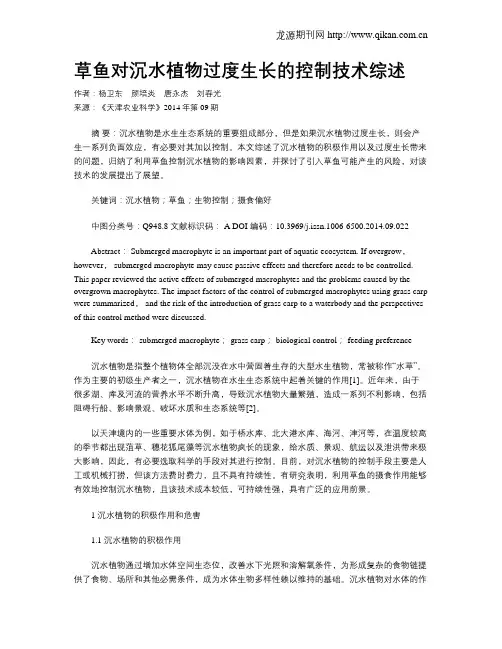
草鱼对沉水植物过度生长的控制技术综述作者:杨卫东颜培炎唐永杰刘春光来源:《天津农业科学》2014年第09期摘要:沉水植物是水生生态系统的重要组成部分,但是如果沉水植物过度生长,则会产生一系列负面效应,有必要对其加以控制。
本文综述了沉水植物的积极作用以及过度生长带来的问题,归纳了利用草鱼控制沉水植物的影响因素,并探讨了引入草鱼可能产生的风险,对该技术的发展提出了展望。
关键词:沉水植物;草鱼;生物控制;摄食偏好中图分类号:Q948.8 文献标识码: A DOI 编码:10.3969/j.issn.1006-6500.2014.09.022Abstract: Submerged macrophyte is an important part of aquatic ecosystem. If overgrow,however, submerged macrophyte may cause passive effects and therefore needs to be controlled. This paper reviewed the active effects of submerged macrophytes and the problems caused by the overgrown macrophytes. The impact factors of the control of submerged macrophytes using grass carp were summarized, and the risk of the introduction of grass carp to a waterbody and the perspectives of this control method were discussed.Key words: submerged macrophyte; grass carp; biological control; feeding preference沉水植物是指整个植物体全部沉没在水中营固着生存的大型水生植物,常被称作“水草”。

观察蝌蚪英语作文带翻译Title: Observing Tadpoles。
Today, I had the wonderful opportunity to observe tadpoles in their natural habitat. It was a fascinating experience that allowed me to gain insights into the early stages of frog development. In this essay, I will share my observations and reflections.As I approached the pond, I was immediately struck by the tranquil beauty of the surroundings. The water was clear, reflecting the vibrant greenery that surrounded it.I sat down by the edge of the pond and carefully observed the tadpoles swimming gracefully in the water.Tadpoles come in various shapes and sizes, depending on the species. Some were small and slender, while others were larger and more robust. Their bodies were translucent, allowing me to see their internal organs, including their digestive system and gills. It was fascinating to watchthem propel themselves through the water with their tail fins, navigating effortlessly among the aquatic plants.One aspect that particularly caught my attention was their feeding behavior. Tadpoles are herbivorous, and they primarily feed on algae and other plant matter. I observed them grazing on the algae that covered the rocks and submerged vegetation in the pond. They used their tiny mouths to nibble on the algae, displaying a remarkablelevel of precision and efficiency in their feeding process.As I continued to observe the tadpoles, I noticed some interesting interactions among them. They seemed to form loose groups, swimming together in a synchronized manner. Occasionally, there would be minor skirmishes as tadpoles competed for food or vied for territory among the plants. Despite these occasional conflicts, there was an overall sense of harmony and cooperation among the tadpoles, as they went about their daily activities in the pond.One of the most captivating moments of my observation was witnessing the metamorphosis of a tadpole into a frog.I observed a tadpole undergoing the remarkable transformation process, known as metamorphosis, where it gradually developed legs and absorbed its tail. It was a profound reminder of the miraculous wonders of nature and the incredible adaptability of living organisms.In conclusion, my experience of observing tadpoles was both educational and enriching. It provided me with valuable insights into the early stages of frog development and deepened my appreciation for the beauty and complexity of the natural world. I look forward to further opportunities to explore and learn from the wonders of nature.我希望这篇文章满足了你的要求。

关于河狸和蜗牛生态系统的英文作文英文回答:Beavers and snails interact in a complex and mutually beneficial relationship within their shared ecosystem. Beavers create and maintain wetlands through their dam-building activities, which provide a crucial habitat for snails. In turn, snails perform important roles in the ecosystem, including nutrient cycling and grazing on algae.Beavers are large rodents known for their impressive dam-building abilities. These dams create ponds and wetlands that provide a stable and sheltered environmentfor a variety of aquatic organisms, including snails. The dams slow down the flow of water, creating calm pools where snails can thrive. Additionally, the dams trap sediment and organic matter, which provides food and nutrients for snails.Snails, on the other hand, play several significantroles in the beaver ecosystem. They are efficient grazers of algae, which helps to keep the beaver ponds clean and healthy. By removing algae, snails improve water quality and increase the amount of sunlight that reaches submerged vegetation. This vegetation provides food and shelter for other organisms, such as fish and insects.Furthermore, snails contribute to nutrient cycling within the ecosystem. They feed on decaying organic matter and release nutrients back into the water column. These nutrients are then available for use by other organisms, including plants and algae.The relationship between beavers and snails is an example of mutualism, where both species benefit from the interaction. Beavers provide a suitable habitat for snails, while snails improve the water quality and nutrient cycling in the beaver pond. This symbiotic relationship contributes to the overall health and productivity of the ecosystem.中文回答:海狸和蜗牛在它们共同的生态系统中进行着复杂且互利共生的关系。

抚仙湖景点介绍英文作文英文回答:Fuxian Lake, a mesmerizing spectacle of nature, is renowned for its crystal-clear waters that shimmer with iridescent hues. Nestled amid the mesmerizing landscapes of Yunnan Province, China, this freshwater gem presents a tranquil paradise for nature enthusiasts, adventure seekers, and those yearning for serene escapes.Origins and Geography:Fuxian Lake, the largest freshwater lake in Yunnan, was formed by tectonic activity millions of years ago. Its vast expanse covers an area of over 212 square kilometers, witha maximum depth of 155 meters. The lake boasts a unique geological feature known as "the Sunken Bay," a submerged crater that adds to its enigmatic charm.Water Clarity and Purity:Fuxian Lake is celebrated for its exceptional water clarity, a trait attributed to its karstic limestone drainage basin. The absence of industrial effluents and agricultural runoff ensures the purity of its waters, earning it the unofficial title of "China's Maldives" for its pristine beauty.Flora and Fauna:The lake's pristine waters nurture a diverse ecosystem. Lush vegetation fringes its shores, while submerged aquatic plants provide shelter and nourishment for numerous fish species. Fuxian Lake is home to over 30 species of fish, including the rare and endangered Chinese sturgeon. The lake's abundant birdlife adds to its biodiversity, with migratory species such as ruddy shelducks and black-headed gulls gracing its shores.Cultural Significance:Fuxian Lake holds great cultural significance for thelocal Yi ethnic minority. The lake features prominently in their folklore, and they have traditionally relied on its waters for fishing, irrigation, and transportation. Numerous ancient temples and cultural sites dot the lake's surroundings, reflecting the rich cultural heritage of the region.Tourism and Recreation:Fuxian Lake is a popular destination for both domestic and international tourists. Its tranquil waters invite visitors to indulge in a range of water activities, including swimming, boating, and fishing. The surrounding hills offer opportunities for hiking and mountain biking, while the lakeside villages provide a glimpse into local life and customs. Several resorts and guesthouses cater to the needs of tourists, offering comfortable accommodations and convenient amenities.Environmental Preservation:Recognizing the lake's ecological importance, theChinese government has implemented strict conservation measures to protect its pristine waters. Sustainable tourism practices and responsible fishing are encouraged to maintain the lake's delicate ecosystem for future generations.中文回答:抚仙湖概况:抚仙湖,又名“星云湖”,是中国云南省最大的淡水湖,位于昆明市澄江、江川两市境内。