
非谓语动词作宾语
- 格式:ppt
- 大小:292.50 KB
- 文档页数:24


1 非谓语动词语法讲解
一、非谓语动词的概念
动词的基本用法是作谓语。当句中已经有了谓语动词了,要选或要填的动词就只能用非谓语形式了。
非谓语形式有三种:1、动词不定式:to do 2、动词的ing : doing 3、 动词的过去分词:done
★不定式:表示目的和将来;
动词的ing:表示主动和进行;
过去分词:表示被动和完成。
二、非谓语动词的时态和语态
一般式 完成式 进行式
不定式 主动 to do to have done to be doing
被动 to be done to have been done
ing 形式 主动 doing having done
被动 being done having been done
过去分词 被动 done
三.非谓语动词的句法功能:
(一)动词不定式:to+do
1.不定式的否定式:not + to do
(1)一般式:不定式的一般式所表示的动作与谓语动词动作同时发生
I'm glad to meet you.
He seems to know a lot.
(2)进行式:不定式的动作正在发生
The boy pretended to be working hard.
He seems to be reading in his room.
(3)完成式:不定式的完成式表示的动作发生在谓语动词动作之前
I regretted to have told a lie. 2 I happened to have seen the film.
2.不定式的句法功能:
(1)作主语:
To finish the work in ten minutes is very hard.
★动词不定式短语作主语时,常用it作形式主语,真正的主语不定式置于句后
It is very hard to finish the work in ten minutes.
非谓语动词专项练习
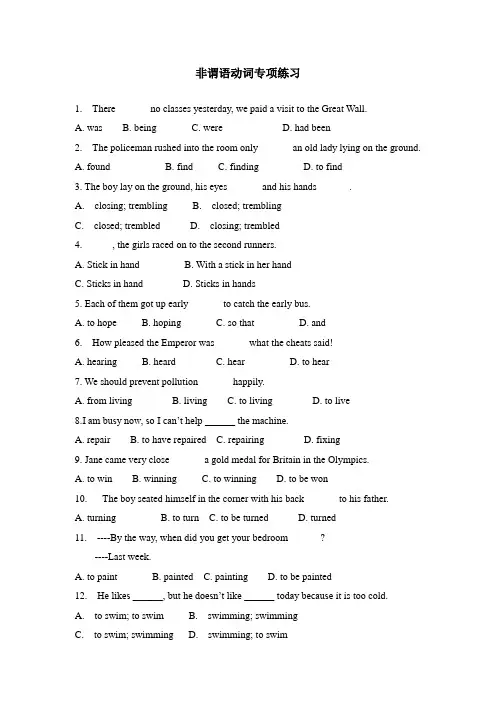
1. There ______ no classes yesterday, we paid a visit to the Great Wall.
A. was B. being C. were D. had been
2. The policeman rushed into the room only ______ an old lady lying on the ground.
A. found B. find C. finding D. to find
3. The boy lay on the ground, his eyes ______ and his hands ______.
A. closing; trembling B. closed; trembling
C. closed; trembled D. closing; trembled
4.______, the girls raced on to the second runners.
A. Stick in hand B. With a stick in her hand
C. Sticks in hand D. Sticks in hands
5. Each of them got up early ______ to catch the early bus.
A. to hope B. hoping C. so that D. and
6. How pleased the Emperor was ______ what the cheats said!
A. hearing B. heard C. hear D. to hear
非谓语动词
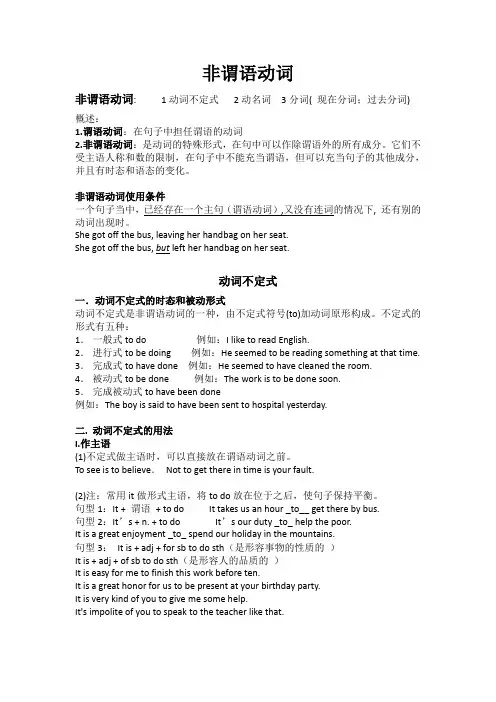
非谓语动词: 1动词不定式 2动名词 3分词( 现在分词;过去分词)
概述:
1.谓语动词:在句子中担任谓语的动词
2.非谓语动词:是动词的特殊形式,在句中可以作除谓语外的所有成分。它们不受主语人称和数的限制,在句子中不能充当谓语,但可以充当句子的其他成分,并且有时态和语态的变化。
非谓语动词使用条件
一个句子当中,已经存在一个主句(谓语动词),又没有连词的情况下,
还有别的动词出现时。
She got off the bus, leaving her handbag on her seat.
She got off the bus, but left her handbag on her seat.
动词不定式
一.动词不定式的时态和被动形式
动词不定式是非谓语动词的一种,由不定式符号(to)加动词原形构成。不定式的形式有五种:
1. 一般式to do 例如:I like to read English.
2. 进行式to be doing 例如:He seemed to be reading something at that time.
3. 完成式to have done 例如:He seemed to have cleaned the room.
4. 被动式to be done 例如:The work is to be done soon.
5. 完成被动式to have been done
例如:The boy is said to have been sent to hospital yesterday.
二. 动词不定式的用法
I.作主语
(1)不定式做主语时,可以直接放在谓语动词之前。
To see is to believe. Not to get there in time is your fault.
(2)注:常用it做形式主语,将to do放在位于之后,使句子保持平衡。

非谓语动词作宾语讲解
非谓语动词是指在句子中充当宾语的动词的非谓语形式,包括动词不定式、动名词和分词。非谓语动词作宾语常见于复合句中,可以起到丰富句子结构、增强语义、简化句子等作用。本文将详细讲解非谓语动词作宾语的用法和注意事项。
一、动词不定式作宾语
动词不定式作宾语时,常用形式为“动词不定式+to”,其中to可以省略。一般来说,动词不定式作宾语时,在意义上相当于一个名词,可以表示目的、结果、愿望、能力等。
例句:
1. I want to learn how to play the guitar.(我想学会弹吉他)
2. She decided not to go abroad for further study.(她决定不出国深造)
除了直接作宾语外,动词不定式还可以作及物动词的宾语补足语,说明宾语具备的特点、状态或能力。
例句:
1. They find it difficult to solve the math problem.(他们发现解这个数学问题很困难)
2. I consider him to be a reliable friend.(我认为他是一个可靠的朋友)
二、动名词作宾语 动名词作宾语时,常形式为“动名词+ing”。动名词作宾语可以表示动作或状态,常用于感官动词(see, hear, feel等)和使役动词(make,
let, have等)后面。
例句:
1. I enjoy swimming in the sea.(我喜欢在海里游泳)
2. My mother made me clean my room.(我妈妈让我打扫房间)
动名词作宾语还可以表示习惯、爱好等。
例句:
1. She gave up smoking last year.(她去年戒烟了)
2. He hates doing housework.(他讨厌做家务)
三、分词作宾语
分词作宾语时,常用现在分词或过去分词形式。分词作宾语可以表示被动、完成或正在进行等含义。