
初中语法之形容词和副词
- 格式:ppt
- 大小:1.42 MB
- 文档页数:22


初中英语语法之形容词&副词
初中英语语法之形容词&副词
形容词副词的原级、比较级和最高级
1、分类:形容词和副词有原级、比较级和最高级三级。
2、规则变化:
(1)单音节和部分双音节形容词和副词,在原级的后面加上er,est构成比较级和最高级。
a)直接加er,est :
b)以重读闭音节结尾的,要双写最后一个辅音字母,后加er,est:
c)以辅音字母+y结尾的,先把y改为i再加上er,est:
(2)两个音节或两个以上的音节的,在原级前加more / most.
3、不规则变化:
原级
比较级
最高级
good好的
better更好的
best最好的
well好;(身体)好的,
bad,badly糟糕的,糟糕地
worse更糟糕的,更糟糕地;(身体)更不舒服的
worst最糟糕的,最糟糕地;(身体)最不舒服的
ill(身体)不舒服的
many许多的(可数) more更多的;更
most最多的;最
much许多的(不可数);非常
little少的
less更少的
least最少的
far远的;远地
farther更远的;更远地
farthest最远的;最远地
further进一步的(地)
furthest最深刻的(地)
4、形容词和副词的原级、比较级和最高级的用法:
(1) 讲述某人/物自身的情况时,用原级。基本句型是:
主语(sb./sth) + 谓语动词 +(very/too/so/quite/rather…) + 形容词/副词原级 +….如:
He is very oldnow. 他现在很老了。
They ran quitefast. 它们跑得相当快。
The weatherlooks rather bad. 天气看上去相当糟。
I am sohappy! 我是如此的快乐!
☆表示两者之间没有差别时,使用句型:
主语(第一个人物) + 谓语动词 + as + 形容词/副词原级 + as + 第二个人物
形容词与副词转换
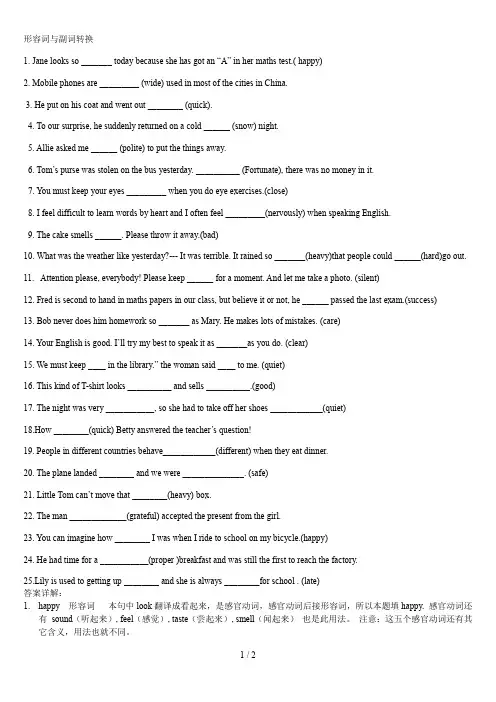
1. Jane looks so _______ today because she has got an “A” in her maths test.( happy)
2. Mobile phones are _________ (wide) used in most of the cities in China.
3. He put on his coat and went out ________ (quick).
4. To our surprise, he suddenly returned on a cold ______ (snow) night.
5. Allie asked me ______ (polite) to put the things away.
6. Tom’s purse was stolen on the bus yesterday. __________ (Fortunate), there was no money in it.
7. You must keep your eyes _________ when you do eye exercises.(close)
8. I feel difficult to learn words by heart and I often feel _________(nervously) when speaking English.
9. The cake smells ______. Please throw it away.(bad)
10. What was the weather like yesterday?--- It was terrible. It rained so _______(heavy)that people could ______(hard)go out.
11. Attention please, everybody! Please keep ______ for a moment. And let me take a photo. (silent)

形容词和副词的比较级和最高级
一.形容词和副词的比较级和最高级的变化方法如下
(1) 符合规则的:
(2)几个不规则的形容词和副词的比较级和最高级如下表:
原 级 比较级 最高级
good , well better best
bad , ill worse worst
many , much more most
little less least
far farther / further farthest / furthest
二.形容词和副词比较级的用法
级别 比较程度 表达方式和意义 例 句 备 注
原
级 同
等
程
度 肯
定
形
式 As+原级+as
(像……一样) Art is as interesting
as music.
Play as well as you
can. 情 况 加 法 例 词
一 般 情 况 直接加 -er ; -est all-taller-tallest
以e结尾的词 加 –r ; -st nice-nicer-nicest
以“辅音+y”结尾的词 变y为i再加-er ; -est dry-drier-driest
heavy-heavier-heaviest
以一个辅音字母结尾的词 辅音字母双写,再加-er ; -est thin-thinner-thinnest
多音节和部分双音节单词 在词前加 more ; most more delicious
most delicious 否
定
形
式 not + so (as) +原级+as
(不如……那样) English is not so
difficult as science.
She does not study so
well as I do.
比较级 不同程度
(用于两者比较) 比较级+than
(比……) Jim is older than
精选文档
1
形容词
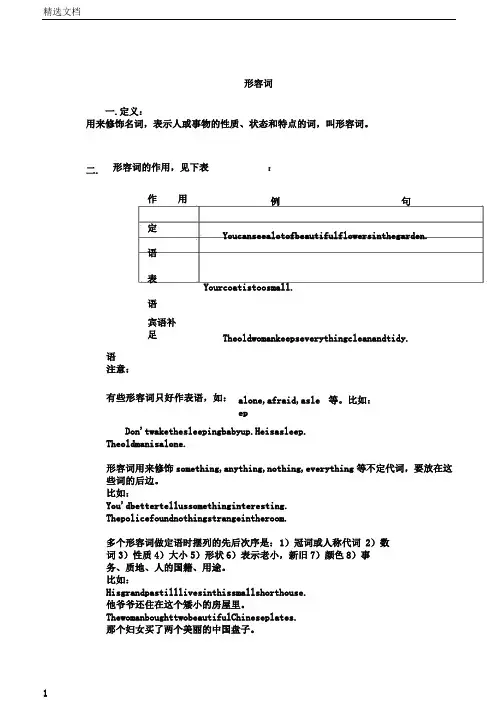
一.定义:
用来修饰名词,表示人或事物的性质、状态和特点的词,叫形容词。
二.
形容词的作用,见下表
:
作 用
例
句
定
语
Youcanseealotofbeautifulflowersinthegarden.
表
语
Yourcoatistoosmall.
宾语补足
Theoldwomankeepseverythingcleanandtidy.
语
注意:
有些形容词只好作表语,如:
alone,afraid,asleep
等。比如:
Don'twakethesleepingbabyup.Heisasleep.
Theoldmanisalone.
形容词用来修饰something,anything,nothing,everything等不定代词,要放在这些词的后边。
比如:
You'dbettertellussomethinginteresting.
Thepolicefoundnothingstrangeintheroom.
多个形容词做定语时摆列的先后次序是: 1)冠词或人称代词 2)数
词3)性质4)大小5)形状6)表示老小,新旧7)颜色8)事
务、质地、人的国籍、用途。
比如:
Hisgrandpastilllivesinthissmallshorthouse.
他爷爷还住在这个矮小的房屋里。
ThewomanboughttwobeautifulChineseplates.
那个妇女买了两个美丽的中国盘子。 精选文档
2
形容词名词化:有些形容词前加定冠词后变为名词,表示一类人,谓
语常用复数。这种词有:rich/poor;good/bad;young/old;healthy/
ill;living/dead;black/white(表示人种等)。
比如:
Theyoungshouldtakegoodcareoftheold.
年青人应当好好照料老人。