
must(必须)和have to(必须)的区别教学提纲
- 格式:ppt
- 大小:25.00 KB
- 文档页数:3


must与have to的差别神态动词must 和 have to都有“一定”的含义,它们的用法以下:(一)、must “一定”、“应当”的用法:表示“一定”、“应当”。
比如:① We must protect our environment.(我们一定保护环境。
)② Everyone must obey the rule.(人人一定恪守制度。
)2. must的否认形式must not表示“不该当”、“严禁”、“严禁”。
语气比较激烈。
例如:① You mustn’t speak like that.(你不该当像那样发言。
)②You mustn’t be late for school.(你不该当上学迟到。
)3. 在回答 must 的问句时,一定形式用must 往返答,但否认形式用needn’t或don’t have to 往返答。
而不用mustn’t往返答。
比如:①—— Must I be home before 8 o’clock(8点以前我一定回家吗)—— Yes, you must.No, you n eedn’t./No, you don’t have to.(是,你一定。
)(不,你不用。
)(二)、 have to表示“一定”、“不得不”,比如:① He has to stay in bed for 3 or 4 days.(他一定卧床歇息三四天。
)② We will have to get up early tomorrow.(明日我们一定早起。
)增补: have got to是have to的口语形式。
比如:①I ’ve got t o leave for Nanjing.(我不得不去南京。
)* Must 与 have to的差别:must 表示的是说话人的主观见解,而have to则表示的是客观需要。
Must 一般只有此刻时,而 have to有更多的形式。
① I must go now.(主观见解)② My mother is ill, so I have to go now.(客观需要)* Have to与have got to的差别:have got to固然是have to的口语形式,但两者在用法上有严格的差别:have to的前方还能够用神态动词或助动词,而have got to却不能够;have to的否认形式为don’t/doesn ’t /didn’t +have to,疑问式为Do/Does/Did +主语+ have to⋯而have got to的否认形式是在have 后加 not,疑问式把have 提早。
have to和must的区别
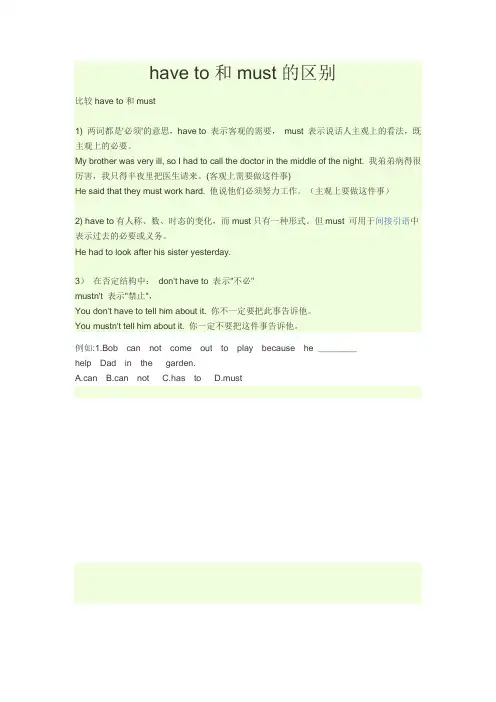
比较have to和must
1) 两词都是'必须'的意思,have to 表示客观的需要,must 表示说话人主观上的看法,既主观上的必要。
My brother was very ill, so I had to call the doctor in the middle of the night. 我弟弟病得很厉害,我只得半夜里把医生请来。
(客观上需要做这件事)
He said that they must work hard. 他说他们必须努力工作。
(主观上要做这件事)
2) have to有人称、数、时态的变化,而must只有一种形式。
但must 可用于间接引语中表示过去的必要或义务。
He had to look after his sister yesterday.
3)在否定结构中:don't have to 表示"不必"
mustn't 表示"禁止",
You don't have to tell him about it. 你不一定要把此事告诉他。
You mustn't tell him about it. 你一定不要把这件事告诉他。
例如:1.Bob can not come out to play because he ________
help Dad in the garden.
A.can
B.can not
C.has to
D.must
选C 因为这是他不得不做的must命令强制口气
have to是不得不,很勉强。
h a v et o,m u s t,n e e d三者区别have to,must ,need三者区别Must 必须,应该,一定,准是, 表示说话人认为有必要做某事, 命令, 要求别人做某事以及对事物的推测。
Need "需要",表示有需要和必要去做某事。
need做情态动词时主要用于疑问句,否定句。
have to 表示“不得不”,是内心不情愿,但是必须去做,有强迫的意思1.must/have tomust 用来指一般现在时和一般将来时, 过去式可用 have to 的过去式代替。
Must相当于have to, 但must强调主观因素,而have to强调客观因素。
have to 表示“不得不”,是内心不情愿,但是必须去做,有强迫的意思如:I have to go to school. 我不得不去上学。
(心里不愿意去上学)must 表示“必须一定”,是必须要做的事情,着重于主观的看法(愿意,命令)而must也不像have to那样有更多的时态。
I must go to see a doctor. 我得看医生去。
2.need可以对MUST引导的一般疑问句作否定回答。
Really? Must I go with you? 是吗?要我和你一起去吗?No, you needn't.不,没必要。
3.must的否定式表示不准,不得等禁止的意思,或表示不可,不能,一定不要等劝告的意思。
Ok, then, you mustn't forget your medical card.好吧,那你一定不要忘记带医疗证。
我有必要说吗?3.作为情态助动词的need一般只用于否定句或疑问句中。
need+原形动词表示必要性。
Of course I remember. Need you remind me?我当然记得了。
你有必要提醒我吗?4.must+have+过去分词表示对过去情况的推断。
Oh, it is wet outside. It must have rained yesterday.噢,外面湿了。