mla格式英文文献
- 格式:doc
- 大小:24.85 KB
- 文档页数:3
mla格式英文文献
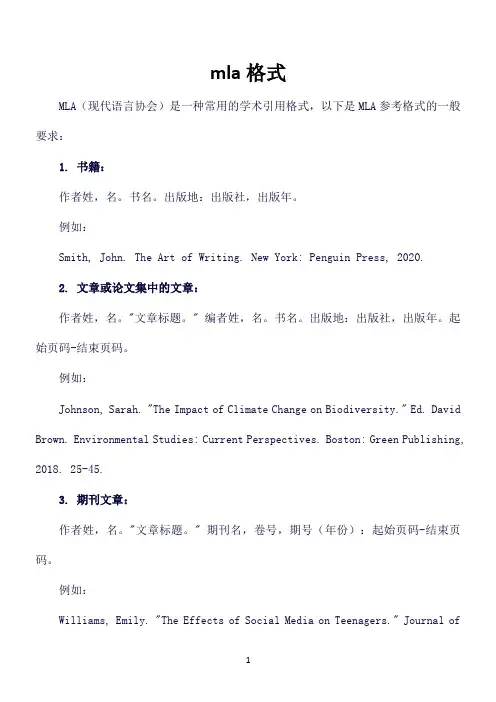
MLA format is a standardized system for formatting academic papers
and citing sources developed by the Modern Language Association
(MLA). It is widely used in the humanities, including fields such as
literature, languages, philosophy, and cultural studies. The MLA style
provides writers with a consistent way to structure their papers, list
references, and acknowledge the work of others. Adhering to MLA
guidelines helps ensure that a paper is clear, organized, and
professional.
One of the key components of MLA format is the use of in-text
citations to acknowledge sources. When a writer references, quotes,
paraphrases, or summarizes information from an outside source,
they must provide an in-text citation to indicate where the
information came from. These citations typically include the author's
last name and the page number where the information was found,
enclosed in parentheses and placed at the end of the sentence. For
example, (Smith 125). This allows readers to quickly identify the
source and locate it in the reference list at the end of the paper.
The reference list, also known as the works cited page, is another
essential element of MLA format. This page provides a
comprehensive list of all the sources used in the paper, arranged
alphabetically by the author's last name. Each entry in the reference
list includes specific information about the source, such as the author,
title, publisher, and publication date. The format for each type of
source, whether it's a book, journal article, website, or other medium,
follows a consistent set of rules. Adherence to these guidelines
ensures that the reference list is clear, comprehensive, and easy for
readers to navigate.
In addition to in-text citations and the reference list, MLA format also
provides guidelines for other aspects of academic writing, such as
the overall structure and formatting of the paper. This includes
specifications for the title page, page headers, margins, font size and
style, and line spacing. These guidelines help to create a consistent
and professional appearance, making the paper easier to read and
understand.
One of the key benefits of using MLA format is that it helps to ensure
academic integrity and prevent plagiarism. By properly
acknowledging sources, writers demonstrate their understanding of
the existing scholarship in their field and their ability to build upon
and contribute to that knowledge. This not only enhances the
credibility of their work but also helps to avoid allegations of academic dishonesty.
Moreover, the consistent application of MLA guidelines across
various academic disciplines facilitates communication and
collaboration within the scholarly community. When all writers
adhere to the same formatting standards, it becomes easier for
readers to navigate and comprehend the ideas presented in a paper,
regardless of the specific field of study.
In conclusion, MLA format is an essential tool for academic writers in
the humanities. By providing a standardized system for formatting
papers, citing sources, and acknowledging the work of others, MLA
helps to ensure the clarity, organization, and integrity of scholarly
work. Mastering MLA format is a crucial step in developing the skills
necessary for successful academic writing and research.