英语中20种特殊句型
- 格式:doc
- 大小:20.00 KB
- 文档页数:4
英语中20种特殊句型
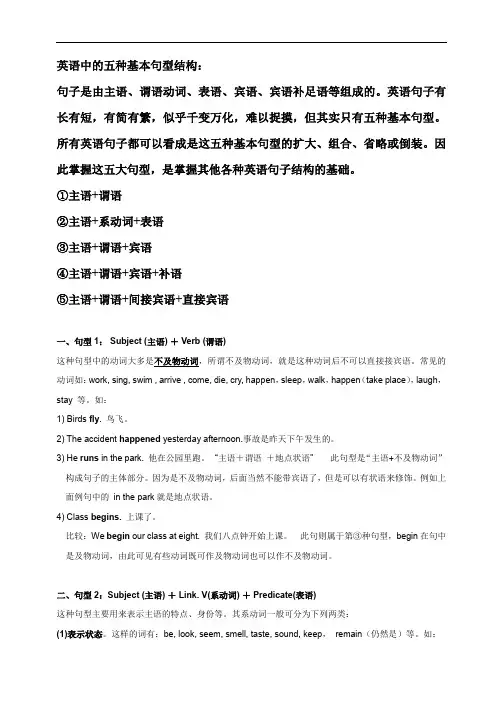
1. it作先行主语和先行宾语的一些句型
It is an important thing to learn English well.
学好英语是件非常重要的事情。
I made it clear that I have no intention of going with you.
我已经说清楚了,我不想和你走。
2. 强调句型
It was I who met Li Ming at the railway station yesterday.
是我昨天在火车站遇见了李明。
3.“All+抽象名词”或“抽象名词+itself”(=very+形容词)
He was all gentleness to her.
他对她非常温存。
4.“not(never) too„+不定式”结构:“not too„to do”的意思是“并不太„„所以能做„„”。
One is never too old to learn.
活到老,学到老。
5. 同格名词修饰是指of前后的两个名词都指同一个人或物,“of”以及它前面的名词构一个形容词短语,以修饰“of”后面的那个名词。如“her old sharper of a
father”,可译为:“她那骗子般的父亲”。
Those wolves of boys eat so much.
那些狼一般的男孩子吃那么多。
6.“as good as„”可译为“相等于,就像,几乎如;实际上,其实”。
The merchant as good as promised the orphan boy, that he would adopt him.
那商人等于许诺要把那孤儿收为养子。
7. to make„of可译为“使„„成为„„,把„„当作”。
I will make a scientist of my son.
我要把儿子培养成为一名科学家。
8.no more„than„句型
A home without love is no more a home than a body without a soul is a man.
正像没有灵魂的躯体不称其为人一样,没有爱情的家庭也不称其为家庭。
9.“not so much„as„”和“not so much as„”结构:
not so much„as„=rather than,其中as有时可换成but rather,可译为:“与其说是„„毋宁说是„„”。而“not so much as”=“without (not) even”,可译为“甚至„„还没有”。
The oceans do not so much divide the world as unite it.
与其说海洋把陆地分开,不如说海洋把陆地连在一起。
10.“Nothing is more„than”和“Nothing is so„as”结构:
“Nothing is more„than”和“Nothing is so„as”都具有最高级比较的意思,“nothing”可换用“no”,“nobody”,“nowhere”,“little”,“few”,“hardly”,“scarcely”等等,可译为“没有„„比„„更为”,“像„„再没有了”,“最„„”等。
Nothing is more precious than time.
没有什么比光阴更可贵的东西了。
11.“cannot„too„”结构:“cannot„too„”意为“It is impossible to
overdo„”,即“无论怎样„„也不算过分”。“not”可换用“hardly”,“scarcely”等,“too”可换用“enough”,“sufficient”等。
You cannot be too careful.
你越细心越好。
That which is good cannot be done too soon.
好事做得越快越好。
12.“否定+but”结构:否定词后面的“but”具有“which not”,“who not”,“that not”,等等否定意义,构成前后的双重否定。可译成“没有„„不是”或“„„都„„”等。
Nothing is so bad but it might have been worse.
事情虽糟,但还不是最糟的。
13.“not so„but”和“not such a„but”结构:这两个结构和“否定+but”的结构差不多,不同之处是这两个结构中的“but”是含有“that„not”意味的连接词,表示程度。可译为“还没有„„到不能做„„的程度”,“并不是„„不„„”,“无论怎样„„也不是不能„„”等。
He is not so sick but he can come to school.
他没有病到不能上学的程度。
14.“疑问词+should„but”结构:这个结构表示过去的意外的事,意为“none„but”,可译为“除了„„还有谁会„„”,“岂料”,“想不到„„竟是„„”等。
Who should write it but himself?
除了他本人以外,还会有谁写呢?
15.“who knows but (that)„”和“who could/should„but”结构:这个结构是反问形式,一般意译为“多半”,“亦未可知”等等,有时也可直译。
Who knows but (that) he may go?
他多半会去的。(他会去也未可知。)
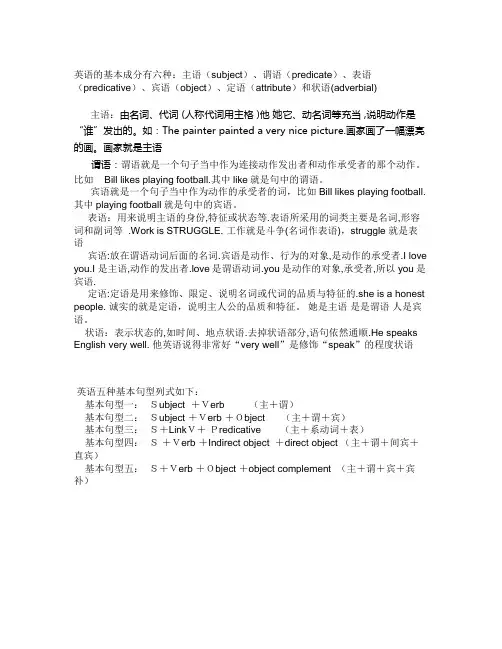
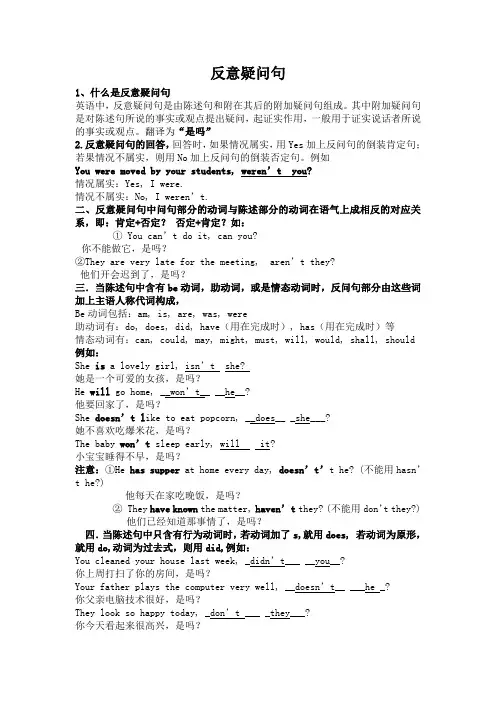
16.“祈使句+and”和“祈使句+or”结构:“祈使句+and”表示“If„you„”,“祈使名+or”表示“If not„, you„”。
Add love to a house and you have a home. Add righteousness to a city and you have a community.
Add truth to a pile of red bricks and you have a school.
一所房子加上爱心,你就有了一个家;一个城市加上正直守法,你就有了一个社区;在红砖房子里加上真理,你就有了一所学校。 Don’t go too close to him, or you’ll be found fault with.
不要太接近他,不然他就会找你的岔子。
17.“名词+and”结构,在这个结构中,名词等于状语从句,或表示条件,或表示时间。
A word, and he would lose his temper.
你再说一句他就要生气了。
18.“as„, so„”结构:这里“so”的意思是“in the same way”(也是如此)。此结构表明两个概念在程度上和关系上相似。
As rust eats iron, so care eats the heart.
忧能伤人,犹如锈能蚀铁。
19.“if any”结构:“if any”和“if ever”,意思是“果真有„„”,“即使有„„”,表示加强语气。与此类似的还有:“if anything”(如有不同的话,如果稍有区别),“if a day”(=at least,至少)。
There is little, if any, hope.
即使有希望,也是希望甚微。
20.“be it ever (never) so”和“let it be ever (never) so”结构:这里,“be it”中的“be”是古英语假设语气的遗留形式,现代英语则使用“let it be”。“ever so”和“never so”都表示同一意思,都表示“very”。
Be it ever so humble (Let it be ever so humble), home is home.
无论怎样简陋,总是自己的家。