
中国文化 英文版
- 格式:ppt
- 大小:3.62 MB
- 文档页数:7
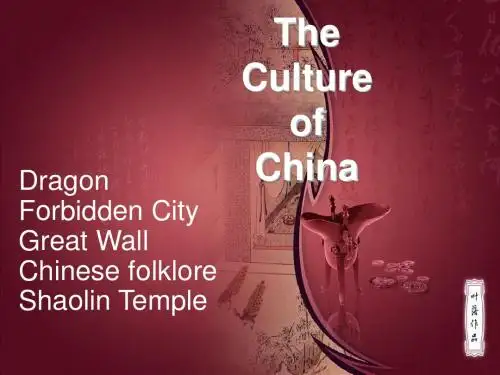

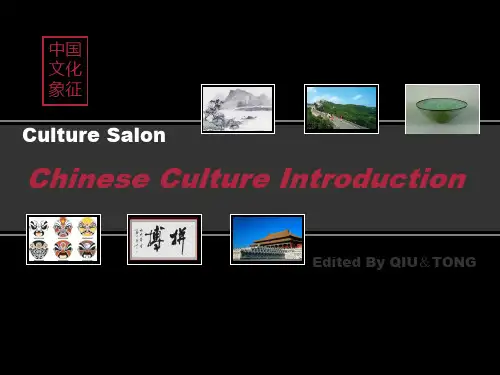

英文版中国传统文化In the vast expanse of cultural landscapes, the intersection of English and Traditional Chinese Culture presents a unique and enchanting fusion. This blend not only highlights the rich tapestry of Chinese heritage but also imparts a fresh perspective to the global audience, enabling a deeper understanding and appreciation of both cultures.The essence of Traditional Chinese Culture lies in its profound philosophy, vibrant art forms, and intricate traditions. Confucianism, Taoism, and Buddhism have shaped the ethical and moral values of the Chinese people for centuries. These philosophies emphasize harmony, respect, and balance, principles that are as relevant today as they were in ancient times.Art in China is as diverse as it is captivating. Calligraphy, painting, and pottery are just a few examples of the numerous artistic expressions that have withstood the test of time. Each stroke of the brush, each tint of ink, and every contour of a pottery piece tells a story,reflecting the artist's thoughts, emotions, and thecultural ethos of their era.Festivals and traditions are another vibrant aspect of Chinese culture. The Lunar New Year, Mid-Autumn Festival, and the Dragon Dance are celebrations that bring joy and unity to families and communities. These traditions are not just rituals but also a way of life, passed down through generations, connecting people to their ancestors and to the land.When Traditional Chinese Culture meets English, it opens up a world of possibilities. English, as a global language, provides a platform for the world to discover the richness of Chinese heritage. Through translations and interpretations, the depth and complexity of Chineseculture are made accessible to a wider audience.In this fusion, we see how English words and phrases are creatively adapted to capture the essence of Chinese traditions. For instance, the term "Confucius sayings" or "Taoist philosophy" are used to introduce Westerners to the wisdom of ancient Chinese thinkers. These translations notonly convey the meaning but also retain the cultural authenticity of the original.Moreover, English has also borrowed many elements from Chinese culture, enriching its vocabulary and expression. Words like "tea," "silk," and "paper" have become synonymous with Chinese culture, reflecting the influenceof China on global history and trade.In conclusion, the enchanting fusion of English and Traditional Chinese Culture is a testament to the power of cultural exchange and understanding. It bridges the gaps between East and West, allowing for a deeper appreciationof both cultures. As we continue to explore and embracethis fusion, we are reminded of the beauty and diversitythat can arise when different cultures come together in harmony.**东西方文化的魅力融合——英文版中国传统文化** 在丰富多彩的文化景观中,英语与中国传统文化的交融展现出独特而迷人的魅力。