
人称代词,物主代词,be动词的用法
- 格式:ppt
- 大小:2.88 MB
- 文档页数:54
英语人称代词和物主代词
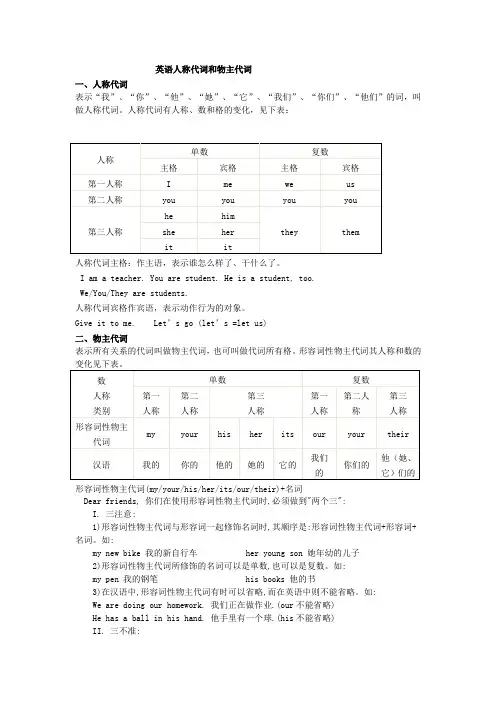
一、人称代词
表示“我”、“你”、“他”、“她”、“它”、“我们”、“你们”、“他们”的词,叫做人称代词。人称代词有人称、数和格的变化,见下表:
人称 单数 复数
主格 宾格 主格 宾格
第一人称 I me we us
第二人称 you you you you
第三人称 he him
they them she her
it it
人称代词主格:作主语,表示谁怎么样了、干什么了。
I am a teacher. You are student. He is a student, too.
We/You/They are students.
人称代词宾格作宾语,表示动作行为的对象。
Give it to me. Let’s go (let’s =let us)
二、物主代词
表示所有关系的代词叫做物主代词,也可叫做代词所有格。形容词性物主代词其人称和数的变化见下表。
数
人称
类别 单数 复数
第一
人称 第二
人称 第三
人称 第一
人称 第二人称 第三
人称
形容词性物主代词 my your his her its our your their
汉语 我的 你的 他的 她的 它的 我们的 你们的 他(她、它)们的
形容词性物主代词(my/your/his/her/its/our/their)+名词
Dear friends, 你们在使用形容词性物主代词时,必须做到"两个三":
I. 三注意:
1)形容词性物主代词与形容词一起修饰名词时,其顺序是:形容词性物主代词+形容词+名词。如:
my new bike 我的新自行车 her young son 她年幼的儿子
2)形容词性物主代词所修饰的名词可以是单数,也可以是复数。如:
my pen 我的钢笔 his books 他的书
3)在汉语中,形容词性物主代词有时可以省略,而在英语中则不能省略。如:
be动词的⼀一般现在时有三种形式,即:am, is, are。
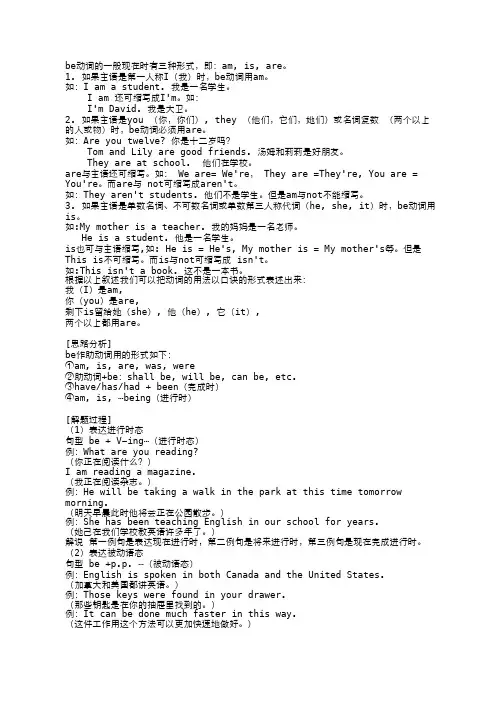
1. 如果主语是第⼀一⼈人称I(我)时,be动词⽤用am。
如:I am a student. 我是⼀一名学⽣生。 I am 还可缩写成I'm。如:
I'm David. 我是⼤大卫。
2. 如果主语是you (你,你们), they (他们,它们,她们)或名词复数 (两个以上
的⼈人或物)时,be动词必须⽤用are。
如:Are you twelve? 你是⼗十⼆二岁吗? Tom and Lily are good friends. 汤姆和莉莉是好朋友。
They are at school. 他们在学校。
are与主语还可缩写。如: We are= We're, They are =They're, You are =
You're。⽽而are与 not可缩写成aren't。
如:They aren't students. 他们不是学⽣生。但是am与not不能缩写。3. 如果主语是单数名词、不可数名词或单数第三⼈人称代词(he, she, it)时,be动词⽤用
is。
如:My mother is a teacher. 我的妈妈是⼀一名⽼老师。 He is a student. 他是⼀一名学⽣生。
is也可与主语缩写,如: He is = He's, My mother is = My mother's等。但是
This is不可缩写。⽽而is与not可缩写成 isn't。
如:This isn't a book. 这不是⼀一本书。根据以上叙述我们可以把动词的⽤用法以⼝口诀的形式表述出来:我(I)是am,
你(you)是are,
剩下is留给她(she), 他(he), 它(it),
两个以上都⽤用are。
[思路分析]
be作助动词⽤用的形式如下:
①am, is, are, was, were
②助动词+be:shall be, will be, can be, etc.
Be动词的用法口诀 :
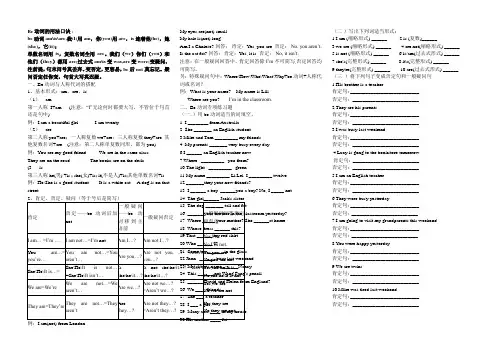
be动词am\is\are,我(I)用am,你(you)用are,is连着他(he),她(she),它(it);
单数名词用is,复数名词全用are。我们(we)你们(you)和他们(they)都用are;过去式am\is变was,are变 were;变疑问,往前提,句末问号莫丢弃。变否定,更容易,be后not莫忘记。 疑问否定任你变,句首大写莫迟疑。
一、Be动词与人称代词的搭配
1、基本形式:am、are、is
(1) am
第一人称I+am (注意:“I”无论何时都要大写,不管位于句首还是句中)
例:I am a beautiful girl. I am twenty.
(2) are
第二人称you+are; 一人称复数we+are; 三人称复数they+are 其他复数名词+are (注意:第二人称单复数同形,都为you)
例:You are my good friend. We are in the same class.
They are on the road. The books are on the desk.
(3 is
第三人称he(男) +is ; she(女)+is; it(不是人)+is;其他单数名词+is
例:He\She is a good student. It is a white cat. A dog is on that
street.
2、肯定、否定、疑问(等于号后是简写)
肯定 否定——be动词后加not 一般疑问——be动词移到主语前 一般疑问否定 一般疑问回答肯定和否定
I am… =I’m …. I am not…=I’m not ... Am I…? Am not I…? Yes,I’m.
No,I’m not.

一、人称代词
表示“我”、“你”、“他”、“她”、“它”、“我们”、“你们”、“他们”的词,叫做人称代词。人称代词有人称、数和格的变化,见下表:
(1)人称代词主格:作主语,表示谁怎么样了、干什么了。如:
I am a teacher. You are student. He is a student, too.
We / You / They are students.
(2)人称代词宾格作宾语,表示动作行为的对象。如:
Give it to me. Let’s go (let’s =let us)
1、I 和me. 我是一名学生。 _____ am a student. 妈妈喜欢我。 Mother
likes ______.
2、We 和 us. 我们是中国人。 _______ are Chinese. 父母爱我们。
Parents love ______.
3、you 人称代词最容易记住的。(你能翻译下列句子吗?试一试!) 你是一名学生。
我喜欢你。 你们是学生。
我爱你们。
4、你能推出she 和 her的位置吗? 她是一名护士。 ______ is a nurse. 你能帮助她。 You can help ______.
5、He和 him 他是我的朋友。______ is my friends. (想想用he还是him呢?) 我想和他一起玩。I want to play with ______.
6、it 的用法。 -Where is my car? -_____ is over there
指天气 It is raining outside.