hadoop组件原理
- 格式:doc
- 大小:38.92 KB
- 文档页数:5
hadoop组件原理
Hadoop is an open-source software framework for distributed
storage and processing of large sets of data. Hadoop是一个用于分布式存储和处理大型数据集的开源软件框架。 It is designed to scale from
single servers to thousands of machines, and it is known for its
reliability and ability to handle massive amounts of data. 它设计用来从单个服务器扩展到成千上万台机器,并以其可靠性和处理海量数据的能力而著称。 Hadoop is widely used in industries such as banking,
healthcare, entertainment, and social media for various purposes
including data warehousing, log processing, data analytics, and more.
Hadoop广泛应用于银行、医疗保健、娱乐和社交媒体等行业,主要包括数据仓库、日志处理、数据分析等各种用途。
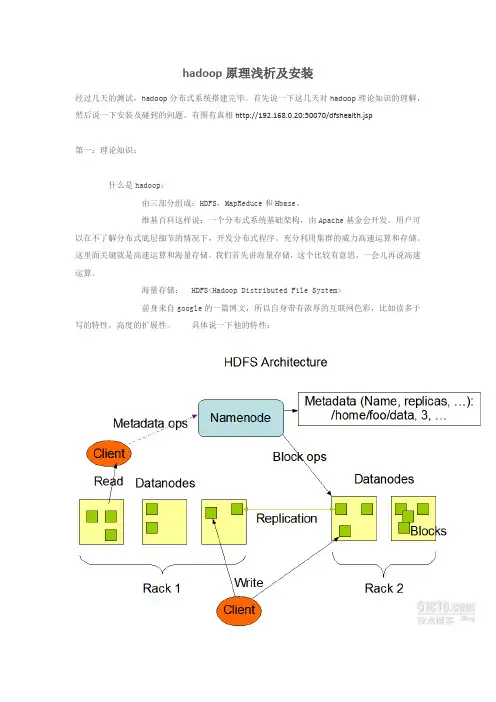
The core components of Hadoop include Hadoop Distributed File
System (HDFS) for storage and Apache MapReduce for processing.
Hadoop的核心组件包括Hadoop分布式文件系统(HDFS)用于存储以及Apache MapReduce用于处理。 HDFS is designed to store large files
across multiple machines in a fault-tolerant manner, while
MapReduce is a programming model for processing and generating
large datasets. HDFS旨在以容错的方式跨多台机器存储大文件,而MapReduce是一种用于处理和生成大型数据集的编程模型。 These
components work together to allow Hadoop to efficiently handle
and process big data, making it a popular choice for organizations
dealing with large-scale data processing. 这些组件共同工作,使得Hadoop能够高效处理大数据,因此成为处理大规模数据的机构的首选。
In addition to HDFS and MapReduce, Hadoop also includes other key
components such as YARN (Yet Another Resource Negotiator) and
Hadoop Common. 除了HDFS和MapReduce,Hadoop还包括其他关键组件,如YARN(另一个资源协调器)和Hadoop Common。 YARN is
a resource management layer that allocates resources among various
applications running in the Hadoop cluster, while Hadoop Common
provides utilities and libraries used by other Hadoop modules. YARN是一个资源管理层,负责在Hadoop集群中各种应用程序之间分配资源,而Hadoop Common则提供其他Hadoop模块使用的实用程序和库。
These components all contribute to the overall functionality and
performance of Hadoop, allowing it to effectively handle complex
data processing tasks. 这些组件共同促进了Hadoop的整体功能和性能,使其能够有效处理复杂的数据处理任务。
Hadoop's distributed nature allows for parallel processing of large
datasets, making it an ideal solution for big data analytics. Hadoop的分布式特性允许对大型数据集进行并行处理,使其成为大数据分析的理想解决方案。 With its ability to efficiently store and process massive
amounts of data, Hadoop enables organizations to gain valuable
insights from their data and make informed business decisions. 凭借其高效存储和处理大量数据的能力,Hadoop使组织能够从数据中获得有价值的见解,并做出明智的商业决策。 By leveraging Hadoop's distributed
computing capabilities, organizations can unlock the potential of
their data and extract meaningful patterns and trends. 通过利用Hadoop的分布式计算能力,组织可以释放其数据的潜力,并提取有意义的模式和趋势。
Furthermore, Hadoop's fault tolerance and scalability make it well-suited for handling the ever-increasing volume of data generated in
today's digital world. 此外,Hadoop的容错性和可扩展性使其非常适合处理当今数字世界中不断增加的数据量。 As data continues to grow at
an unprecedented rate, the need for a reliable and efficient data
processing solution becomes crucial. 随着数据以前所未有的速度增长,对可靠和高效的数据处理解决方案的需求变得至关重要。 Hadoop's ability
to store and process large amounts of data across a distributed network of machines addresses this need effectively. Hadoop能够跨分布式机器网络存储和处理大量数据,有效地满足了这一需求。
From a technical perspective, Hadoop's distributed architecture and
parallel processing capabilities are key factors that contribute to its
effectiveness in handling big data. 从技术角度来看,Hadoop的分布式架构和并行处理能力是其处理大数据有效性的关键因素。 By distributing
data and processing tasks across multiple nodes, Hadoop is able to
achieve high performance and reliability. 通过将数据和处理任务分发到多个节点,Hadoop能够实现高性能和可靠性。
Moreover, Hadoop's ability to handle unstructured and semi-structured data sets, in addition to traditional structured data, makes
it a versatile and comprehensive solution for organizations with
diverse data types. 此外,Hadoop能够处理非结构化和半结构化数据集,除了传统的结构化数据,使其成为对具有多种数据类型的组织而言的一种通用和全面的解决方案。 With the increasing variety and complexity of
data sources, Hadoop's flexibility in accommodating different data
formats and types is invaluable. 随着数据源的种类和复杂度不断增加,Hadoop在容纳不同数据格式和类型方面的灵活性是无价的。
In conclusion, Hadoop's architecture and components make it a
powerful and versatile platform for handling big data, enabling
organizations to extract valuable insights and make data-driven
decisions. 总之,Hadoop的架构和组件使其成为一个强大且多才多艺的大数据处理平台,使组织能够提取有价值的见解并做出数据驱动的决策。 Its
distributed nature, fault tolerance, and scalability are key attributes
that contribute to its effectiveness, making it a popular choice for
organizations seeking to leverage big data for strategic advantage.
其分布式特性、容错性和可扩展性是促使其有效性的关键特征,使其成为那些希望利用大数据获取战略优势的组织的首选。 With the continuous
advancements in the field of big data, Hadoop continues to play a
vital role in revolutionizing the way organizations manage and utilize