小升初英语专题: 时态
- 格式:doc
- 大小:399.50 KB
- 文档页数:10
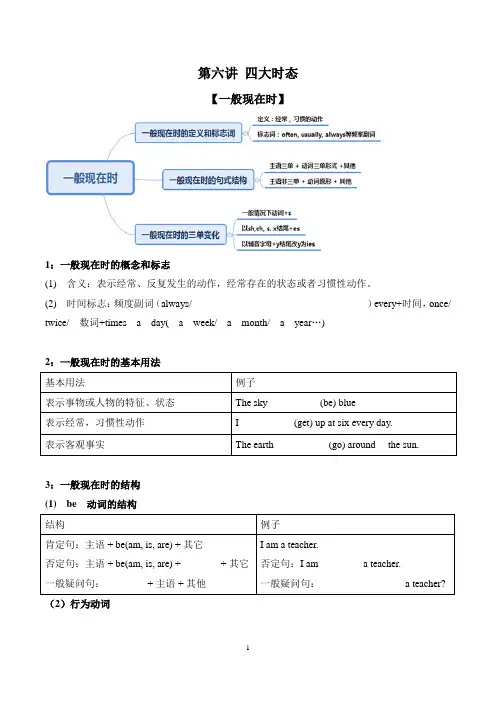
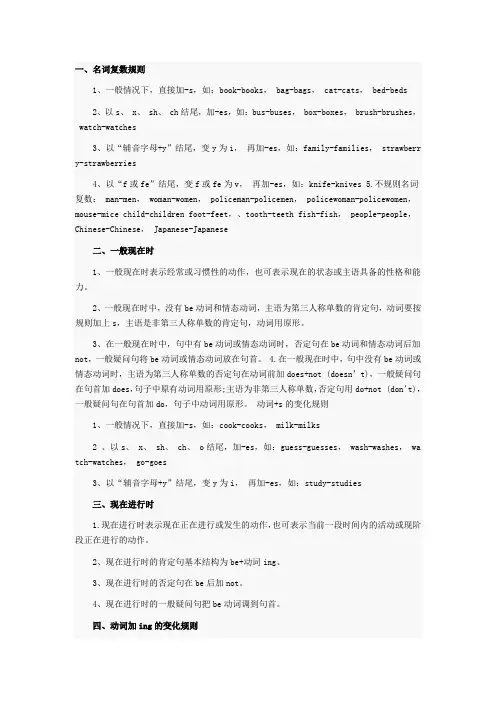
一、一般现在时
表示经常性或习惯性的动作。通常会与Usually, often , every, sometime,always 搭配。
1、一般现在时的构成
1)、肯定句
a、be动词: 主语+be动词(am, is, are)+其它。如:I am a boy.
b、行为动词:主语+行为动词+其它。 如:We study English.
当主语为第三人称单数(he, she,it)时,要在动词后加"-s"或"-es"。如:Mary likes Chinese.玛丽喜欢汉语。
练习
1. He often ________(have) dinner at home.
2. Daniel and Tommy _______(be) in Class One.
2)、否定句
a、be动词:主语+be动词+not+其它。如:He is not a student.
b、行为动词:主语+don’t(doesn’t)+动词原形+其它。如:I don’t like you.
练习
3. We _______( watch) TV on Monday.(否定句)
4. Nick _______( go) to the zoo on Sunday.(否定句)
3)、一般疑问句
a、be动词:be动词+主语+其它。如:Are you a student?
b、行为动词:Do(Does) +主语+行为动词+其它。如:Do you often play football?
练习
5. ______ they ________(like) the World Cup?
6. you tired?
4)、特殊疑问句
特殊疑问句的结构是:特殊疑问词 + 一般疑问句。所以,动词的变化同一般疑问句。如:What is this?/ What do you like to do?
练习
7. What _______they often _______(do) on Saturdays?
8. What your favorite food?
2、主语为第三人称单数时,动词的变化
1.一般情况下,直接加-s,如:cook-cooks, milk-milks
2.以 结尾,加-es,如:guess-guesses, wash-washes, watch-watches, go-goes
3.以 , 再加-es,如:study-studies
练习
写出下列动词的第三人称单数
drink ________ go _______ stay ________ make ________
look _________ have_______ pass_______ carry
come________ watch______ plant_______ fly ________
study_______ brush________ do_________ teach
wash_______
3、一般现在时的功能
1.表示事物或人物的特征、状态。
如:The sky is blue.天空是蓝色的。
2.表示经常性或习惯性的动作。
如:I get up at six every day.我天天六点起床。
3.表示客观现实。
如:The earth goes around the sun.地球绕着太阳转。
巩固练习
说一说下列句子体现了一般疑问句的哪种功能。
1. The grass is green.
2. I go to school from Monday to Friday.
3. The sun rises in the east.
4. I usually take a walk after dinner.
5. He is a policeman.
1、用括号内动词的适当形式填空。
1. He often ________(have) dinner at home.
2. Daniel and Tommy _______(be) in Class One.
3. We _______(not watch) TV on Monday.
4. Nick _______(not go) to the zoo on Sunday.
5. ______ they ________(like) the World Cup?
6. What _______they often _______(do) on Saturdays?
7. _______ your parents _______(read) newspapers every day?
8. The girl _______(teach) us English on Sundays.
9. She and I ________(take) a walk together every evening.
10. There ________(be) some water in the bottle.
2、单项选择题。
( ) 1. My father always _______ up at half past six.
A. get B. gets C. Getting
( ) 2. ________ the boy ________ TV every day?
A. Do … watch B. Does … watches C. Does … Watch
( ) 3. Ben and Janet _________ Chinese and other subjects at school.
A. learn B. learns C. learning
( ) 4. A: ________ does Yongxian go to school? B: By bus.
A. How B. What C. Where
( ) 5. My mother _______ the housework every day.
A. did B. do C. does
( ) 6. The lion doesn’t _________ meat three times a day.
A. eats B. eat C. Eating
( ) 7. He ________ a model every week.
A. makes B. is making C. made
( ) 8. Does the cat ________ a mouse every hour? A. catch B. catching C. catches
( ) 9. What does he do? He usually ________ the earth to the hill.
A. carry B. carries C. carrys
( ) 10. My mother always _______ up at half past six.
A. get B. getting C. gets
二、一般过去时
一般过去时表示过去某个时间发生的动作或存在的状态,常和表示过去的时间状语连用。一般过去时也表示过去经常或反复发生的动作。通常会与过去的时间词搭配。如:last year; last night;
yesterday(+ morning, afternoon, evening), in + 过去时间词:in 1998等。
1、be 动词和助动词在一个般过去时中的变化
1)am 和 is 在一般过去时中变为was(was not
2) are 变为 were(were not)
3) 否定句和疑问句中的助动词do 变为 did(did not)
2、动词过去式变化规则:
1).一般在动词末尾加-ed,如:work-worked , cook-cooked
2).结尾是e加d,如:live-lived
3).末尾只有一个元音字母和一个辅音字母的重读闭音节,应双写末尾的辅音字母,再加 -ed,如:stop-stopped
4).以“辅音字母 y”结尾的,变y为i, 再加-ed,如:study-studied
5).不规则动词过去式:
am,is-was, are-were, do-did, see-saw, say-said, give-gave, get-got, go-went, come-came,
have-had, eat-ate, take-took, run-ran, sing-sang, put-put, make-made, read-read, write-wrote, draw-drew,
drink-drank, swim-swam, sit-sat
巩固练习
1、写出下列动词的过去式。
is\am_________ plant________ are ________
drink_________ play_______ go________ make ________
does_________ dance________ worry________ ask _____
taste_________ eat__________ put ______
kick_________ pass_______ do ________ 2、单项选择题。
1. What _____ you _______ last week? I bought a bag.
A. did ,buy B. did , bought C. do, buy D. do, bought
2.What did you see _________?
A. now B. every day C. these days D. just now