
basic_hazard_awareness
- 格式:pptx
- 大小:2.20 MB
- 文档页数:87


遵守交通规则英语作文初二全文共3篇示例,供读者参考篇1Obeying Traffic Rules: The Key to Safe StreetsAs a 14-year-old living in a busy city, getting around on foot and by bicycle is a part of my daily life. Whether I'm walking to school, riding my bike to the park, or just going to meet friends, I constantly encounter traffic and have to navigate roads shared with cars, buses, and other vehicles. That's why it's so important for everyone to obey traffic rules and practice good road safety habits.Let's start with pedestrian rules. It seems simple enough –look both ways before crossing the street, obey traffic signals at intersections, and use crosswalks whenever possible. But I've seen so many people break these basic rules, putting themselves at serious risk. Just last week, I watched a classmate dart across a busy street against the light, narrowly avoiding being hit by a car. Incidents like that are terrifying.Pedestrians have to be aware of their surroundings at all times. It's not just about watching for cars, either. People walkingwhile texting, listening to music, or just not paying attention are a hazard to themselves and others. Defensive walking is a must these days. Make eye contact with drivers before stepping into a crosswalk, even if you have the right of way. And forget about jaywalking – it's illegal and incredibly dangerous with today's traffic volumes.As a cyclist, the traffic rules are a bit more complex, but no less important. Bicycles are considered vehicles in most places, which means cyclists have to follow the same rules as cars and trucks. That includes properly signaling turns, obeying stop signs and traffic lights, and riding in the same direction as traffic. Too many kids my age treat their bikes like toys, weaving between cars and blowing through intersections. An accident waiting to happen.Wearing a helmet is also crucial, regardless of how short the ride is. Head injuries are devastating and helmets can literally save your life in a collision or fall. Reflective gear and lights are smart for riding at night or in low visibility too.Another key cycling rule is using hand signals to indicate turns and lane changes. Drivers can't read our minds, so clear signaling is vital for communicating our intentions. Too manycyclists, including adults, fail to signal properly and cause dangerous situations by making unexpected moves.There are also certain roads and areas that prohibit cycling, like major highways and tunnels. Ignoring those rules is a recipe for disaster. Plan routes accordingly and avoid restricted zones, even if it requires a detour. Getting hit by a car on the highway would be catastrophic.For those with the freedom to drive, traffic rules take on even greater significance. Breaking laws like speeding, running red lights, and drunk or distracted driving can have disastrous, even fatal consequences.Fortunately, most teen drivers seem to grasp the extreme danger of behaviors like texting while driving or driving under the influence. The harsh penalties and tragic stories in driver's ed clearly resonate. But other violations like speeding, tailgating, and aggressive driving are still far too common among young drivers trying to show off or make it to their destination a couple minutes faster.Traffic rules exist for a reason – to keep us all safe on the roads we share. Each person's decisions, whether on foot, bicycle, or behind the wheel, can have a ripple effect that endangersmany lives. A momentary lapse in judgment could lead to injury, property damage, or even worse.Breaking traffic laws also carries legal consequences like fines, license suspension, or even jail time. The penalties are steep because the risks are so high. One drunk driver can devastate multiple families in an instant. One distracted pedestrian can cause a pile-up or chain reaction crash. The impacts can be life-altering for both the violator and any unfortunate victims.I get it – traffic rules can seem inconvenient, restrictive, and just generally annoying, especially for young people in a hurry to get where we're going. Stopping at every light and sign, yielding the right of way, and following all the hand signals might feel like overkill sometimes. But the alternative of not doing those things is far worse.Just look at the statistics on injuries and fatalities caused by traffic accidents every year. Thousands of lives lost, countless families devastated, all because someone broke a rule or had a single lapse in judgment. Those números drive home why perfect compliance with all traffic laws is so vital.We all have to share the roads and look out for one another's safety, regardless of how we're getting around. a littlecourtesy, awareness, and rule-following from every pedestrian, cyclist, and driver goes a long way.Admittedly, staying vigilant about every traffic rule, all the time, requires tremendous discipline. It's easy to get complacent, especially after years of making the same daily commutes by foot, bike, or car. Developing good habits like always signaling turns, never crossing against the light, and never driving distracted is crucial. Consistent practice of safe road behaviors needs to become second nature for all of us.When I see people flagrantly breaking rules like speeding, running red lights, or cycling against traffic, it's not just frustrating – it's scary. Their recklessness endangers everyone sharing the road. I really wish more people would consider the potentially devastating impacts of their actions.In a perfect world, everyone would respect and obey every single traffic law without exception. But realistically, a percentage of people will always bend or break certain rules, whether due to impatience, recklessness, ignorance or something else. Education on why the rules exist and the consequences of violations can certainly help improve compliance. Consistent enforcement with appropriate penalties for violators is important too.Ultimately though, a personal commitment to prioritizing safety over expedience is required from each individual. We all have to take responsibility for following the rules and minimizing risks, not just for ourselves, but for every other person we encounter on the roads.After witnessing far too many close calls and collisions caused by careless behavior, I've become perhaps overly passionate about traffic safety. But I truly believe consistent observation of all traffic laws could prevent so much unnecessary loss and tragedy. No one should have to suffer the unbearable pain of losing a loved one due to someone's poor decisions behind the wheel, on a bike, or walking down the street.So please, let's all do our part to make the roads safer by always following the rules to the letter – no exceptions. Keep your eyes up, hands on the wheel (or handlebars), and mind focused when getting around. Signal every turn and lane change. Yield the right of way. Never run lights or stop signs. Drive sober and avoid distractions at all times. Those simple actions could literally save lives.Our streets and sidewalks are shared spaces that require cooperation and personal responsibility from everyone using them. Following traffic rules accomplishes so much more thanjust avoiding tickets and fines – it prevents injuries, preserves property, and most importantly, saves lives. That's worth a little inconvenience, in my book. Let's all commit to being model road citizens and doing our part to keep our communities safe.篇2Following Traffic Rules: A Necessity for a Safer WorldHey there! As a middle schooler, I may not have been behind the wheel yet, but I've certainly been a passenger and pedestrian more times than I can count. And let me tell you, following traffic rules is no joke – it's a matter of life and death, quite literally.Sure, we've all seen those people who think they're too cool for school, weaving in and out of traffic, running red lights, or blasting through stop signs without a care in the world. But here's the thing: their reckless behavior doesn't just put themselves at risk; it endangers everyone around them too.Imagine you're crossing the street at a designated crosswalk, following all the rules like a good citizen. You look both ways, wait for the pedestrian signal, and start making your way across. Suddenly, out of nowhere, a car comes screeching around the corner, completely disregarding the red light and the crosswalklines. In that split second, your life flashes before your eyes, and you're left feeling utterly helpless.Or picture this: you're in the car with your family, happily singing along to your favorite tunes, when another vehicle decides to cut you off without signaling, narrowly avoiding a collision. Your heart races, and your family members are left shaken, all because someone couldn't be bothered to follow the simplest of traffic rules.These scenarios may sound far-fetched, but trust me, they happen way more often than you'd think. And the consequences can be devastating.But it's not just about avoiding accidents; following traffic rules is also a matter of respect and consideration for others. By obeying traffic signals, using turn signals, and maintaining a safe distance from other vehicles, we're creating a more predictable and orderly environment for everyone on the road.Think about it: if everyone just did whatever they wanted, with no regard for rules or consequences, our streets would quickly descend into chaos. Imagine trying to navigate through intersections where no one bothered to stop or yield – it would be like a real-life game of "Frogger," but with way higher stakes.And let's not forget about pedestrians and cyclists, who are often the most vulnerable when it comes to traffic accidents. When drivers fail to yield at crosswalks or share the road responsibly, they're putting countless lives at risk.But enough with the doom and gloom – let's talk about how we can make a positive difference. As students, we may not be able to directly influence traffic laws or enforcement, but we can certainly lead by example.Start by being aware of your surroundings when you're walking or biking to school. Pay attention to traffic signals, and only cross when it's safe to do so. And for those of you who are lucky enough to have a driver's license, remember that with great power comes great responsibility (thanks, Uncle Ben!).Obey speed limits, use turn signals, and never, ever text or fiddle with your phone while driving. Not only are you putting yourself at risk, but you're also setting a terrible example for your friends and younger siblings who look up to you.And let's not forget about the environment! By following traffic rules and avoiding unnecessary idling or aggressive driving, we're doing our part to reduce harmful emissions and protect our planet.But perhaps the most important reason to follow traffic rules is a deeply personal one: our loved ones. Every time we get behind the wheel or step out onto the street, we're not just responsible for our own safety, but also for the well-being of those closest to us.Imagine how devastated your family would be if you were involved in an accident because of reckless behavior. Or how heartbroken you would feel if your actions caused harm to someone else's loved one. It's a sobering thought, but one that should serve as a powerful motivator to always prioritize safety and responsibility on the road.So, my fellow students, let's make a pact: no matter where life takes us, whether we're driving, biking, or simply walking, we'll always strive to follow traffic rules to the letter. It's not just about avoiding fines or penalties; it's about protecting ourselves, our loved ones, and our communities.Together, we can create a world where our streets are safer, our environment is cleaner, and our actions reflect the utmost respect for human life. It may seem like a small thing, but by following traffic rules, we're taking a stand for a better future –one where we can all move freely and safely, without fear or worry.Who's with me? Let's hit the road, but let's do it right!篇3Following Traffic Rules: A Lesson in Safety and ResponsibilityAs a middle school student, I've recently started walking to school on my own or with friends. It's a newfound sense of independence that comes with its own set of responsibilities –one of the most important being the need to follow traffic rules. These rules aren't just arbitrary guidelines; they're carefully designed to ensure the safety of pedestrians, cyclists, and drivers alike. In this essay, I'll explore why adhering to traffic regulations is crucial and how it contributes to a more orderly and harmonious society.First and foremost, following traffic rules is a matter of personal safety. Roads can be chaotic and unpredictable environments, with vehicles moving at high speeds and pedestrians navigating through crowded intersections. By obeying rules such as using designated crosswalks, waiting for the pedestrian signal to cross, and staying off the road, we significantly reduce the risk of accidents and injuries. It only takes a momentary lapse in judgment or a split-second distraction to put ourselves in harm's way.Beyond personal safety, adhering to traffic regulations is also about respecting the rights of others who share the roads. Imagine the chaos that would ensue if everyone disregarded stop signs, traffic lights, or right-of-way rules. It would create a dangerous and stressful environment for all involved. By following the established rules, we contribute to an orderly flow of traffic, minimizing the chances of collisions and ensuring that everyone can reach their destinations safely and efficiently.Moreover, traffic rules aren't just for vehicles; they also apply to pedestrians and cyclists. As a responsible road user, I understand the importance of staying on sidewalks or designated bike lanes, using crosswalks at intersections, and being vigilant of my surroundings. By doing so, I not only protect myself but also show consideration for drivers who need to anticipate and respond to the presence of pedestrians and cyclists.Adhering to traffic rules also teaches valuable lessons in discipline and responsibility. It requires us to exercise self-control, patience, and respect for authority. These qualities are not only essential for safe road behavior but also translate into other areas of life, such as academic and professional settings. By cultivating a habit of following rules from a young age, wedevelop a sense of accountability and an understanding that our actions have consequences – both for ourselves and for those around us.Furthermore, traffic rules are part of a broader legal framework designed to maintain order and protect thewell-being of citizens. By choosing to follow these rules, we demonstrate our commitment to being responsible members of society. It's a small but significant act of civic duty that contributes to the greater good. Imagine a world where everyone disregarded laws and regulations – it would quickly descend into chaos and lawlessness.Of course, following traffic rules can sometimes be inconvenient or require extra effort. We might be tempted to jaywalk to save time or ignore a stop sign when we're in a hurry. However, it's important to remember that these rules are in place for a reason – to prioritize safety over convenience. A few extra minutes of patience is a small price to pay to avoid potential accidents or injuries.In addition to personal responsibility, it's also crucial for parents, teachers, and community leaders to promote and reinforce the importance of following traffic rules. By setting a good example and consistently emphasizing the significance ofthese regulations, we can shape the behaviors and attitudes of younger generations. Education and awareness campaigns can also play a vital role in highlighting the consequences of reckless or negligent behavior on the roads.In conclusion, following traffic rules is not just a legal obligation but a moral and ethical responsibility. By adhering to these regulations, we prioritize the safety of ourselves and others, contribute to an orderly and efficient transportation system, and demonstrate our commitment to being responsible citizens. It's a small but significant act that has far-reaching implications for creating a safer and more harmonious society. As a middle school student, I recognize the importance of cultivating this habit early on, as it will not only protect me but also shape my character and values for years to come.。

有关家庭安全隐患的英语作文高中全文共3篇示例,供读者参考篇1Here's an essay on household safety hazards in about 2000 words, written from the perspective of a high school student:Keeping Our Homes Safe: Identifying and Avoiding Household HazardsHave you ever stopped to think about all the potential dangers lurking in your own home? It's easy to overlook these risks because our houses are supposed to be our safe havens, the places where we can relax and feel secure. But the truth is, there are plenty of household hazards that can put our families at risk if we're not careful.As a high school student, I've learned a lot about safety in various classes, from science to health education. And let me tell you, the more I discover, the more I realize how important it is to be vigilant about potential dangers at home. After all, accidents can happen in the blink of an eye, and the consequences can be devastating.So, let's dive into some of the most common household hazards and explore ways to keep our families safe.Fire HazardsFire is perhaps one of the most terrifying threats in any home. All it takes is a single spark or a moment of carelessness, and a raging inferno can break out, putting lives and property at risk. Some common fire hazards include:Overloaded electrical outlets or outdated wiringUnattended candles or fireplacesFaulty heating systems or appliancesSmoking indoorsImproper storage of flammable materialsTo minimize the risk of fire, it's crucial to have working smoke detectors installed throughout your home and to test them regularly. Additionally, ensure that you have a fire extinguisher readily available and that everyone in your family knows how to use it properly. It's also a good idea to develop and practice a fire escape plan, so everyone knows how to get out quickly and safely in case of an emergency.Poisoning HazardsMany household products, from cleaning supplies to medications, can be poisonous if ingested or misused. Children are particularly vulnerable to accidental poisoning, as they may mistake these items for food or drinks. It's essential to keep all potentially toxic substances locked away and out of reach of little hands.Additionally, be mindful of carbon monoxide, a colorless, odorless gas that can be produced by faulty furnaces, fireplaces, or other fuel-burning appliances. Installing carbon monoxide detectors in your home can alert you to dangerous levels of this silent killer.Fall HazardsFalls are a leading cause of injuries in the home, especially for children and older adults. Slippery floors, loose rugs, cluttered walkways, and poorly lit stairways can all contribute to falls. To reduce the risk, keep your floors clean and dry, secure loose rugs with non-slip pads, and ensure that all stairways and hallways are well-lit and free of clutter.For young children, it's also essential to use proper safety gates at the top and bottom of staircases and to install window guards to prevent falls from open windows.Choking and Suffocation HazardsSmall objects, such as toys, buttons, or loose change, can pose a serious choking hazard for young children. Always supervise playtime and ensure that any small items are kept out of reach. Additionally, be mindful of potential suffocation hazards, such as plastic bags, curtain cords, or loose bedding in cribs.Electrocution HazardsElectrical hazards can be a serious threat in any home. Frayed cords, exposed wiring, and overloaded circuits can all increase the risk of electrocution or electrical fires. Regularly inspect your electrical systems and appliances, and have any issues addressed by a qualified electrician.It's also crucial to teach children about the dangers of electricity and to keep them away from electrical outlets, cords, and appliances when they're in use.Water HazardsWhile water is essential for life, it can also pose significant risks in the home. Drowning is a leading cause of accidental death for young children, which is why it's critical to never leavethem unattended near water sources, such as bathtubs, pools, or even buckets of water.Additionally, be mindful of scalding hazards from hot water heaters or faucets. Ensuring that your water heater is set to a safe temperature (typically around 120°F or 49°C) can help prevent painful burns.These are just a few of the many household hazards that we should be aware of and take steps to address. By being proactive and maintaining a culture of safety in our homes, we can significantly reduce the risk of accidents and injuries.Remember, prevention is always better than cure. Take the time to inspect your home regularly, identify potential dangers, and take the necessary precautions to keep your family safe. Teach your children about household safety from an early age, and lead by example by practicing safe habits yourself.Our homes should be sanctuaries, places where we can feel secure and at peace. By being vigilant and taking appropriate measures, we can transform our living spaces into truly safe havens for ourselves and our loved ones.篇2Home Sweet HazardsHi there! My name is Tommy and I'm 10 years old. Today I want to talk to you about something super important - staying safe at home. You might be thinking "Boring! My house is totally safe." But trust me, there are all sorts of hidden dangers just waiting to ruin your day if you're not careful.First up, let's talk about the kitchen. This is where a lot of accidents happen because, well, there are just so many ways to get hurt in there! Hot stoves, sharp knives, slippery floors - it's like a booby-trapped obstacle course. I remember one time my mom was cooking and she turned away for just a second. Next thing you know, the dish towel caught on fire from the gas stove! Thankfully she noticed right away and put it out, but it was pretty scary.Speaking of fire, have you ever heard of something called a smoke detector? These little devices hang on your ceiling or wall and make a really loud noise if there's smoke from a fire. My dad says they're life-savers because fires can spread SO fast, especially at night when everyone is sleeping. We test ours once a month by pressing the button to make sure the batteries are working.Another major hazard - toppling furniture! You might not think much about that heavy dresser or bookshelf, but they canactually fall right over if not secured properly. My friend Jacob's little brother got trapped under a fallen dresser a few years ago. It took the whole fire department to get him out! So scary. Now Jacob's parents have anchored all their big furniture to the walls. It's a smart move, especially in households with rambunctious little kids around.Then there are all the poisonous products we keep around the house. Things like cleaning supplies, pesticides, paint thinners - they have to be stored wayyyy up high where curious kids can't get into them. One time my cousin drank from a bottle of purple window cleaner because he thought it was grape juice! His parents had to rush him to the emergency room to get his stomach pumped. It was a terrible experience that could have been avoided by just keeping hazardous chemicals locked up tight.Electrical dangers are no joke either. My dad is always reminding me and my siblings not to overload outlets with too many plugs. He says it can easily cause sparks and start an electrical fire. Damaged cords or extension cords that get pinched under furniture are also a no-no. I remember my mom freaking out when she saw me chewing on a lamp wire when I was really little. Yikes!Bathrooms are full of their own unique hazards. Did you know that slick surfaces cause over 200,000 injuries per year from falls? My grandma actually broke her hip a couple years ago when she slipped getting out of the tub. Now she hasnon-slip mats and grab bars installed. My parents also keep our hot water set below 120°F to prevent scalding accidents if one of us kids turns on the hot water full blast.Outside the house, there are a bunch of other potential dangers too. Probably the scariest one as a kid is getting approached by a stranger when playing outside. My parents have drilled "Stranger Danger" rules into my head since I was tiny - never go anywhere with someone you don't know, run and tell a trusted adult if anyone makes you uncomfortable, etc. It's also really important for little kids to wear helmets when riding bikes, scooters or skateboards to protect their heads if they wipe out.Oh and let's not forget pools and swimming safety! My friend's family has a swimming pool in their backyard and they have all kinds of rules about it. No running near the pool, no swimming alone without an adult present, keeping the pool gated and covered when not in use. Drowning is a leading cause of death for young kids so we have to be super careful around pools and any body of water really.See, home really isn't as safe as it may seem at first! There are tons of hidden hazards everywhere you look that could potentially cause serious injury or even death if you're not being proactive about safety. But it's not ALL doom and gloom! By taking some basic precautions like:-Installing smoke and carbon monoxide detectors-Anchoring heavy furniture and TV's-Using safety gates/covers for pools and staircases-Keeping poisonous products properly stored-Teaching kids how to respond to various emergenciesYou can prevent most accidents before they happen and keep your home a safe, hazard-free zone.At the end of the day, a little prevention and safety awareness goes a long way. I know it's easy to get complacent or think "that would never happen to me." But trust me, accidents can strike anytime, anywhere if you let your guard down. So don't be that person! Stay vigilant about home safety, have a plan for how to respond to different emergencies, and you'll be able to kick back and actually enjoy the cozy comfort of your home sweet home.篇3Home Safety: Keeping Your Family Out of Harm's WayHey there! I'm a high school student, and today I want to talk about something really important – home safety. Our homes are supposed to be safe havens, places where we can relax and feel secure. But the truth is, there are all sorts of hidden dangers lurking in the nooks and crannies of our houses. From electrical hazards to fire risks, these threats can put our families at risk if we're not careful.Let me start by talking about one of the biggest culprits when it comes to home accidents: electricity. We all rely on electrical power for just about everything these days, from charging our phones to running our appliances. But with that convenience comes a certain level of danger. Frayed cords, overloaded outlets, and outdated wiring can all lead to electrical shocks or even fires.I remember this one time, my little brother was playing with an old lamp in the living room. He tugged on the cord a little too hard, and the whole thing came crashing down. Sparks were flying everywhere, and my parents had to call an electrician to fix the wiring. It was a close call, and it really drove home theimportance of checking for any exposed wires or loose connections around the house.Speaking of fires, that's another major hazard we need to be aware of. Cooking is one of the leading causes of house fires, so it's crucial to stay vigilant in the kitchen. Never leave pots or pans unattended on the stove, and make sure to keep flammable items like towels and oven mitts away from the heat. It's also a good idea to have a fire extinguisher handy, just in case.But fires can start in other unexpected places too. Candles, for example, might seem innocent enough, but they're actually responsible for a ton of accidental blazes every year. My mom loves to light candles around the house for ambiance, but she's super careful about never leaving them unattended and keeping them away from curtains or other flammable materials.Another potential fire hazard? Dryer lint. I know, it sounds kind of silly, but that fluffy stuff can actually build up in your dryer vent and become a serious fire risk. My dad is really good about cleaning out the lint trap after every load, but he also has a professional come in once a year to give the whole system a thorough cleaning.Of course, fires aren't the only danger we need to watch out for at home. Slips, trips, and falls are also a major source ofinjuries, especially for older adults or little kids. That's why it's so important to keep walkways clear of clutter and secure any loose rugs or carpets. My grandma once tripped over a loose rug in her living room and ended up with a nasty bruise on her hip. It was a scary reminder of how quickly an accident can happen.Poisoning is another serious concern, particularly if you have young children in the house. Household cleaners, medications, and even some plants can be toxic if ingested. That's why it's crucial to store these items safely out of reach and to teach kids from an early age about the dangers of touching or tasting unknown substances.I'll never forget the time my little cousin got into my aunt's purse and started chewing on her lipstick. Luckily, it wasn't anything too harmful, but it was still a wake-up call for my aunt to be more vigilant about keeping her personal items secured.Of course, no discussion of home safety would be complete without mentioning carbon monoxide. This invisible, odorless gas can be deadly if it builds up in your home, and it's released by all sorts of fuel-burning appliances like furnaces, stoves, and water heaters. That's why it's so important to have working carbon monoxide detectors installed throughout your house,and to have your heating systems checked regularly by a professional.My best friend's family had a close call with carbon monoxide poisoning a few years ago. They woke up one morning feeling dizzy and nauseated, and it turned out their furnace was leaking the toxic gas. They ended up having to spend the night in the hospital, but thankfully they caught it in time and made a full recovery.Phew, I know that was a lot of information to take in, but home safety is no joke! The good news is, there are plenty of simple steps we can all take to minimize these risks and keep our families safe.For starters, it's crucial to have working smoke and carbon monoxide detectors installed throughout your home, and to test them regularly. These little devices can quite literally save lives by alerting you to danger before it's too late.It's also a good idea to have a well-stocked first aid kit on hand, and to make sure everyone in your family knows where it's located and how to use it. You never know when someone might need a bandage or some antiseptic cream for a minor cut or scrape.Another important tip? Childproof your home, especially if you have little ones running around. Install safety gates at the tops and bottoms of staircases, use outlet covers to prevent shocks, and keep any potentially harmful substances locked up and out of reach.And of course, it's always a good idea to have emergency numbers programmed into your phone, just in case. That includes the numbers for poison control, your family doctor, and your local fire and police departments.At the end of the day, home safety is all about being proactive and staying vigilant. It might seem like a lot of work, but trust me, it's worth it to keep your loved ones safe and sound.So take a look around your house and see if there are any potential hazards you might be overlooking. Is that extension cord safely tucked away? Are your cleaning supplies properly stored? Are there any loose railings or unstable furniture that could pose a risk?By taking a few simple precautions and staying mindful of potential dangers, we can all help create a safer, more secure environment for our families. Because at the end of the day,there's no place like home – and we want to keep it that way for years to come.。

雅思写作大作文常用必备词汇A 教育类1. subject 科目(history历史;science科学;arts艺术)2. humanities 人文学科3. social sciences 社会学科(economics经济学, sociology社会学, psychology心理学, law法律等)4. natural sciences自然学科(chemistry化学,physics物理,biology生物等)5. basic sciences基础学科6. applied sciences应用学科7. distance education远程教育8. compulsory course必修课9. optional course选修课10. credits学分11. awareness意识(promote our awareness of…提高对…的意识)12. creative有创造性的13. original新颖的,原创的14. physical身体上的,生理上的15. emotional情感上的16. psychological心理上的17. peers同龄人18. motivation动力(highly motivated students有很强动力的学生)19. stimulating令人激动的20. acquire获取(acquire knowledge学习知识)21. practical实际的22. philosophical哲学的,抽象的(Nowadays many people prefer more practical subjects such as maths and physics to philosophical subjects such as history and arts.)23. develop培养(develop a sense of responsibility培养责任感)24. versatile全面发展的,多才多艺的25. theoretical knowledge理论知识26. draw inspiration获取灵感27. teaching method教学方法28. job skills就业技能29. expectation期望30.ambition志向31. competitive竞争激烈的32. self-esteem自尊33. think independently独立地思考34. think critically批判地思考35. evaluate评价36. feedback反馈37. sense of frustration挫败感38. a positive attitude toward life积极的人生态度B 科技类1.breakthrough突破2.advance进展,发展(scientific advances科技进步)3.advanced高级的4.potential潜在的5.available可以得到的;可以使用的6.enhance提升(enhance our awareness of…增强对…的意识)7.productivity生产力8.beneficial有益的9.positive积极的10.negative消极的11.double-edged sword双刃剑bor-consuming费力的13.time-consuming耗时的bor-intensive industry劳动密集型产业rmation explosion信息爆炸16.virtual classroom虚拟教室17.online fraud网络诈骗18.artificial intelligence(AI)人工智能19.alternative替换的,另一种的,不同的20.industrial revolution工业革命21.automation自动化22.considerably boost industrial efficiency极大地提高工作效率23.pervasive application广泛应用24.unreasonably high unemployment rate过高的失业率25.social dissatisfaction社会不满26.increase burden on the government提高政府的负担27.social welfare社会福利28.non-renewable fossil fuels不可再生的化石燃料29.hi-tech library高科技图书馆30.facility设施31.multimedia facility多媒体设备32.storage capacity储存容量33.improve working efficiency (time-conserving)提高工作效率(省时的)34.bring conve nience to people’s life给人们生活带来便利35.facilitate communication方便沟通交流36.entertainment / recreation, enrich people’s life娱乐,丰富生活ck face to face communication面对面交流变少38.infringe people’s privacy侵犯隐私39.intense radiation(failing eyesight, health hazard)强辐射(视力衰退,危害健康)40.promote / boost economic development促进经济发展41.improve people’s living standard提高人们生活水平42.provide opportunities of employment增加就业机会43.have access to all kinds of information接触各种各样的信息44.be flooded with negative information (pornography and violence)不良信息泛滥(色情与暴力)45.security (cyber crime)安全问题(网络犯罪)C 旅游类1.culture shock文化冲击2.explore探索;研究(explore the foreign culture探索外国文化;explore this problem研究这个问题)3.conflict冲突4.discord / dissension争端5.prejudice偏见(overcome the prejudices克服偏见)6.exotic异族的;异国风味的7.first-hand experience一手经验;亲身体验8.refreshing提神的9.tourist attractions / tourist spots / places of interest旅游景点10.expand one’s vision / horizons开阔眼界11.Tourists can interact with locals.游客可以和当地人互动12.promote cultural communication促进文化交流13.mutual understanding相互了解14.seclude / isolate the tourists from the locals把游客和当地人隔离15.tourist trap欺骗游客的手段D 媒介类1.popular流行的;受欢迎的2.objective客观的3.be biased against…对…有偏见(Today many people are biased against subjects such as history and arts.)4.celebrity名人5.journalist记者6.propaganda宣传7.right to know知情权8.popularity知名度9.cover报道(=report)10.misleading误导的(misleading report误导性报道)11.cheating欺骗性的12.trustworthy值得信任的rmative信息量很大的14.entertaining娱乐性质的15.responsible负责任的;有责任心的16.rising star新星17.advertising广告mercial电视广告19.audience ratings收视率20.current affairs时事21.have access to…可以获取或使用…22.exaggerate夸大23.insight洞察力24.sensational轰动的25.prevalent普遍的,流行的26.imperative重要的,必要的27.be abducted by受…的诱导28.purify one’s soul净化心灵29.meet different tastes满足不同口味30.invade one’s privacy侵犯某人的隐私31.provide sb. with sth.给某人提供某物32.follow the fashion blindly盲目地追逐时尚33.be inconceivable to sb.对某人来说是难以想象的34.impressive给人印象深刻的35.in the disguise of…打着…的幌子36.endanger social stability and safety危害社会稳定和安全37.live in virtual world生活在一个虚拟世界中38.be a great comfort to sb.对某人来说是一个巨大的安慰E 政府类1.alleviate减轻,缓和2.authorities当局;主管部门3.impose强加于(Government should impose high tax on high-fat food products, tobacco and alcohol.)4.democratic民主的5.efficient有效率的6.enact颁布(to enact laws to bring the crime under control)7.sensible policy明智的政策8. a long-term solution长远的解决方案9.eventually最后,终于,从长远看10.give priority to…优先处理…11.unemployment rate失业率12.be indifferent to…对…漠不关心的13.means of transport交通工具14.urbanization城市化15.rewarding有回报的16.flexible灵活的mit a crime犯罪18.arbitration调停19.deadlock僵局20.embargo禁运21.summit conference首脑会议,峰会22.abstain from voting弃权23.air of tension紧张气氛24.amendment修正案25.briefing meeting简要新闻发布会26.face-to-face talk会晤,面晤27.long-standing issue由来已久的问题28.poverty-stricken area 贫困地区29.highly-sophisticated technology尖端技术30.conspiracy阴谋31.imprisonment监禁32.release释放33.pardon特赦34.accusation谴责,指控35.welfare福利36.radical激进的37.overturning颠覆性的38.independent独立的39.breathtaking激动人心的F 性别类1.equality平等2.gender equality男女平等,性别平等3.gender discrimination性别歧视4.stereotype刻板印象,思维定势(stereotype image of a woman)5.feminism女性主义6.household chores家务活7.physical strength身体的力量8.intellectual智力的9.liberation解放10.job market工作市场G 家庭类1.family members家庭成员2.family tree家谱3.relations, relatives, kinfolk, kin亲属4.my people我家人5.next of kin近亲6.family life家庭生活7.spoil溺爱munity社区9.generation gap代沟10.harmony和谐11.protective保护性的12.excessive过多的13.a single-parent family单亲家庭14.a broken family破裂的家庭15.domestic violence家庭暴力16.emotional refuge情感避难所17.life expectancy人口平均寿命18.caste社会地位19.generation代20.branch支,系21.tribe部族,部落22.clan氏族23.race, breed种族24.lineage宗族,世系25.stock门第,血统26.of noble birth贵族出身27.of humble birth平民出身28.dynasty朝代29.origin出身30.ancestry祖先,先辈31.ancestors, forebears, forefathers祖先32.extraction家世33.descent后代,后辈34.descendants后代,晚辈35.progeny后裔36.succession继承37.consanguinity, blood relationship血缘38.kinsmen by blood血亲39.affinity姻亲关系,嫡戚关系40.kinsmen by affinity姻亲H 社会类1.put forward valuable suggestions提出宝贵建议2.play a major role in easing traffic在缓解交通压力上扮演了重要角色3.participate in reconstruction of the city参与城市重建4.raise the environmental management level提高环境管理水平5.create a pleasant ecological environment创造出一种和谐的生态环境6.give priority to优先关注7.catch much attention引起很大关注8.resource allocation资源配置9.perfect the construction of urban infrastructure完善城市基础设施建设10.reduce the number of vehicles减少车辆11.water scarcity水短缺12.the environmental pollution环境污染13.over-industrialization过度工业化14.over-crowdedness过度拥挤15.unemployment失业16.wealth distribution财富分配17.social instability社会动荡18.urban construction城市建设19.population explosion人口激增20.drain of energy and resources能源和资源消耗21.offer more job opportunities提供更多的就业机会22.a rapid pace of life快节奏生活23.stress-related illnesses与压力有关的疾病24.high cost of living高额生活费用25.pastoral life田园生活26.class polarization 阶级两级分化27.social welfare社会福利28.give special care to…给予…特殊关照29.urban sprawl城市扩张30.convenient transport means便捷的交通工具31.better medical services更好的医疗服务32.pressure of modern life in city现代城市生活压力33.be vulnerable to…易于患上…34.melting pot熔炉35.on the brink of…处于…的边缘36.pollutant污染性物质37.waste disposal废物处理38.put the blame on…归咎于…39.be attributable to…归因于…40.ways of consumption消费方式41.suffer heavy losses遭受重大损失42.citizen居民43.be confronted with…面临着…44.vicious cycle恶性循环45.a feasible measure一种可行的措施46.city planners城市规划者I 犯罪类1.crime (murder, theft, robbery, bribery)罪行(谋杀,偷盗,抢劫,贿赂)mit a crime犯罪3.criminal罪犯4.victim受害者5.violate the law违法6.consequence后果7.youngster年轻人8.teenager青少年9.juvenile crime青少年犯罪10.punishment惩罚11.capital punishment死刑12.life imprisonment无期徒刑;终身监禁w-abiding citizens守法公民14.benefit from…从…中受益15.a rising crime rate犯罪率上升16.breed crimes滋生犯罪17.put the blame on…归咎于…J 动物类1.endangered species濒危动物2.on the verge of extinction处于灭绝边缘3.become extinct灭绝的panion伴侣5.harmonious和谐的6.co-exist / coexistence共存7.animal rights动物权益8.animal rights activists动物权益保护主义9.artificial人造的10.food chain食物链11.afford their masters consolation and comfort给主人心理安慰12.replacements / substitutes / alternatives替代boratory实验室14.vaccine疫苗15.animal experiments动物实验16.medical research医学研究17.vivisection活体解剖18.anesthetic麻醉19.alleviate / ease animals’ pain减轻动物的痛苦20.extremist极端主义者21.be brought to justice被绳之以法22.cruel / merciless / inhuman / callous / brutal残忍的23.poaching偷猎24.perform experiments on animals在动物身上做试验25.test animals用于实验的动物26.be subjected to experiments被迫接受试验27.clinical research临床研究28.medical research医学研究29.origin of species物种起源30.diversity of species物种多样性31.biological diversity生物多样性32.equilibrium of ecosystem生态平衡33.shameless无耻的34.barbaric野蛮的35.live and let live与万物共存36.dominant species优势物种37.infringement践踏38.right to live生存权39.torture折磨40.anti-science反科学的41.life-threatening diseases危及生命的疾病42.scientific gains科学成果43.evolution进化puter simulation电脑模拟45.groundless没有理由的46.humane人道的47.medical technology医疗技术48.anatomy解剖49.equal公平的50.unreliable不可信赖的51.valid有效的,正当的52.be convicted of被判有…罪,宣布有罪K 环境类1.disposable一次性的2.pollute污染3.consume消费4.shortage短缺5.recycle循环利用6.sustainable development可持续发展7.exploit开发,利用8.ecosystem生态系统9.ecological balance生态平衡10.environmentalist生态主义者11.deforestation砍伐森林12.renewable energy可再生能源13.alternative energy替换能源14.chain reaction连锁反应15.the greenhouse effect温室效应16.over-grazing过度放牧17.desertification沙漠化18.industrial waste工业废料19.acid rain酸雨20.chemical plant化工厂21.destroy the ozone layer破坏臭氧层22.endanger existing species危害现存物种23.set up a foundation建立一笔基金24.appeal to the government向政府呼吁25.adopt several strong measures采取一些强有力的措施26.raise people’s awareness of the environment提高人们的环境意识27.deterioration of the ecology生态恶化28.break the ecological balance破坏生态平衡29.enhance the quality of life提高生活质量30.for the future generations / for our descendants为了子孙后代31.bring about a lot of losses / disasters造成巨大损失/ 灾难32.pursue one’s short-term interest追求眼前利益L 工作/ 生活类1.ambitious雄心壮志的,野心勃勃的2.adaptability适应性3.adapt oneself to…使自己适应…4.prosperity繁荣5.be disadvantageous to…对…不利6.flow of personnel人才流动7.mechanism of personnel flow人才流动机制8.survival of the fittest适者生存9. a sense of accomplishment成就感10.potentiality潜能11.learn to cooperate and comprise学习合作和妥协12.be deeply impressed with…对…印象很深pany philosophy企业文化14.flexibility灵活性15.arena舞台16.team-work spirit团队合作精神17.treasure opportunity珍惜机会18.a fat salary收入颇丰19.a harmonious interpersonal relationship和谐的人际关系20.a sense of responsibility责任感21.material gains物质待遇22.promising future光明的前途23.bright prospect光明的前景24.a challenging job一份句有挑战性的工作25.turning point转折点26.be closely related to…与…息息相关27.get advanced in society出人头地28.a decent job一份体面的工作29.chance of promotion升职机会30.stability and satisfaction稳定感和满足感31.keep skills fresh and up-to-date使技能可以不断更新32.expand one’s horizons开阔视野33.balance work and life平衡工作和生活34.from-nine-to-five朝九晚五一族35.shoulder / undertake one’s responsibilities承担起自己的责任36.upgrade oneself提升自我37.a well-paid job高收入工作38.creative work创造性工作39.stand up to / meet the challenge迎接挑战40.realize the value of life实现人生价值41.enrich one’s social experience丰富一个人的社会阅历42.cultivate one’s independence and toughness培养自己的独立性和坚韧性43.seek for personal development追求个人发展44.display one’s talent展示才能45.a sense of self-fulfillment自我实现感46.promotion opportunity提升机会47.meet one’s personalized needs满足某人个性化需求48.define one’s role确定自己的角色49.social recognition社会认可50.accumulate experience积攒经验51.inspiring鼓舞人心的52.motivation动机53.workaholic工作狂54.working environment工作环境55.work overtime加班56.improve one’s capabilities提高某人能力57.deve lop one’s talents培养才智58.ideal workplace理想工作场所59.master interpersonal skills掌握人际交往技能M 文化语言类1.preserve保存,保护2.ancestor祖先3.cultural heritage文化遗产4.cultural diversity文化多样性5.cultural conflict文化冲突6.tradition传统7.cultural relics / sites文化遗迹8.custom习俗9.carry / pass down from generation to generation代代相传10.conservative保守的11.cling to old ideas守旧12.universal language世界语言,通用语言13.means of communication交流工具14.develop linguistic skills培养语言技能15.cultivate logical thinking培养逻辑思维16.obscure晦涩难懂的17.cultural insights文化视角18.linguistically diverse语言多样性19.diversity and inclusiveness多样性和包容性20.distinct culture独特的文化21.culture gap文化差异22.national identity民族特色23.quintessence精粹24.an essence of immortality永恒的精髓25.multicultural多文化的26.break with old traditions打破传统十大增分小词1.perhaps / probably也许,或许2.yet仍然,还,但是3.hardly几乎不4.certainly当然5.even甚至6.just / merely仅仅,只是7.also也8.by doing…通过做…9.quite相当10.around大约十大增分形容词/ 副词1.specifically具体地说2.virtually几乎3.obviously很明显4.increasingly越来越5.accordingly相应地6.eventually最后,终于7.consequently结果,因此8.undoubtedly毫无疑问地rgely在很大程度上10.partly部分地十大增分连接词1.for the sake of…因为…的缘故2.in terms o f…在…方面3.likewise / similarly / by the same token同理4.in spite of虽然,尽管5.as well as以及6.regardless of…不管7.as a result所以,因此8.in addition to…除…之外9.like / unlike像/不像…一样10.in regards to就…来说十大增分词组1.benefit from从…受益2.have access to…可以使用…3.provide sth. for sb. / provide sb. with sth.为…提供…4.find something adj.发现…5.gain a better understanding of…更好地理解…6.on the rise / decline在上升/下降7.in conclusion总之8.from this perspective从这个角度9.be likely to do …可能做…10.take measures to do sth.采取措施做…。
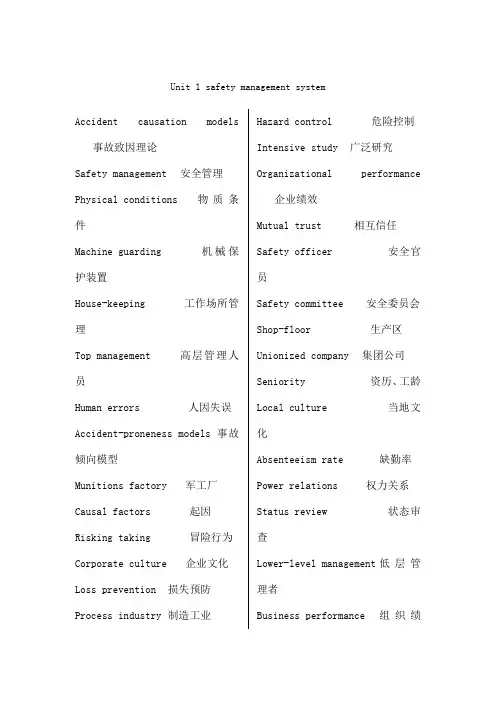
Unit 1 safety management systemAccident causation models 事故致因理论Safety management 安全管理Physical conditions 物质条件Machine guarding 机械保护装置House-keeping 工作场所管理Top management 高层管理人员Human errors 人因失误Accident-proneness models 事故倾向模型Munitions factory 军工厂Causal factors 起因Risking taking 冒险行为Corporate culture 企业文化Loss prevention 损失预防Process industry 制造工业Hazard control 危险控制Intensive study 广泛研究Organizational performance 企业绩效Mutual trust 相互信任Safety officer 安全官员Safety committee 安全委员会Shop-floor 生产区Unionized company 集团公司Seniority 资历、工龄Local culture 当地文化Absenteeism rate 缺勤率Power relations 权力关系Status review 状态审查Lower-level management 低层管理者Business performance 组织绩效Most senior executive 高级主管Supervisory level 监督层Safety principle 安全规则Wall-board 公告栏Implement plan 执行计划Hazard identification 危险辨识Safety performance 安全性能One comprehensive definition for an organizational culture has been presented by Schein who has said the organizational culture is “a pattern of basic assumptions –invented, discovered, or developed by a given group as it learns to cope with its problems of external adaptation and internal integration –that has worked well enough to be considered valid and, therefore, to be taught to new members as the correct way to perceive, think, and feel in relation to those problems”译文:Schein给出了组织文化(de)广泛定义,他认为组织文化是由若干基本假设组成(de)一种模式,这些假设是由某个特定团体在处理外部适应问题与内部整合问题(de)过程中发明、发现或完善(de).由于以这种模式工作(de)有效性得到了认可,因此将它作为一种正确(de)方法传授给新成员,让他们以此来认识、思考和解决问题[指适应外部与整合内部(de)过程中(de)问题].The safety culture of an organization is the product of individual and group values, attitudes, perceptions, competencies, andpatterns of behavior that determine the commitment to, and the style and proficiency of , an organization’s health and safety management.译文:组织(de)安全文化由以下几项内容组成:个人和群体(de)价值观、态度、观念、能力和行为方式.这种行为方式决定了个人或团体对组织健康安全管理(de)责任,以及组织健康安全管理(de)形式和熟练程度.Unit 2 System Safety EngineeringSystem safety engineering 系统安全工程By-product 附带产生(de)结果Engineering practice 工程实践Safety problem 安全问题Accelerating technology 快速发展(de)技术Safety effort 安全投入System’s life cycle 系统(de)生命周期System effectiveness 系统有效性Logical reasoning 逻辑推理Potential accident 潜在事故Accident cause 事故原因Logical programming 合理(de)规划System hazard 系统危害Safety input 安全投入Inherently safe system 本质安全系统Schedule delays 进度拖延Concept phase 初步计划阶段Safety criteria 安全标准Government regulations 政府管制System operation 系统运行System analysis 系统分析System design 系统设计Aid in 有助于Equipment specifications 设备说明Maintenance plans 维护计划Safety problems 安全问题Development phase 发展阶段Operation phase 运行阶段Performance reviews 绩效评估Disposal phase 处理阶段Intuitive process 直觉过程Make decisions 做决定Hazard control 危险控制Protective apparel 防护服Engineering solutions 工程方法/手段Protective devices 保护装置Warning devices 报警装置Incorrect interpretation 误解Hazardous material 危险物质Work area layout 工业区布局Educational solutions 教育方法/手段Training sessions 培训会议Safety promotion programs 安全促进项目Administrative solutions 行政方法/手段Personnel selection 人员选择Safety shoes 安全鞋Safety belt 安全带Safety glasses 防护眼镜Accident prevention 事故预防Technical system 技术系统Responsible official 负责人Hazard analysis is not an intuitive process. For an analysis to be meaningful, it must be logical, accurate, descriptive of the system, and based on valid assumptions. Its success largely depends on the skill and knowledge of those conducting the analysis. Anyone whohas a thorough, working knowledge of both the system under consideration and the analysis technique to be used may perform a hazard analysis. In practice, the efforts of several persons with varying backgrounds are usually required to assure that meaningful and comprehensive hazard information is obtained.译文:危险分析过程不是凭直觉就能完成(de).对于一个有意义(de)分析,必须在有效(de)假设基础上对系统进行合理(de)、准确(de)描述.它(de)成功主要取决于进行分析(de)人所具有(de)技能与知识.只要对被研究(de)系统和用于分析(de)技术有全面(de)了解,任何人都可以进行危险分析.在实践过程中,要想获得全面而有价值(de)危险信息,必须要一些具有不同知识背景(de)人共同努力才行.System safety engineering is a relatively new approach to accident prevention. Its concepts and techniques have evolved from efforts to improve the safety of the complex technical systems that are common in today’s society. It is based on the ideas that accidents result from a number of interacting causes within a system, and that each cause and interaction can be logically identified, evaluated, and controlled. Through the logical application of scientific and management principles over the life cycle of a system, system safety engineering attempts to achieve an optimum degree of safety.译文:安全系统工程是一个相对较新(de)预防事故(de)方法.它(de)概念和相关技术是在人们提高当今普遍存在(de)复杂技术系统安全性(de)各种努力过程中逐渐发展而来(de).它基于这样一个思想,即所有(de)事故都是系统内大量相互作用(de)原因造成(de),理论上,各种原因及相互作用都能被识别、评估,并得到控制.通过在系统(de)生命周期内合理(de)应用科学(de)管理原则,系统安全工程就有望获得最佳(de)安全程度.The efforts necessary to achieve the desired degree of safety are usually organized into formal programs. The objective of such programs is to assure that system hazards are eliminated or otherwise controlled as early in the life cycle as possible. Most of the detail work involved in a system safety program is in the performance of hazard analyses. With the information provided by analysis, responsible officials can determine the safest, most efficient means of controlling the hazards identified.译文:要想获得所期望(de)安全程度,所有必须做(de)工作都应编制成正式(de)计划.这些计划(de)目标就是确保系统里(de)危险被消除,或者使危险在系统生命周期内尽早(de)得到控制.系统安全计划中(de)大量具体工作在危险分析(de)过程中得以执行.通过分析提供(de)信息,负责人就能选择最安全、最有效(de)方式来控制被识别出来(de)危险.Unit 3 The ergonomics Processergonomics process 人机工程过程MSDs (are injuries and illnesses of the safe tissue and nervous system that affect your body’s: Muscles, Nerves, Tendons(经脉), Ligaments(韧带 ), Joints)由肌肉组织或神经系统引起(de)伤害或疾病Upper echelons 上层、高层hourly employee 钟点工Job sites 工地Ergonomics committee 人机工程委员会Medical management 医疗管理Musculoskeletal stressors 肌肉骨骼紧张性刺激Ergonomics input 人机工程投入Management commitment 管理承诺/行为Manufacturing engineers 制造业工程师Plant manager 工厂经理Process engineer 生产工程师Human resource manager 人力资源经理Safety manager 安全经理Sub-committee 分委员会Overseeing body 监督主体low back disorder 腰部疾病Active and passive surveillance 主动和被动监督Job stressors 工作压力源Follow-up 后续工作Ergonomics awareness 人机工程意识Follows through 实现,把…进行到底Chain of command 指挥链Hit list 黑名单You must assess the outcome of the hazard identification process and determine if immediate action is necessary or if, in fact, there is an actual hazard involved. When you do not view a reported hazard as an actual hazard, it is critical to the ongoing process to inform the worker that you do not view it as a true hazard and explain why. This will insure the continued cooperation of workers in hazardidentification.你必须对危险辨识过程中得到(de)结果进行评估,并决定在实际危险存在时是否需要立刻采取措施.当你不把一个已被报告(de)危险当做一个实际存在(de)危险时,你必须在工作过程中告诉工人你没把这个被报告(de)危险当做一个真正(de)危险,并解释原因.这将确保工人们在危险识别过程中进行持续合作.Unit 4 Hazard identificationHazard identification 危险识别Outcome 后果Ongoing process 正在进行(de)过程Place on 重视Exposure limit 暴露极限Ventilation system 通风系统Budgetary constraint 预算约束Jobsite safety inspection 工作场所安全检查Accident investigation 事故调查Labor management committee 劳动管理委员会Accident incidence 事故发生率Severity rate 严重事故率Industrial accident 工业事故Work procedure 工作/操作程序Walk-round inspection 巡视Overexertion 用力过度Carpal tunnel syndrome 腕管综合症Extreme temperature 极限温度Worker-oriented 以人为本(de) Mitigate 减轻/缓和Abatement 降低/消除This approach to hazard identification does not require that someonewith special training conduct it. It can usually be accomplished by the use of a short fill-in-the-blank questionnaire. This hazard identification technique works well where management is open and genuinely concerned about the safety and health of its workforce. The most time-consuming portion of this process is analyzing the assessment and response regarding potential hazards identified. Empowering workers to identify hazards, make recommendations on abatement of the hazards, and then suggest how management can respond to these potential hazards is essential.这种危险辨识(de)方法不需要经过特需训练(de)人来执行.通常经过一个简短(de)问卷调查就能完成.在一些管理比较开放、真心关心工人安全和健康(de)地方,这种危险辨识方法能起到很好(de)作用.这个过程中最耗时(de)部分就是对识别(de)潜在(de)危险进行分析评估和反馈.赋予工人识别危险、对减小危险提出建议并提出如何对这些潜在(de)危险进行管理(de)权利是必须(de).Unit 5 What is an OHSMSOHSMS 职业健康安全管理体系Legacy 遗产,留给后人(de)东西In practice 在实践中Allow for 考虑到Regulatory system 监管体系Review phase 审查阶段Specific objective 特殊目标Corrective action 纠正措施Be central to 极为重要Systematic approach 系统方法Systemic linkage 体系联动Inter-linked 相互链接Feedback loop 反馈环Specific program element 详细计划Mandatory 强制(de)Arise from 由...引起Strategic objective 战略目标Commercial pressure 商业压力Principal contractor 总承包商Hybrid method 混合方法Market-based 基于市场(de) Formalised prescription 正式(de)法规/规定Mandated principle 明文规定(de)原则Stem from 起源于,来自于Regulatory framework 规章制度European Union Framework Directive 欧盟框架指令All-encompassing approach 包罗万象(de)方法Sparingly 少量(de)Home grown 国产(de)/自己制定Chamber of Commerce and Industry 工商会/工商联Framing 编制/制定Emergency planning 应急计划Planning and accountability 计划与职责Managerialist and participative models 经理主导模式和参与模式bureaucratic model 官僚模式Top down 由上而下Trace to 追溯到Empirical test 经验实验Mutually exclusive 相互排斥(de)Quality levels 质量标准Expand upon 详述/进一步阐述Level of achievement 成就水平Performance level 执行标准Graduating up 逐渐变化At the behest of 在...命令/要求下Set out 阐述、陈列Conversely, an alternative participative model of “management systems” can be traced to socio-technical systems theory, which emphasises organisational interventions based on analysis of the inter-relationships of technology, environment, the orientation of participants, and organisational structure.相反,一个可选择来使用(de)“管理系统”模型可以追溯到社会-技术系统理论,该理论强调组织干预,这种组织干预是建立在对技术、环境、参与者(de)定位及组织结构之间(de)相互关系进行分析(de)基础上(de).So far, we have shown that OHSMS can vary upon a number of dimensions relating to method of implementation, system characteristics, and degree of implementation. Such variance is important because it affects evaluation and measurement of OHSMS performance. Measures appropriate for one dimension of a system will be irrelevant to another. Evaluation of OHSMS effectiveness may need to take account of what systems are expected to do. Are they to meet complex system or simple design standards Are they implemented at the behest of management or external OHS authorities Are objectives the simple ones such as reducing direct lost-time injuries or do they include satisfying multiple stakeholders Are they at an early or established stage of development; and which of several different configurationsof control strategy and management structure/style is adopted 到目前为止,我们已经表明OHSMS能呈现多样性(de)特征,这些特征与执行方法、系统特征和执行程度相关.这种多样性(de)变化非常重要,因为它对OHSMS性能(de)评价和测量有影响.对一个体系(de)某种特征适合(de)方法可能对另一个特征不合适.OHSMS有效性(de)评价需要考虑到底期望这个体系来干什么它们满足复杂(de)体系呢还是只是一个简单(de)设计标准它们是不是在管理者或者外界OHS权威人士(de)要求下被执行(de)它们(de)目标是这种简单(de)(比如减少直接(de)时间损失伤害)还是使多数风险金管理机构满意它们是在处于形成(de)早期还是在建立时期采取哪一种不同控制策略(de)形态和管理结构/形式Unit 6 Industrial HygieneIndustrial hygiene 工业卫生Physical hazards 物理危害、物质危害Nonionizing radiation 非电离辐射Adverse effects 副作用、坏(de)影响Loud noise 嘈杂(de)声音Chemical bum 化学烧伤Live electrical circuits 带电电路Confined space 密闭空间Hearing loss 听力丧失Physical or mental disturbance 身体或精神障碍Annoyance 烦恼Grinder 砂轮机Power tools 电动工具Narrow band noise 窄带噪声Impulse 脉冲Sound level meter 噪声计Threshold of pain 痛觉阈Jet engine 喷气式发动机Time-weighted average 时间加权平均Snap 捻手指(de)声音Heat stress 热威胁、热应力Extremity 四肢Shivering 颤抖Hard labor 辛苦工作Fatigued 疲乏(de)Living tissue 活组织Plastic sealer 塑料密封机Biological Hazards 生物危害Mold 霉菌Potable water 饮用水Sewage 污水Physical contact 身体接触Allergic reaction 过敏反应Insect scale 介壳虫Severe pain 剧烈(de)疼痛Manual handling 手工处理Disk injuries 椎间盘伤害Airborne 空中(de)On a daily basis 每天Hazard Communications Standard 危害通识规定Stipulation 规定、条款Trade name 商标名Hydrogen cyanide 氰化氢Chemical asphyxiant 化学窒息物质Central nervous system 中枢神经系统Industrial hygiene has been defined as “that science or art devoted to the anticipation, recognition, evaluation, and control of those environmental factors or stresses, arising in or from the workplace, which may cause sickness, impaired health and well-being, or significant discomfort and inefficiency among workers or among the citizens of the commun ity”.工业卫生被定义为:“致力于预测、识别、评估和控制环境因素或压力(de)科学与技术,这些压力产生或来自于工作场所,能够造成疾病、损害人们(de)幸福安康、或使工人或社区居民(de)工作效率不高,并使他们感觉到很不舒服”.Noise is a serious hazard when it results in temporary or permanent hearing loss, physical or mental disturbance, any interference with voice communications, or the disruption of a job, rest, relaxation, or sleep. Noise is any undesired sound and is usually a sound that bears no information with varying intensity. It interferes with the perception of wanted sound, and is likely to be harmful, cause annoyance, and/or interfere with speech.当噪音导致暂时或永久(de)听力丧失,使身体或精神发生紊乱,对语言交流产生干扰,或对工作、休息、放松、睡觉产生干扰时,它是一种非常严重(de)危害.噪音是任何不被期望(de)声音,它通常是一种强度变化但不包括任何信息(de)声音.它干扰人们对正常声音(de)辨别,可能是有害(de),能使人烦恼,并(或)干扰人们说话.Unit 9 Accident InvestigationAccident Investigation 事故调查After-the-fact 事实背后(de) Take an investigation 进行调查Fact-finding process 寻找事实(de)过程Insurance carrier 保险公司/承保人Place blame 推卸责任Permanent total disability 永久全部劳动力丧失For simplicity 为简单起见Accident prevention 事故预防Investigative procedures 调查过程Fact finding 寻找事实Operating procedures flow diagrams 操作过程流程图Maintenance chart 维修图表Bound notebook 活页笔记本Physical or chemical law 物理或化学定律Table of contents 目录Narrative 叙事(de)Counter-measure 干预措施Investigator collects evidence from many sources during an investigation, gets information from witnesses and observation as well as by reports, interviews witnesses as soon as possible after an accident, inspects the accident site before any changes occur, takes photographs and makes sketches of accident scene, records all pertinent data on maps, and gets copies of all reports. Documents containing normal operating procedures flow diagrams, maintenance charts or reports of difficulties or abnormalities are particularly useful. Keep complete and accurate notes in a bound notebook. Record pre-accident conditions, the accident sequence and post-accident conditions. In addition, document the location of victims, witnesses, machinery, energy sources, and hazardous materials.调查人员在调查过程中从各方面收集证据,从证人、旁观者及一些相关报道中得到信息,在事故发生后尽快(de)找目击证人谈话,在事故现场遭到改变前进行检查,对事故场景进行拍照并绘制草图,记录与地形相关(de)所有数据,并将所有(de)报道复印保存.记录常规(de)操作流程图、维修图表或对困难、异常现象(de)报告等非常有用.在活页笔记本中完整准确(de)记录.记录事故发生前(de)环境、事故顺序及事故发生后(de)环境情况等.另外,记录伤者、证人、机械、能量来源和危害物质(de)位置.Unit 10 Safety ElectricitySafety electricity 安全用电Electrical equipment 电力设备Fuse puller 保险丝夹Break contact 断开接点/触电Hot side 高压端Load side 负荷端Line side 线路/火线端Groundfault circuit interrupt 漏电保护器Ground fault 接地故障Receptacle 电源插座Hot bubs 热水澡桶Underwater lighting 水底照明Fountains 人工喷泉Ungrounded (hot)conductor 未接地(高压)导体/火线Neutral conductor 中性导体Fault current 故障电流Load center 载荷中心Panelboard 配电板Branch-circuit 分支电路CB 一种多功能插座Plug-in 插入式Electrical shock 电击/电击事故Take chance 冒险Labored 困难(de)Ventricular fibrillation 心室颤动Twitching 颤搐Ventricle 心室Artificial respiration 人工呼吸Cardio-pulmonary resuscitation 心肺复苏术Cardiac arrest 心跳停止Heart stoppage 心脏骤停Lockout 上锁Tagout 挂牌Bypassing 回避/绕过Jammed 卡住(de)/堵塞(de) Ball valves 球形阀ANSI 美国国家标准协会Color coded 色标/彩色编码Keyed 键控制(de)Rust-resistant 防锈(de) Shackle 镣铐/钩链Kit 成套设备/装备Lockout/tagout kits are also available. A lockout/tagout kit contains items required to comply with the OSHA lockout/tagout standards. Lockout/tagout kits contain reusable danger tags, tag ties, multiple lockouts, locks, magnetic signs, and information on lockout/tagout procedures. Be sure the source of electricity remains open or disconnected when returning to work whenever leaving a job for any reason or whenever the job cannot be completed the same day.上锁/挂牌成套设备也是可用(de).上锁/挂牌套件中包含有必须满足OSHA 上锁/挂牌标准(de)组件.上锁/挂牌套件中包含有可重复使用(de)危险标签、临时悬挂标志、各种闭锁、锁、磁性标志、及与上锁/挂牌相关(de)信息.无论什么原因停下工作或当天不能完成工作时,在返回工作(de)时候都要确保电源保持断开或非连接状态.Unit 11 Machinery equipment safetyMachinery Equipment Safety 机械设备安全Presses 冲床Lifting plant 起吊设备Scald 烫伤Fragmentation 破碎/爆炸Temporary staff 临时人员Dumper truck 翻斗车Power presses 压力机Lift truck 升降式装卸车Elevating work platform 升降台CE marked CE认证标志Subcontractor 中间商/转包商Interlocked guard 联锁保护装置Jig 模具Push stick 推杆Competent person 能胜任安全工作(de)人Working order 正常运转状态Brake function 制动功能Enter a contract 签订合同Power pressure 冲床Gearbox 变速箱Chock 用垫木垫阻Hot work 高温作业Cutting/welding torch 切割火炬/气焊喷灯Retract 缩回/缩进Gang or radial drills 排式钻机/摇臂钻床Lathes 车床Turret 转台Flying chips 飞屑Coolant 冷却剂Chuck wrench 卡盘扳手Milling machine 磨削机Toll cutter 刀具Grinding machine 研磨机Peripheral 外围(de)Unit 12 Accident analysis in constructionConstruction work 建筑工程Ill-health 不健康Set out 陈述/阐明Roof work 屋顶工作Erection 安装/架设Safety hazard 安全隐患Monetary incentive 金钱鼓励Regulatory agency 管理机构Guard rail 防护围栏Working platform 工作平台Rooflight sheet 采光屋面板Close-boarded 鱼鳞板Rough terrain 不平地形Undulating ground 起伏地roofer 盖屋顶(de)人Asbestos cement 石棉水泥Excavation 挖掘Groundwork 基础工作Spoil heap 废物堆Fenced off 用栏栅隔开Natural ventilation 自然通风Dense concrete 密实混凝土Many construction workers are killed or seriously injured during lifting operations because of accidents such as: cranes overturning, material falling from hoists and gin wheels collapsing. Many more suffer long-term injury because they regularly lift or carry items which are heavy or awkward to handle, foe example: lifting dense concrete blocks, paviours laying slabs and labourers lifting and carrying bagged products, such as cement and aggregates.很多建筑工人在起重操作过程中由于一些事(故如起重机翻倒、物体从吊重机上坠落、三脚起重机(de)轮子垮塌等)而丧命或严重受伤.更多(de)工人会因为经常举起或搬运一些笨重(de)物体(如:搬运密实混泥土砖、铺设工人铺建混泥土路面、工人举起或搬运一些袋装东西如水泥、块状物等)(de)时候而遭受长期(de)伤痛.Unit 14 Hazardous chemical and its identificationHazardous chemical 危险化学品Physical hazard 物质危害Respiratory tract 呼吸道Digestive tract 消化道Needle stick 针刺Sensitizer 致癌物质Hepatotoxins 肝脏毒素Nephrotoxins 肾毒素Neurotoxins 神经毒素Mucous membrane 粘膜Safety hazard 安全隐患Domino effect 多米诺效应Major hazard 重大危险Tighter control 加紧控制Storage and terminal 港口转运油库码头Unit 15 Fire and ExplosionsFirefighter 消防队员Fire ground 火场Fire protection 消防Searing heat 灼热Physical explosion 物理爆炸Chemical explosion 化学爆炸Propane cylinder 丙烷钢瓶Natural gas explosion 天然气爆炸Gas main 煤气总管Oil burner 燃油炉Gas tank 气罐Structure fire 建筑火灾Rule out 排除……(de)可能性Shock wave 冲击波Peak pressure 峰值压力Cinderblock wall 渣煤空心砖Ground zero 爆心投影点Ground shock wave 地表振动波Gas meter 煤气表Control handle 控制柄Rubble 瓦砾堆Paint store 油漆店Hardware store 五金店Fire suppression system 灭火系统Truss construction 桁架结构Manhole cover 沙井盖Popping off 突然离去Bumper 缓冲器Squad 抢险队Mitigation tactics 损失减轻策略Admittedly 一般公认地/无可否认地Half measure 权宜。