ANALYSIS OF THE CHARACTER OF HAMLET BY WILLIAM SHAKESPEAREStudent XXXMajor XXXTutor XXXXXNANCHANG BUSINESS COLLEGEOF JXAUD ecember 2012摘要威廉莎士比亚(1564-1616),英国诗人,演员,剧作家。
欧洲文艺复兴时期欧洲最伟大的剧作家和诗人,卓越的人文主义的思想代表,近代欧洲文学奠基者之一。
他被公认为最伟大的英语作家和世界杰出的剧作家。
在其创作的作品中,四大悲剧之一的《哈姆雷特》被认为是其巅峰之作。
莎士比亚以其独特的创作手法塑造了一个有一个的人物形象。
这些人物形象栩栩如生,独具个性,尤其以《哈姆雷特》中丹麦王子哈姆雷特的形象最为著名。
哈姆雷特是一个处于现实和理想矛盾中的人文主义者,曾经对天地万物、人与社会都充满了美好的希冀。
但是现实的严酷与丑恶打破了他的美好理想,他的人文主义的信念破灭了。
作为一个人文主义者,哈姆雷特在复仇道路上的犹豫,显示了他所代表的人文主义与封建势力的悬殊。
借此表现了作者对文艺复兴运动的反思与对人的命运与未来社会的忧虑。
哈姆雷特的性格中却有着犹豫不定,延宕的一面。
但正是因为他的犹豫延宕才使得这一形象有着不朽的艺术魅力。
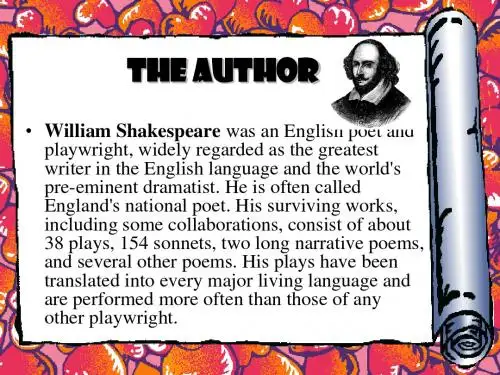
【关键词】:莎士比亚;哈姆雷特;性格浅析;犹豫;延宕;死亡AbstractWilliam Shakespeare (1564-1616), is an English poet, player and playwright. He was the most remarkable playwright and a poet of England in the period of the Renaissance in European, an outstanding representative of humanitarianism, and one of the founders of modern European literature. He was widely regarded as the greatest writer in the English language and the world's pre-eminent dramatist. In his works, Hamlet, one of his four tragedies, is considered the summit of Shakespeare’s art. One character after another was created by Shakespeare with unique creative technique in writing. These characters were alive with the unique personality, particularly well-known in Hamlet, the image of Hamlet,the Prince of Denmark. Hamlet is a contradiction between ideals and realities in the humanist. Once he was full of bright hope for people, society and all things. But the ugly and harsh reality broke his beautiful ideal, and his humanist beliefs shattered. As a humanist, Hamlet hesitated on the road of revenge, which showed that he represented the poor between the feudal forces and humanism, and so as to show author’s reflections of Renaissa nce movement and concerns to the fate of human and future societyHowever, Hamlet was hesitating and procrastinating in his personality. His melancholy is the reason why his image has a monumental artistic charm.【Key words】Shakespeare ;Hamlet ;analysis of the character;hesitation;procrastination;deathContentsAbstrac(in Chinese) (Ⅰ)Abstrac(in English) (Ⅱ)1 Introduction ............................................................................................ - 1 -1.1 The writing background ....................................................................- 1 -1.2 About William Shakespeare ..............................................................- 2 -1.3 About Hamlet.....................................................................................- 4 -2 Analysis of the Character of Hamlet..................................................... - 5 -2.1 Character analysis from different Relationships ...............................- 5 -2.1.1 Between son and his dead father .......................................................- 6 -2.1.2 Between son and his mother .............................................................- 7 -2.1.3 Between nephew and his uncle..........................................................- 9 -2.2 Character analysis from the language ............................................. - 10 -2.2.1 Hamlet's inner monologue on death issues ........................................ - 10 -2.2.2 The monologue after meeting the ghost of the old king........................ - 12 -3 The Main Reason Leading to the Formation of Hamlet's Character-- 13 -3.1 The reasons for depression .............................................................. - 13 -3.2 The reasons for delay....................................................................... - 14 -3.3 The influence of the society.............................................................. - 14 -4 Conclusion ............................................................................................. - 15 -1. IntroductionHamlet of Shakespeare is a classical representative work. The most famous word is: ―To be or not to be this is a question.‖ In the work, Shakespeare created Hamlet, a man with wisdom and courage. In the 8th century, there was a prince in Denmark. The old king was murdered and the throne was usurped by his brother. The prince was told the truth by the ghost of his father. In order to revenge on his uncle for killing his father, he pretended to be a madman. He and his uncle started a fierce struggle. He was a kind-hearted man and a god-fearing person. He was inconsistent in his heart, and fell in love with a beautiful girl. Finally, he died in the trap set by his uncle. Before he died, he killed his uncle to avenge for his father. Shakespeare had the most incisive and the most profound thinking on the nature of life throughout the full-text. This made the reader ina state of strong shock.1.1 The writing backgroundHamlet is Shakespeare's most famous play. It is a tragedy, believed to have been written between 1599 and 1601. It created in 1601-1602 years, published in 1603. Hamlet has been hailed as the master work of Shakespeare. This work are based on a Prince Lance Royce (Prince Amleth) story, the story can be traced back to 12th century. However, Shakespeare's Hamlet is not the first story about the history. Early in the 16th century, the eighties, the same name creation by Thomas • Kidd (Thomas Kyd) already famous among British social drama, but the script of Kidd's version has been lost. The play vividly portrays real and feigned madness –from overwhelming grief to seething rage – and explores themes of treachery, revenge, incest, and moral corruption.Three different early versions of the play have survived: these are known as the First Quarto (Q1), the Second Quarto (Q2) and the First Folio (F1). Each has lines, and even scenes, that are missing from the others. Shakespeare based Hamlet on the legend of Amleth, preserved by 13th-century chronicler Saxo Grammaticus in his Gesta Danorum as subsequently retold by 16th-century scholar François de Belleforest. He may have also drawn on, or perhaps written, an earlier (hypothetical) Elizabethan play known today as the Ur-Hamlet.Shakespeare lived in a alternate time which a serious decline of feudalism and the riseof capitalism in European history came in to being. Hamlet is a prince of Denmark in the ancient time. Shakespeare deliberately made an error of its time to move Hamlet to British reality in Elizabeth dynasty. Britain,at this time, social conflicts became seriously,lavish court life existed in the upper class, social situation was very unrest , and the bourgeoisie, between the royal family and Capitalist became more and more keen. Shakespeare,through the story of Hamlet, was ruthlessly exposed the darkness and injustice of the society, and fully demonstrated his humanist ideas.In Shakespeare's description, this story of medieval England was given a new meaning and importance. Although the drama is filled with colourful characters in the Danish name, but the reader is easy to see what happening in the story is precisely the description of British society at that time, the whole story is permeated with the spirit of Shakespeare's era. It can say, "Hamlet," as a work in the Shakespeare’s criticism of humanism and the spirit of real life, is a most profound expression work.1.2 About William Shakespeare. William Shakespeare was an English poet and playwright, widely regarded as the greatest writer in the English language and the world's pre-eminent dramatist. He is often called England's national poet and the "Bard of Avon". His surviving works, including some collaborations, consist of about 38 plays, 154 sonnets, two long narrative poems, and several other poems. His plays have been translated into every major living language and are performed more often than those of any other playwright. Shakespeare was born and raised in Stratford-upon-Avon. At the age of 18, he married Anne Hathaway, with whom he had three children: Susanna, and twins Hamnet and Judith. Between 1585 and 1592, he began a successful career in London as an actor, writer, and part owner of a playing company called the Lord Chamberlain's Men, later known as the King's Men. He appears to have retired to Stratford around 1613, where he died three years later. Few records of Shakespeare's private life survive, and there has been considerable speculation about such matters as his physical appearance, sexuality, religious beliefs, and whether the works attributed to him were written by others. Shakespeare produced most of his known work between 1589 and 1613. His early plays were mainly comedies and histories, genres he raised to the peak of sophisticationand artistry by the end of the 16th century. He then wrote mainly tragedies until about 1608, including Hamlet, King Lear, Othello, and Macbeth,considered some of the finest works in the English language. In his last phase, he wrote tragicomedies, also known as romances, and collaborated with other playwrights.There are four major masterpieces of Shakespeare's tragedies: Hamlet, Othello, King Lear, Macbeth.His famous comedies: Midsummer Night's Dream, The Merchant of Venice, Twelfth Night.Historical drama: Henry IV, Henry V, Charles II. Serious play, tragicomedy: Romeo and Juliet. He also wrote 154 sonnets, two long poems. Ben Jonson called him "the soul of the times," Marx said he and the Aeschylus in ancient Greece as "the greatest drama of human genius." Although Shakespeare's writing only in English, but he is a world famous writer. Most of his works have been translated into many languages, the plays are staged in many countries.In general, the creation of Shakespeare's plays can be divided into the following three periods:The first period (1590 - 1600)To writing historical drama, comedy-based, there are nine historical dramas, comedies and two 10 tragedies. In addition to 9 historical dramas, King John was written in the early 13th century’s British history, the other eight works are content to dovetail the two 4-steps:the three sections of Henry VI,the last section , with Richard III; Richard II, Henry IV (known as the most successful historical drama), the next and Henry V. 10 comedies,Comedy of Errors, Taming of the Shrew, Two Gentlemen of Verona, love in vain, Midsummer Night's Dream, The Merchant of Venice, The Merry Wives of Windsor, Much Ado About Nothing , happy and twelfth Night.The second period (1601 - 1607)Mainly in tragedy, wrote three Roman dramas, tragedies and three 5 "dark comedies" or "problem plays." Roman drama Julius Caesar, Antony and Cleopatra is drawn from Plutarch, Greek and Roman Heroes, the historical drama. As the depth of thought and realisim in this period has been enhanced, so that Troilus and Cressida, married and a tit and Comedy also reveal the dark side, hanging over the treacherous intrigues of evil shadow, which is called "problem plays" or "dark comedy."The third period (1608 - 1613)Tend to compromise and fantasy tragicomedy or melodrama. His major works are four tragicomedies or melodramas: Tell Prince Rick Reese, Cymbeline, The Winter's Tale, The Tempest.These works were written separated, reunited, framed, rehabilitate. Although still insists humanist ideal, they have exposed the reality of the dark time, but mainly rely on magic to solve conflicts, fantasies by chance and accident, and to promote forgiveness, tolerance, compromise, reconciliation to the end. Shakespeare and Fletcher also co-wrote the historical drama Henry VIII and the melodrama, Two of your family, which in recent years collected by some of Shakespeare's plays..1.3 About HamletThere are four major masterpieces of Shakespeare's tragedies: Hamlet, Othello, King Lear, Macbeth.Hamlet is the classical representative work. This book certainly does not have the big difference in the superficial plot with the historical fable, spoke or the Danish prince the story which revenged for the father, in which fills the rank smell of blood violence and dies. Just like the dramatis personae Horatio said: "you may hear to rape massacre, the unusual repair behavior, and the dark center decision, accidental slaughter, borrows the hand murder, as well as falls into suicide result."Hamlet begins with the news King Hamlet of Denmark has recently died. King Claudius, who now rules Denmark, has married Queen Gertrude, the late King's wife. Hamlet, the late King's son, does not trust the new King. Hamlet meets the Ghost of his father, who reveals he was poisoned by King Claudius and who tells him to avenge his death but not to punish Queen Gertrude for remarrying since it is not his place.Queen Gertrude lies for her son, saying that he is mad. King Claudius, now scared, decides to have Hamlet sent away to England immediately, King Claudius revealing his plan to have him killed there.. King Claudius meets Laertes, telling him that Hamlet killed his father, the two then plotting to kill him at a fencing match.At Ophelia's burial, Hamlet fights Laertes over Ophelia's grave, each believing they loved her more. Hamlet explains to his only trusted friend Horatio how he avoided the death planned for him in England and had Rosencrantz and Guildenstern killed instead,revealing his desire to kill King Claudius. Queen Gertrude drinks a poisoned cup meant for her son, dying but not before revealing she was poisoned. Hamlet fences against Laertes but is cut by Laertes sword. The two switch swords and Laertes is cut by his own sword, Laertes explaining that his sword was poison tipped. Now dying, Hamlet stabs King Claudius with this same sword, killing him and telling Horatio to tell his story and not to commit suicide, recommending Y oung Fortinbras as the next King of Denmark. Y oung Fortinbras arrives, Horatio promising to tell his friend's story.Prince Hamlet is a fictional character, the protagonist in Shakespeare's tragedy Hamlet. He is the Prince of Denmark, nephew to the usurping Claudius and son of the previous King of Denmark, Old Hamlet. Throughout the play he struggles with whether, and how, to avenge the murder of his father, and struggles with his own sanity along the way. By the end of the tragedy, Hamlet has caused the deaths of Polonius, Laertes, Claudius and his two childhood friends Rosencrantz and Guildenstern. He is also indirectly involved in the deaths of his love Ophelia (drowning) and of his mother Gertrude (poisoned by mistake). Hamlet himself is the final character to die in the play.Hamlet is a man with contradictory, he had many chances to kill Claudius, but he hesitated, which reflects the religious thought poisons.2 Analysis of the Character of Hamlet2.1 Character analysis from different RelationshipsSince Hamlet was first performed in the 17th century, countless readers greatly admire d this honourable Prince of Denmark. Between the lines in Shakespeare's Hamlet, people are searching for revenge figure of the prince and have shaped the Hamlet’s image of their own. His father died and mother takes new husband. His uncle usurped the throne. When it all got turned around and round, Hamlet almost lost the courage to survive. The world, this life, for he had no nostalgia and the sadness pushed him to the edge of life and death. After his dead father's ghost had appeared, Hamlet knew the truth. However, he did not revenge impulsively. He meditated on the revenge plan with his anxiety and hesitation, so that the time for revenge was delayed. Finally he and his enemy perished together. From the image of Hamlet, we can see the human vulnerability and the brutality of the environment are so contrary but complementary toeach other. Ultimately, when Hamlet was faced with the fight, the main characters of him---depression and delay were expressed before us.As we all know, Hamlet mainly focuses on the relationships of family, love, and friendship. In Hamlet there are complicated characters and contradictory relationships between the three types of ethics. However, through these complicated relationship we can analyze the main character of Hamlet--depression and delay.2.1.1 Between son and his dead fatherIn the varieties of complex relationships, the relationship between Hamlet and the ghost of his dead father is the most important. His father's sudden death led him to change the views of the whole world. Together with his uncle usurped the throne and his mother remarried him, we can see Hamlet is filled with depression and anger. He should have revenge, for the throne, for his mother. However, he also thinks that if he revenges for those, he will be the same as his uncle, a person who is full of evil ideas. Then he has delayed his revenge, and his inner heart is full of contradictions of revenge.Before Hamlet met his father’s ghost, at first, as the representative of humanitarianism, Hamlet did not believe the existence of the ghost. Even he was depressed and had suicidal thoughts before he met the ghost. In the play, in front of the king and queen, he showed depression, anger and hostility. We note Hamlet in particular mentioned that,“O, that this too too solid flesh would melt,Thaw and resolve itself into a dew,Or that the Everlasting had not fixedHis canon ’gainst self-slaughter. O God, God,How weary, stale, flat and unprofitableSeem to me all the uses of this world!Fie on’t, ah fie, ’tis an unweeded gardenThat grows to seed; things rank and gross in naturePossess it merely. That it should come to this!But two months dead---nay not so much, not two---So excellent a king, that was to thisHyperion to a satyr.” [ACT Ⅰ, SCENE 2]After the ghost told him the truth, then he realized his obligation to avenge his father. On the one hand, Hamlet had the strong revenge feeling for his father in his mind. ―Haste me to know’t that I with wings as swift as meditation or the thoughts of love may sweep to my revenge.‖ [ACT Ⅰ, SCENE 5] On the other hand,the gap between the ideal and the reality had driven his revenge. Hamlet was growing up in the privileged circumstances, and he was easy to produce the halo effect in his heart from the people around him and the world. Therefore, all in his mind was filled with ideal colour. Although his mother's quick marriage to the King and Hamlet produced a strong aversion, this is only a pity. ―That one may smile, and smile, and be a villain.‖ [ACT Ⅰ, SCENE 5] He unborn the reality of this evil and terror, and the gap between reality and the ideal has made him generate the strong will that can against his revenge. However, this offensive idea was reinforced by his father's command, ―If thou hast nature in thee, bear it not. Let not the royal bed of Denmark be a couch for luxury and damned incest.‖[ACT Ⅰ, SCENE 5] However, Hamlet’s mind was very complicated. He knew the importance of revenge but worried about the result. Facing with the reality and the ideal, he produced the mental torture. After the ghost exited, Hamlet wanted to escape the reality by faking his illness. The essence is to delay the plan of revenge. In the relationship between Hamlet and his dead father, we can see that Hamlet wa nts to revenge, yet the depression and delay’s character is his obstacle.From the story itself, after Hamlet saw the ghost of his father, he heard the ghost of the allegations, but he, unlike what the people of the usual revenge story do, did not take action immediately. He arranged his action carefully. Although one of the purposes is to let the king is secret publicly revealed, the real reason is that he suspected the ghost. He feared to believe the ghost words to take hasty action that would harm him and others. This undoubtedly shows the character of his hesitation.2.1.2 Between son and his motherThe relationship between Hamlet and his mother was considered Oedipus complex. And, in the course of his revenge he showed his mother hate and love, his character---depression and delay was performed vividly.“O, that this too too solid flesh would melt,Thaw and resolve itself into a dew,Or that the Everlasting had not fixedHis canon ’gainst self-slaughter. O God, God,How weary, stale, flat and unprofitableSeem to me all the uses of this world!Fie on’t, ah fie, ’tis an unweeded gardenThat grows to seed; things rank and gross in nature Possess it merely. That it should come to this!But two months dead---nay not so much, not two--- So excellent a king, that was to thisHyperion to a satyr; so loving to my mother,That he might not beteem the winds of heavenVisit her face too roughly. Heaven and earth,Must I remember? Why, she would hang on himAs if increase of appetite had grownBy what it fed on, and yet within a month---Let me not think on’t: frailty, thy name is woman---A little month, or ere those shoes were oldWith which she followed my poor father’s body,Like Niobe all tears, why she, even she---O God, a beast that wants discourse of reason Would have mourned longer---married with my uncle, My father’s brother, but no more like my father Than I to Hercules; within a month,Ere yet the salt of most unrighteous tearsHad left the flushing in her galled eyes,She married. O most wicked speed, to postWith such dexterity to incestuous sheets!It is not (nor it cannot come to) good.But break, my heart, for I must hold my tongue.” [ACT Ⅰ, SCENE 2]At this time, Hamlet did not know the murderer who killed his father was his uncle. However, his mother’s new marriage led him to use these words to satirize, ridicule and even insult his mother. It is because of his Oedipus complex, he sense extreme contradiction, self-condemnation, self-punishment, or even thought about the question of life and death. So his inner mind conflicted and struggled for this contradiction. This contradiction is between his Oedipus complex and his father’s death and the marriage of his mother and his uncle. His inner conflict of this contradiction has been expressed by Hamlet's melancholy. Especially he showed delay on the question of revenge, his character of depression made him lose many opportunities. To some extent, the acts of Hamlet’s delay are the performance of his inner personality. With the weakness of his character, his willpower is not strong. It was difficult for him to undertake such a major revenge mission. Added with his world-weary and the strong Oedipus complex, he was indulged in thinking. Considering with such intricate factors, it is not difficult to find that Hamlet has the character of depression and delay.2.1.3 Between nephew and his uncleHamle t is a drama with the main plot of revenge. The relationship between Hamlet and his uncle is enemy. Claudius was a heinous criminal in the eyes of Hamlet. Claudius brutally poisoned his brother to get the imperial throne, and wanted to murder his nephew for consolidating the royal position. Hamlet revenged for his father, and he also personally killed his uncle. Revenge has become a vendetta in the royal family.When Claudius suspected Hamlet, Hamlet did not have a direct conflict with him, but pretended to be ill from being suspected. His retreat made Claudius lose the heart of preparedness. After the ghost's words were confirmed, the mission of revenge called Hamlet, and God also provided a good opportunity for him. Going to the residence of his mother, he saw his uncle praying. ―Now might I do it pat, now he is a-praying; and now I’ll do’t; [he draws his sword] and so he goes to heaven, and so am I revenged.‖[ACT Ⅲ, SCENE 3] But at this point, Hamlet suddenly changed.“N o. [He sheathes his sword]Up, sword, and know thou a more horrid hent:When he is drunk asleep, or in his rage,Or in th’incestuous pleasure of his bed,At game, a-swearing, or about some actThat has no relish of salvation in’t,Then trip him, that his heels may kick at heaven,And that his soul may be as damned and blackAs hell, whereto it goes. My mother stays.This physic but prolongs thy sickly days.”[ACT Ⅲ, SCENE 3]From Hamlet’s inner mind, the personality of depression and delay prevented his revenge at the right time. Indeed a series of words and deeds has expressed this meaning, Hamlet certainly had a rational mind, but his depressed and hesitating characters eventually led to the tragedy.2.2 Character analysis from the languageShakespeare’s most outstanding skill in Hamlet is monologue, and monologue at the different situation can reflect personality traits of Hamlet. Monologue contributes to the analysis of Hamlet's character traits.2.2.1 Hamlet's inner monologue on death issuesAmong many inner monologues in Hamlet, the most famous one is about death issue. This monologue not only reflects Hamlet facing choice but demonstrates deeply his inner conflict. Before the contradiction Hamlet has melancholy, delay character.“To be, or not to be: that is the question:Whether ’tis nobler in the mind to sufferThe slings and arrows of outrageous fortune,Or to take arms against a sea of troubles,And, by opposing, end them. To die --- to sleep,No more; and by a sleep to say we endThe heart-ache and the thousand natural shocksThat flesh is heir to: ’tis a consummationDevoutly to be wished. To die, to sleep;To sleep, perchance to dream. Ay, there’s the rub,For in that sleep of death what dreams my come,When we have shuffled off this mortal coil,Must give us pause. There’s the respectThat makes calamity of so long life;For who would bear the whips and scorns of time,Th’oppressor’s wrong, the proud man’s contumely,The pangs of disprized love, the law’s delay,The insolence of office, and the spurnsThat patient merit of th’unworthy takes,When he himself might his quietus makeWith a bare bodkin? Who would fardels bear,To grunt and sweat under a weary life,But that the dread of something after death(The undiscovered country, from whose bournNo traveller returns) puzzles the will,And makes us rather bear those ills we have,Than fly to others that we know not of?Thus conscience does make cowards of us all;And thus the native hue of resolutionIs sicklied o’er with the pale cast of thought,And enterprises of great pitch and momentWith this regard their currents turn away,And lose the name of action. ---Soft you now,The fair Ophelia! ---Nymph, in thy orisonsBe all my sins remembered.”[ACT Ⅲ, SCENE 1]We can see Hamlet’s melancholy is not the negative, hair-splitting and fruitless kind. It is rather the result of his penetrating habit of mind. When the sudden demand for difficult and decisive action arises, he would ask himself: ―How am I to do it? When? Where? What will be the consequence to the state? What is the good of doing it in such a world as this?‖Life and death are the conflicts that human beings face, they maymake different choices. When Hamlet was facing a contradiction, as an idealist, he expressed the depression and delay. ―To be or not to be, that is a question!‖He lost numerous revenge opportunities. The reason is not that he was not brave, it is because there were many things that Hamlet concerned. His melancholy character is a fundamental reason why he was unable to make the choice.2.2.2 The monologue after meeting the ghost of the old kingAfter Hamlet met the ghost, he had no idea about the murder and his inner mind struggled in pain.When the actors came to the court, Hamlet conceived and arranged the plan of having a scene of the murder played before the King and Queen to confirm the words of the ghost. Hamlet’s device proves a complete success. Although only six lines have been spoken by the player on the stage, the king started to his feet and rushed out of the hall. He declared that now he could“…drink hot bloodAnd do such bitter business as the dayWould quake to look on.” [ACT Ⅲ, SCENE 2]In this mood, and on his way to his mother’s chamber, he comes upon the King, alone, kneeling, conscience-stricken and attempting to pray. The enemy is now delivered into his hands:“Now might I do it pat, now he is a-praying;And now I’ll do’t; [he draws his sword] and so he goes to heaven,And so am I revenged.That would be scanned:A villain kills my father, and for thatI, his sole son, do this same villain sendTo heaven.Why, this is hire and salary, not revenge.He took my father grossly, full of bread,With all his crimes broad blown, as flush as May;And how his audit stands, who knows save heaven?But in our circumstance and course of thought,。