
浊辅音 [m] [n] [
- 格式:pptx
- 大小:523.71 KB
- 文档页数:9
![浊辅音 [m] [n] [](https://imgs-1438308264.cos.ap-hongkong.myqcloud.com/c5e4601b866fb84ae45c8d9b.webp)
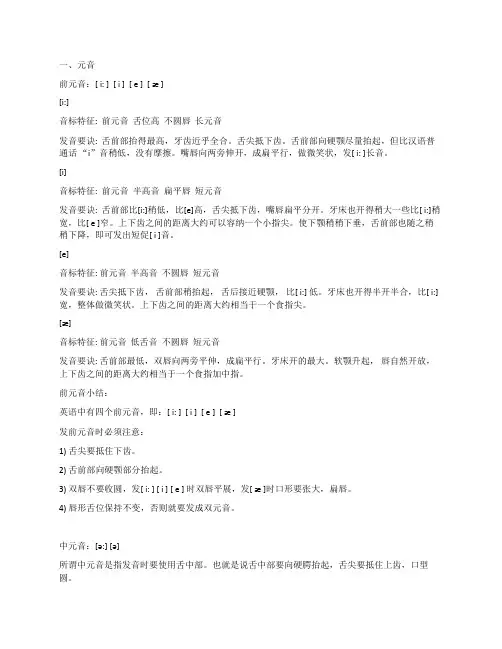
元音字母和辅音字母的发音规则清辅音/p/,/ t/ ,/ k/,/f/,/θ/,/s/,/ʃ/ / h/,/ts/,/tʃ/,/tr/浊辅音/b/,/d/,/g/,/v/ ,/ð/,/z/,/ʒ/,/ r/,/dz/ ,/dʒ/,/dr/ /m/,/n/,/ŋ/,/ j/,/w/,/ l/在此个别音标不能显示:英语发音规则一,元音字母在重读音节中的读音元音字母读音例词a在开音节中[ei]name plane Jane baby cake在闭音节中[ ]bag dad hat map black backe在开音节中[i:]he these me Chinese在闭音节中[e]bed let pen desk yes eggi在开音节中[ai]bike fly drive time nice kite在闭音节中[i]fish big drink sit milk swimo在开音节中[Eu]those close go hoe home no在闭音节中clock not box shop socku在开音节中[ju:]student excuse duty Tuesday在闭音节中[Q]bus cup jump much lunch在开音节中,元音字母u在辅音字母j l r s后面时读[u:]音,例如:June blue ruler super二,元音字母在非重读音节中的读音元音字母读音例词a[E]China another woman breakfast[i]orange comrade village cabbagee[E]hundred student open weekend[i]chicken pocket begin childreni[E]/[i]holiday beautiful family animal[ai]exercise satelliteo[E]second tonight somebody welcome[Eu]also zero photou[E]autumn diffcultpopular congratulation January动词中的a如果处在开音节位置,a读[ei]音,例如:operateu处在开音节位置,又在辅音字母j l r s后面时,读[u(:)]音,例如:July influence February issue三,元音字母在重读音节中的特殊读音元音字母读音例词a在[w]音后面[C]want what watch wash qualitya在f n sk ph sp ss st th前[a:]after plant graph ask grasp glass fast fatheri在-nd -ld和gh前[ai]find child light higho在-st -ld前[Eu]most postcard old coldo在m n v th前[Q]come monkey love mother四,-r音节元音字组在重读音节中的读音元音字组读音例词arar在[w]音后面[a:]car farm dark sharpener[C:]warm quarter towardsoror在[w]音后面[C:]forty morning shortword worker worseer ir ur[E:]certainly bird Thursday辅音字母r双写时,前面的元音字母不能与r构成-r音节,而是按重读闭音节的拼读规则发音.例如: carry sorry hurry-r音节在非重读音节中通常读[E]音,例如:dollar teacher martyr forget Saturday 五,-re音节元音字组在重读音节中的读音元音字组读音例词are[a:E]care dare hareere[iE]here mereire[aiE]fire hire wireore[C:]more score beforeure[ju:E]pure cureare ere ire ore很少出现在非重读音节中,ure在非重读音节中读[E]音,例如:picture pleasure重读元音字母加Rr,再加非重读元字组时,重读元音字母应按-re音节拼读规则拼读,字母Rr读[r]音.例如:parent zero story during inspiring某些常用词及多音节词经常出现长音短化现象.例如:orange very American paragraph六,元音字组在重读音节中的读音元音字组读音例词[ei]afraid rain wait day playair[aiE]air hair chair pair repairal在f m前[C]small ball talk wall all[C:l]always also salt almost bald [a:]half calmau/aw[C:]autumn daughter drawea[i:]teach easy cheap please [e]heavy bread sweater weather [ei]break greatear[iE]hear dear near clear year [εE]bear pear wear[E:]earth learn earlyee[i:]jeep week green threeeer[iE]pioneer deer beerei/ey[ei]eight neighbour they [i:]either keyeu/ew在j l r s后[ju:]new few newspaper [u:]flew brewie/ei[s]音之后[i:]piece field receiveoa[Eu]coat Joan boat goaloar/oor[C:]roar board door flooroi/oy[Ci]noise point boy toiletoo[u:]broom food tooth school [u]book look cook foot good ou/ow[au]flower house count down [Eu]know row throw though [Q]young country enough [u:]group you soupour[C:]course your fourour hour ours[C:]journeyui在j l r s后[ju:i]fluid suicide tuition[u:]juice fruit suit七,非重读音节中元音字组和字群的读音元音字组或字群读音例词ai/ay ei/ey[i]Sunday foreign monkeyow[Eu]yellow sparrow tomorrow元音字组在非重读音节中读[E]音或[i].例如:neighbour serious famous biscuit coffee -sion -tion[Fn]impression nation-sion在元音字母后[Vn]vision decision occasion-tion在s后[tFE n]question suggestion-sten[sn]listen-stle[sl]whistle-surepleasure measure-ture[tFE]picture culture八,元字组在复合词非重读音节中的读音复合词中的第二部分不标注重音符号,但其中的元音字母或元音字组仍按重读音节拼读规则拼读.例如:everyday[ei]handbag[ ]blackboard[C:]有些词随着语言的发展,前后两部分已失去其单独存在的意义,融合成为一个词.其中的非重读部分要按非重读音节的读音规则发音.例如:sun太阳+ day[ei]日子> Sunday[i] 星期天holy神圣+ day[ei]日子> holiday[i] 假日break中断+ fast[a:]斋戒> breakfast[E] 早餐cup茶杯+ board木板[C:] > cupboard[E] 碗柜九,辅字组的读音辅字组读音例词b[b]bike bus bag[/]bomb tombcc在e前或在i/y前[k]cake picture coat music[s]face decide cinemach[tF]much chick rich teacher[k]school headache chemistry [F]machine-ck[k]cock pocket black knockd[d]doctor bread hand day-dge[dV]bridge fridgedr-[dr]children driver drinkf[f]five four breakfastgg在e i/y前[^]bag gardon go[dV]orange large Germangh[f]cough enough[/]light daughter highgu- -guegu在非重读音节中[^]guess league dialogue [^w]language anguishh[h]hot head house hand[/]hour honestj[dV]jeep jar joke join Julyk[k]kind bike skate make week kn-[n]knife know knockl[l]life milk school tallm[m]monkey come autumn-mn[m]autumn columnnn在[k] [g]音前[n]not shine ten note[N]uncle thank hungry-ng[N]morning young wrongp[p]paper plane pig ship pen ph[f]elephant photo telephone q[k]Iraq[kw]quality quiter[r]red rubber rulers在词首或清辅音前元音字母间或浊辅音前[s]sit sleep desk[z]music husbandsc-[sk]scarlet[s]muscle sciencesh[F]she fish shirt washt在通常情况下在弱读字母ia ie io前[t]ten letter meet[F]patient nationtch[tF]watchth在通常情况下在冠词代词介词连词中在词尾-the -ther中[θ]thin thirty method[T]the these with than [T]clothe father weather[tr]tree train country truckv[v]very voice love leavew[w]week win wake sweet wait[/]answer twowh-wh-在字母o前[w]what when white why[h]who whose wholex在重读元音前[ks]box text exercise[gz]examle exist exactwr-[r]writey-[j]yes yard yellow youngz[z]puzzle zero zoo重读音节单词中读音特别响亮的音节.用音标标记双音节,多音节词的读音时,应使用重读符号.单音节词多数是重读音节,标记读音时不需要使用重读符号.开音节①绝对开音节:单个元音字母后面没有辅字组的重读音节.例如:no blue ba-by stu-dent se-cret.②相对开音节:单个元音字母后面加单个辅音字母,再加一个不发音字母e构成的重读音节.例如:name these bike home ex-cuse.闭音节单个元音字母后面有辅字组(r w y 除外)且以辅字组结尾的重读音节.例如:bag egg fish not cup多音节词重读规则多音节词通常在倒数第三个音节重读.例如: el-e-phant con-grat-u- la-tion词尾有-ic或-tion,-sion的词,在-ic或-sion,-tion前的一个音节上重读.例如:scien tific im pression nation参考资料:/question/9567169.html?si=7。

20个辅音字母中易错的字母音标48个英语音标表:20个元音+28个辅音一、单元音12个短元音: [i] [ə] [ɒ] [u] [Λ] [æ] [e]长元音: [i:] [ə:] [ɔ:] [u:] [ɑ:]二、双元音8个[ai] [ei] [ɔi] [au] [əu] [iə] [eə] [uə]三、清浊成对的辅音10对清辅音:[p] [t] [k] [f] [θ] [s] [tr] [ts] [∫] [t∫]浊辅音:[b] [d] [g] [v] [ð] [z] [dr] [dz] [ʒ] [dʒ]四、其他辅音8个[h] [m ] [n] [ŋ] [l] [r] [w] [j]the在元音前读[ði],在辅音前读[ðə],而元辅音的判断不是第一个单词,而是第一个音素,或说发音。
如:the United States的第一个音素是[j],半元音,按辅音读[ðə]五、音节音节是读音的基本单位,任何单词的读音,都是分解为一个个音节朗读。
在英语中元音特别响亮,一个元音可构成一个音节,一个元音和一个或几个辅音音素结合也可以构成一个音节。
一般来说,元音可以形成音节,但辅音不够响亮,不能形成音节。
但英语辅音字母中有 4 个辅音[m],[n],[ng],[l]是响音,它们和辅音音素结合,也可构成音节。
它们构成的音节往往出现在词尾,一般是非重读音节。
英语的词有一个音节的,两个音节的,多个音节的,一个音节叫单音节,两个音节叫双音节,三个音节以上叫多音节。
如:take 拿;ta ble 桌子;pota to` 马铃薯;pop`ula tion 人口;congrat`ula tion 祝贺;tel emu`nica tion 电讯;01、划分音节的方法元音是音节的主要部分,辅音是音节的边界。
无论两个辅音之间有多少个元音,通常都是一个音节。
如:bed 床;bet 打赌;seat 坐位;beat 毒打;beaut 极好的;beau ty 美;两元音字母之间有一个辅音字母时,辅音字母归后一音节,如:stu dent 学生;la bour 劳动;有两个辅音字母时,一个辅音字母归前一音节,一个归后一音节,如:let ter 信;win ter 冬天;不可分字母组合根据字母组合划分音节。
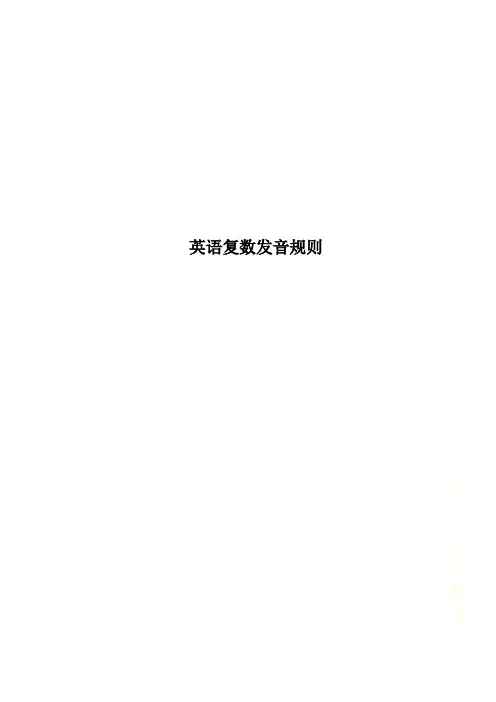
英语复数发音规则英语复数发音规则一、绝大多数的可数名词的复数形式,是在该词末尾加上后辍-s。
读音变化:结尾是清辅音读[s],结尾是浊辅音或元音读[z]。
例:friend→friends; cat→cats; style→styles; sport→sports;piece→pieces二、凡是以s、z、x、ch、sh结尾的词,在该词末尾加上后辍-es构成复数。
读音变化:统一加读[iz]。
例:bus→buses; quiz→quizzes; fox→foxes; match→matc hes;flash→flashes三、以辅音字母+y结尾的名词,将y改变为i,再加-es。
读音变化:加读[z]。
例:candy→candies; daisy→daisies; fairy→fairies; lady→ladies;story→stories四、以-o结尾的名词,如果不是外来词或缩写,就加-es,否则加-s构成复数。
读音变化:加读[z]。
例:tomato→tomatoes; potato→potatoes; torpedo→torpedoes;bingo→bingoe s反例:silo→silos; piano→pianos(外来词); photo→photos;macro→macros(缩写词)五、以-f或-fe结尾的名词,多为将-f或-fe改变为-ves,但有例外。
读音变化:尾音[f]改读[vz]。
例:knife→knives; life→lives; leaf→leaves; staff→staves; scarf→scarves 反例:roof→roofs六、以-us结尾的名词(多为外来词),通常将-us改变为-i构成复数。
读音变化:尾音[Es]改读[ai],其中[kEs]要改读为[sai],[gEs]要改读为[dVai]。
例:fungus→fungi; abacus→abaci; focus→foci; cactus→cacti;cestus→cesti七、以-is结尾的名词,通常将-is改变为-es。