牛津高中英语-将来时态
- 格式:doc
- 大小:36.00 KB
- 文档页数:1
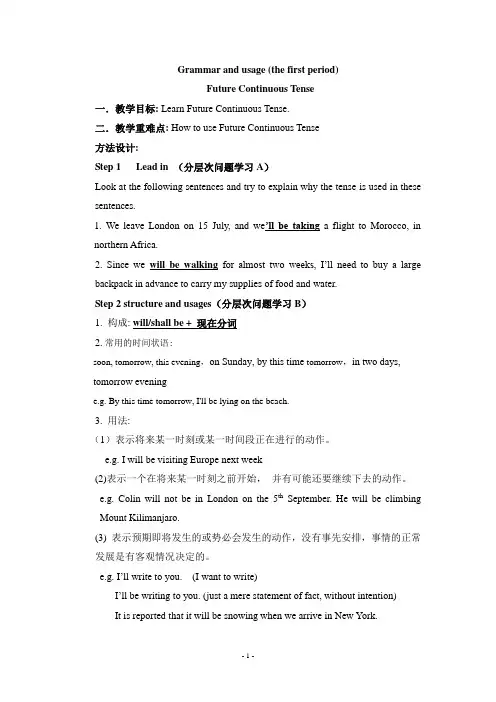
一将来进行时态
1.我们用将来进行时态来:
1)谈论将来一段时间正在进行的事情。
如:Toby will be climbing in the Himalayas all next week
2)谈论从将来的某一点开始并且有可能要持续一段时间的事情。
如:Toby will not be in London next Tuesday. He will be climbing in the Himalayas. 3)没有任何意图的表达将来的事情。
如:The weather report says that it will be raining when we arrive in London.
在这种情况下表示事情是很自然的发生的,没有人为的安排。
4)礼貌地询问有关其他人将来的计划。
如:Will you be visiting your uncle in Tanzania?
2.将来进行时态的构成:
1)陈述句:will(not)+v-ing
如:Toby and his brother, Colin, will (not) be flying to Morocco.
2)疑问句:will 提到主语的前面
如:Will they be flying to Morocco on 15th July?
3)回答:will(not)
如:Yes, they will. /No, they will not(won’t)
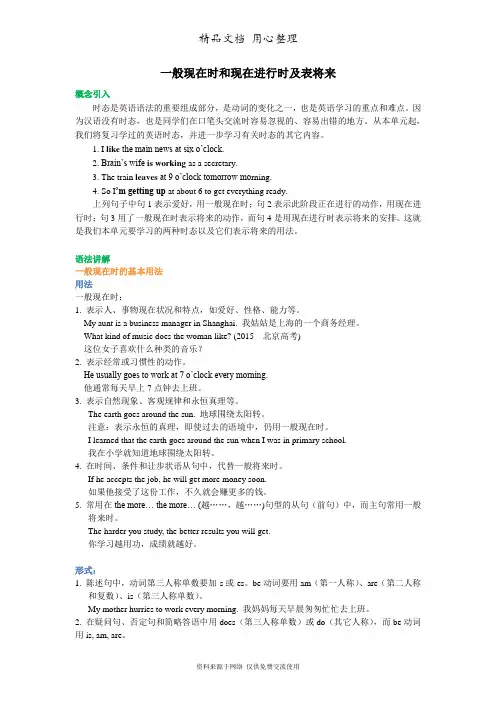
二过去将来时态
1.我们用过去将来时态和过去进行时态来:
1)表示过去的将来某一时间要发生的动作。
如:They set off at 9 a.m. and would reach the airport an hour later.
2) 暗指一个过去的目的。
如:I was going to leave, but then it rained.
3) 暗指一个过去的安排。
如:Colin called Jennifer to say that he was seeing her later that afternoon.
4) 指代实际已经发生过的将来的动作。
如:The journey that was to change Toby’s life started in July that year.
2.陈述句中过去将来时态的构成:
1)would +动词原形
如:I told you Colin and I would spend a few weeks traveling.
2) was/were going to,was /were to , was/were about to
如:We were going to see the wild animals, but then we didn’t have time.
It was his last day at school---he was to leave the next morning.
Colin was about to get off the camel when a child ran towards him.。