
新概念英语第一册121-122课课件
- 格式:pptx
- 大小:116.18 KB
- 文档页数:18

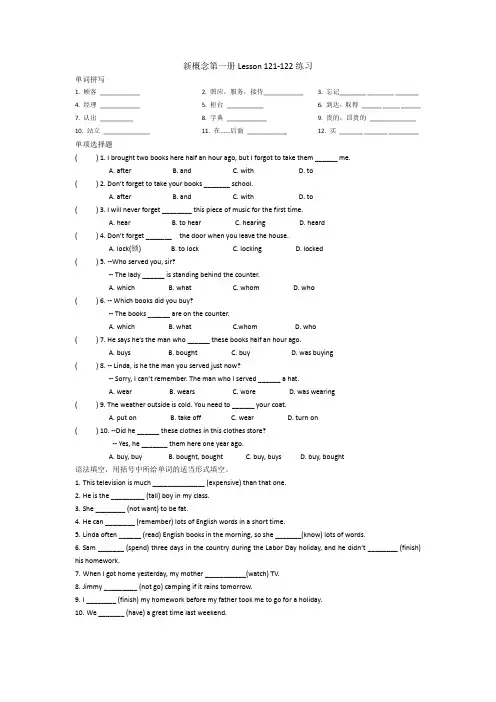
新概念第一册Lesson 121-122练习
单词拼写
1. 顾客 ____________ 2. 照应,服务,接待____________ 3. 忘记________ ________ _______
4. 经理 ____________ 5. 柜台 ___________ 6. 到达,取得 ______ _____ ______
7. 认出 __________ 8. 字典 ____________ 9. 贵的,昂贵的 ______________
10. 站立 ______________ 11. 在......后面 ____________ 12. 买 _______ _______ _________
单项选择题
( ) 1. I brought two books here half an hour ago, but I forgot to take them ______ me.
A. after B. and C. with D. to
( ) 2. Don’t forget to take your books _______ school.
A. after B. and C. with D. to
( ) 3. I will never forget ________ this piece of music for the first time.
A. hear B. to hear C. hearing D. heard
( ) 4. Don’t forget _______ the door when you leave the house.

新概念英语第一册:121-122课 语法及单词解析
【篇一】
语法 Grammar in use
定语从句
定语从句像形容词一样起修饰作用,但位于所修饰的名词之后。定语从句由关系代词引导,紧跟在它所修饰的成分后面。关系代词 who,whom与 that修饰人,which与
that修饰东西。关系代词指代从句的主语或宾语,同时又充当连接词,把从句和主句连接起来。请看例句:
(1)关系代词作从句的主语(who/which/that):
The dog which/that is carrying the basket is mine.
叼着篮子的那只狗是我的。
He's the porter who/that carried my suitcase.
他就是那个扛着我的衣箱的搬运工。
(2)关系代词作从句的宾语(whom/that/which):
They're the windows which/that the children broke yesterday.
这些就是孩子们昨天打碎的窗户。
She's the lady whom I served yesterday.
她就是我昨天服务过的那位女士。
【篇二】
词汇学习 Word study
recognize v.
(1)认出;认识: I recognize him now.
我现在认出他来了。
Can you recognize this tune?
你能听出这支曲调吗?
(2)承认;确认:
I recognize that he is more capable than I am.
我承认他比我更有能力。
They recognized Richard as his lawful heir.
他们确认理查德为他的合法继承人。
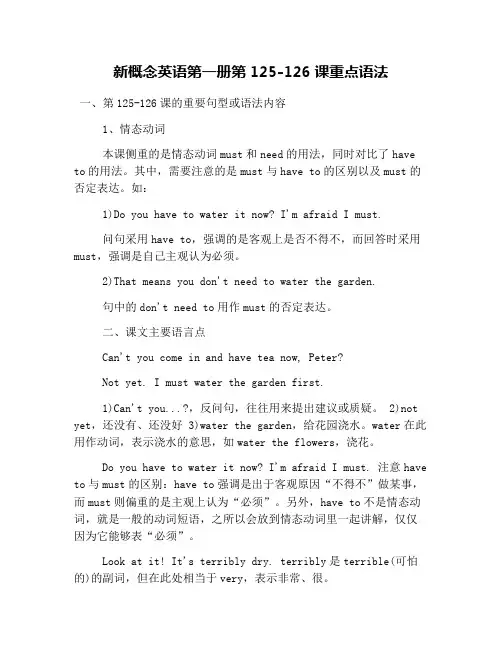
新概念英语第一册第125-126课重点语法
一、第125-126课的重要句型或语法内容
1、情态动词
本课侧重的是情态动词must和need的用法,同时对比了have
to的用法。其中,需要注意的是must与have to的区别以及must的否定表达。如:
1)Do you have to water it now? I'm afraid I must.
问句采用have to,强调的是客观上是否不得不,而回答时采用must,强调是自己主观认为必须。
2)That means you don't need to water the garden.
句中的don't need to用作must的否定表达。
二、课文主要语言点
Can't you come in and have tea now, Peter?
Not yet. I must water the garden first.
1)Can't you...?,反问句,往往用来提出建议或质疑。 2)not
yet,还没有、还没好 3)water the garden,给花园浇水。water在此用作动词,表示浇水的意思,如water the flowers,浇花。
Do you have to water it now? I'm afraid I must. 注意have
to与must的区别:have to强调是出于客观原因“不得不”做某事,而must则偏重的是主观上认为“必须”。另外,have to不是情态动词,就是一般的动词短语,之所以会放到情态动词里一起讲解,仅仅因为它能够表“必须”。
Look at it! It's terribly dry. terribly是terrible(可怕的)的副词,但在此处相当于very,表示非常、很。 What a nuisance! 1)nuisance,讨厌的东西或人。 2)注意复习what和how引导的感叹句。
Those who turn back never reach the summit. 回头的人永远到不了最高峰!
Proper preparation solves 80 percent of life's problems.适当的准备能解决生活中80%的问题。 Lesson 121 and Lesson 122
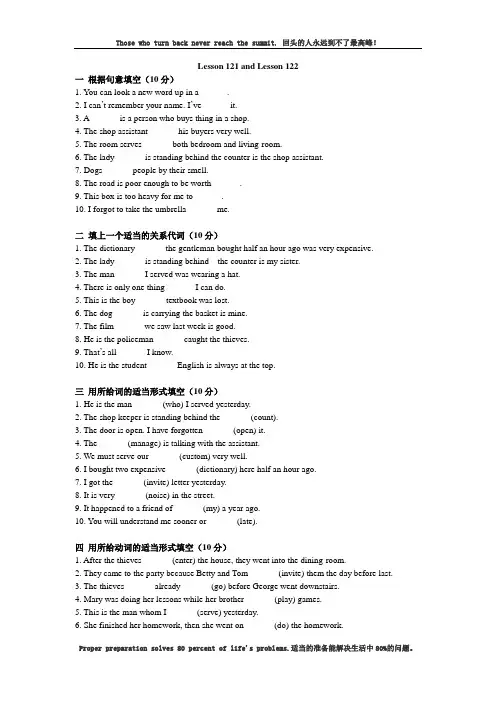
一 根据句意填空(10分)
1. You can look a new word up in a ______.
2. I can’t remember your name. I’ve ______it.
3. A ______ is a person who buys thing in a shop.
4. The shop assistant ______ his buyers very well.
5. The room serves ______ both bedroom and living-room.
6. The lady ______ is standing behind the counter is the shop assistant.
7. Dogs ______ people by their smell.
8. The road is poor enough to be worth ______.
9. This box is too heavy for me to ______.
10. I forgot to take the umbrella ______ me.
二 填上一个适当的关系代词(10分)
1. The dictionary ______ the gentleman bought half an hour ago was very expensive.
2. The lady ______ is standing behind the counter is my sister.