
状语从句
- 格式:ppt
- 大小:596.50 KB
- 文档页数:48


状语从句的种类
用来修饰谓语动词、其它动词、定语、状语或整个句子的从句叫做状语从句.状语从句可分为:
1.时间状语从句2.地点状语从句;3.原因状语从句;4.条件状语从句;5.目的状语从句;6.让步状语从句;7.比较状语从句;8.程度状语从句;9.方式状语从句;10.结果状语从句.
状语从句的时态特点
一般情况下,时间和条件状语从句的谓语动词一般用“一般现在时”表示“一般将来时”,用“现在完成时”表示“将来完成时”.
时间状语从句(adverbial clause of time)
1.由when,while,as引导的时间状语从句.
【区别】when,while和as的区别:when引导的从句的谓语动词可以是延续性的动词,又可以是瞬时动词.并且when有时表示“就在那时”.
While引导的从句的谓语动作必须是延续性的,并强调主句和从句的动作同时发生(或者相对应).并且while有时还可以表示对比.例如:
While my wife was reading the newspaper,I was watching TV.(was reading是延续性的动词,was reading和was watching同时发生)
As表示“一边……一边”,as引导的动作是延续性的动作,一般用于主句和从句动作同时发生;as也可以强调“一先一后.
As we was going out,it began to snow.当我们出门时,开始下雪了.(as强调句中两个动作紧接着先后发生,而不强调开始下雪的特定时间)
2.由before和after引导的时间状语从句.注意before引导的从句不再用否定式的谓语,并且当before引导的从句位于主句之后,有时译成“就,才”.还要注意主句和从句之间的时间关系.当主句用将来时,从句总是用现在时;如果before引导的从句谓语用的是过去时,则主句动词多用过去完成时,这样以便体现动作发生的先后.After表示主句动作发生在从句动作之后.主句和从句的动作的时间关系正好与before引导的从句相反.
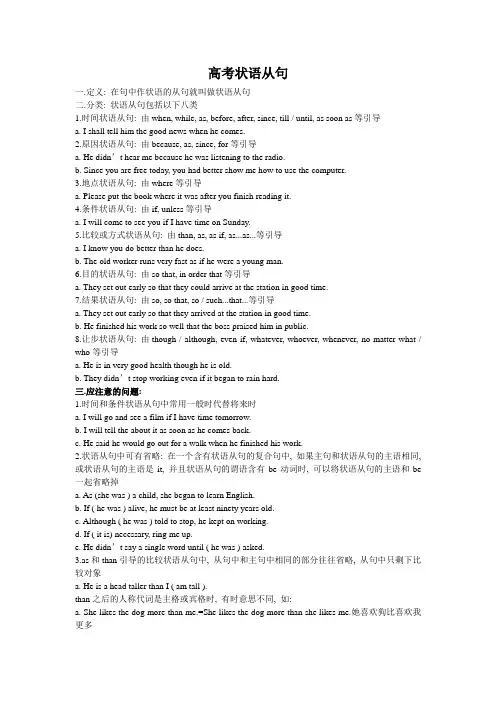
高考状语从句
一.定义: 在句中作状语的从句就叫做状语从句
二.分类: 状语从句包括以下八类
1.时间状语从句: 由when, while, as, before, after, since, till / until, as soon as等引导
a. I shall tell him the good news when he comes.
2.原因状语从句: 由because, as, since, for等引导
a. He didn’t hear me because he was listening to the radio.
b. Since you are free today, you had better show me how to use the computer.
3.地点状语从句: 由where等引导
a. Please put the book where it was after you finish reading it.
4.条件状语从句: 由if, unless等引导
a. I will come to see you if I have time on Sunday.
5.比较或方式状语从句: 由than, as, as if, as...as...等引导
a. I know you do better than he does.
b. The old worker runs very fast as if he were a young man.
6.目的状语从句: 由so that, in order that等引导
a. They set out early so that they could arrive at the station in good time.
7.结果状语从句: 由so, so that, so / such...that...等引导

.
. (一)状语从句概述
定义 状语从句用作状语,是起副词作用的句子。
位置 状语从句可以放在主句之前,也可以放在主句之后,时间、条件、原因和让步状语从句放在句首时需要用逗号和主句隔开。
分类 根据其作用可以分为时间、地点、原因、条件、目的、让步、方式和比较等状语从句。
作用 它可以修饰谓语、非谓语动词、定语、状语和整个句子。
(二)状语从句详解
1. 时间状语从句
引导词 用法 示例
when 意为“当…的时候”。When引导从句的谓语动词可以是延续性动词,也可以是瞬间动词。并且when有时表示“就在那时” A liar is not believed when he
speaks the truth.说谎者讲真话时也没有人相信。
When he arrives, I’ll call you.
When you laugh and smile,
your body relaxes.
while 意为“在…的时候,在…的同时”。While引导从句的谓语动词必须是延续性While I was standing at the
window, I saw several boys
running along the street. .
. 的,发生时间较长,并强调主句和从句的动作同时发生(或者相对应)。While有时还可以表示对比。 While John was watching TV,
his wife was cooking.
as 意为“一边…一边…”。As引导的动作是延续性的,发生时间较短,一般用于主句和从句动作同时发生;as也可以强调一前一后。 The writer was angry as he
was travelling on a train to
London because someone
had invaded his “space”.
He smiled as he stood up.
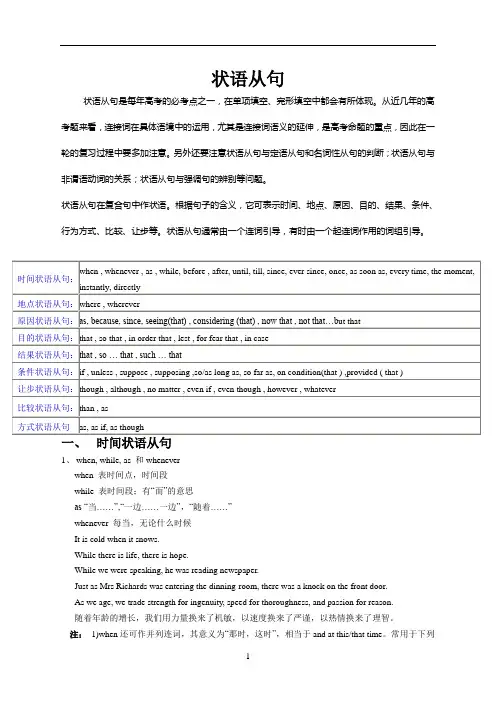
1 状语从句
状语从句是每年高考的必考点之一,在单项填空、完形填空中都会有所体现。从近几年的高考题来看,连接词在具体语境中的运用,尤其是连接词语义的延伸,是高考命题的重点,因此在一轮的复习过程中要多加注意。另外还要注意状语从句与定语从句和名词性从句的判断;状语从句与非谓语动词的关系;状语从句与强调句的辨别等问题。
状语从句在复合句中作状语。根据句子的含义,它可表示时间、地点、原因、目的、结果、条件、行为方式、比较、让步等。状语从句通常由一个连词引导,有时由一个起连词作用的词组引导。
时间状语从句: when , whenever , as , while, before , after, until, till, since, ever since, once, as soon as, every time, the moment,
instantly, directly
地点状语从句: where , wherever
原因状语从句: as, because, since, seeing(that) , considering (that) , now that , not that…but that
目的状语从句: that , so that , in order that , lest , for fear that , in case
结果状语从句: that , so … that , such … that
条件状语从句: if , unless , suppose , supposing ,so/as long as, so far as, on condition(that ) ,provided ( that )
让步状语从句: though , although , no matter , even if , even though , however , whatever