小学英语知识--情态动词
- 格式:docx
- 大小:12.89 KB
- 文档页数:2
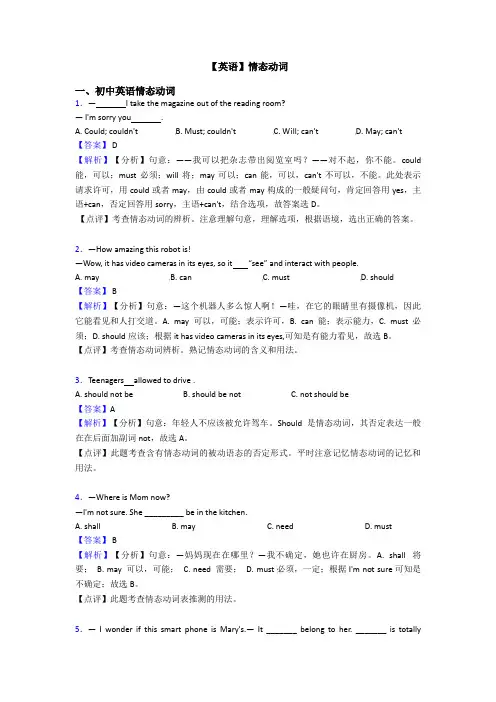
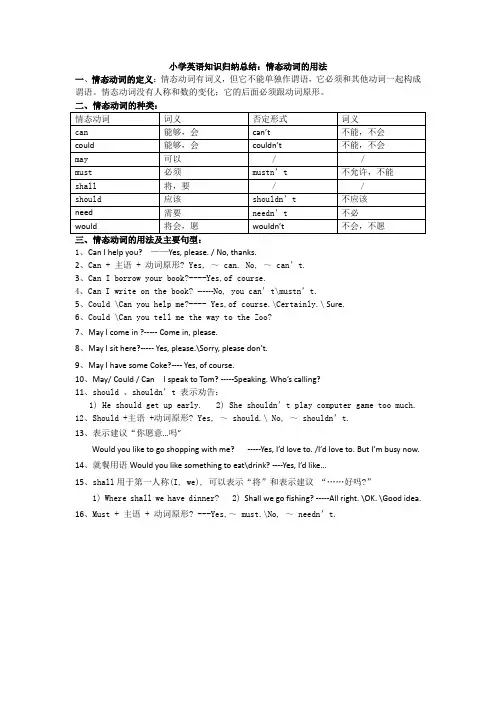
情态动词shall ,will ,should和would 在不同的句子中含有不同的意思,其基本用法如下:
一、shall
1. 表示说话者的意图、允许、警告、命令、决心等,用于陈述句的第二、第三人称中,必须,应,可之意。例如:
1)You shall have that book tomorrow.
2) He shall be punished if he insists on doing that.
2,. 在问句中表示征求对方意见,主要用于第一、第三人称,有“…..好吗”,“要不要”等意思。例如“
1) Shall I fetch the hammer?
2) Shall those goods be sent over to you at once?
3) Shall we help you?
2. 用在表示意图、要求等的从句中,有“应该”,“要”之意,例如:
My demand is that is shall be done in time.
二、should
1.表示义务、责任、建议或劝告,有“应当、应该”的意思。例如:
1) You should learn from each other.
2) You shouldn’t be so careless.
3) He should have told me the news earlier.
(should + have + 过去分词)表示对过去本该做的事而没有做,其否定形式是对过去本不做的事而做了的固定句型。
3.用于表示建议、命令、决定等的从句中,有“应该、必须”的意思。例如:
1) The young doctor proposed that he should try the experiment on himself.
2) It was decided that we should start a cleanup at once.
三、will
1.表示意志、意愿,有“愿、要”之意。例如:
1) We will fight on until final victory is won.
2) I will do my best to help you. 3) She will not shove the heavy load on to others.
2.在疑问句中用于第二人称,表示说话人向对方提出请求或询问对方的意思,有“你…..好吗、你愿…..”。例如:
1) Will you help me with my work?
2) Will you join our discussion?
四、would
1.Will 的过去式,表示对过去时间的意志、意愿、决心,有“愿、要、偏要”的意思。例如:
1) I promised that I would do my best.
2) I told him not to go ,but he would not listen to me.
2.表示请求或个人的想法、看法,使语气婉转,有“愿、倒”等意思,例如:
1) Would you please take a seat?
2) Would you mind opening the window?
3) I would like to express my thanks to you.