begin用法
- 格式:docx
- 大小:37.37 KB
- 文档页数:3
begin用法
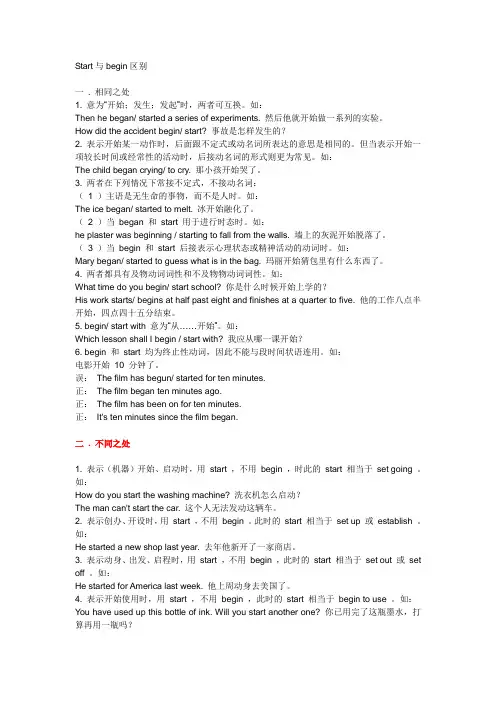
"Begin" 是一个常见的动词,它表示开始或着手进行一些活动或任务。以下是 "begin" 的一些常用用法和例句。
1. 后接动名词(V-ing):
- I began studying English when I was in elementary school.
(我从小学开始学习英语。)
- Let's begin preparing for the meeting.
(让我们开始准备会议。)
2. 后接不定式(to do):
- She began to play the piano at the age of five.
(她五岁开始学习弹钢琴。)
- They began to build the new bridge last month.
(他们上个月开始建新桥。)
3. 结构:begin + 宾语 + 动词不定式(to do):
- He began his speech by thanking everyone for their support.
(他以感谢大家的支持开始他的演讲。)
- The teacher began the class by asking a question.
(老师以问一个问题开始上课。)
4.作为“开始事”的不定式短语: - The party is about to begin.
(派对即将开始。)
- The concert will begin in ten minutes.
(音乐会将在十分钟后开始。)
5. "begin" 同义词和近义词:
- start:指动作或过程的起点。
- The race will start at 10:30 am.
(比赛将在上午10点半开始。)
(典礼将以一篇欢迎词开始。)
- initiate:指发起或创始项活动。
- The organization plans to initiate a new project next year.
(该组织计划明年启动一个新项目。)
"Begin" 还可以与其他词组合,形成一些常见的短语和习语:
- begin anew:重新开始
- After a long break, she decided to begin anew with her
studies.
(经过长时间的休息,她决定重新开始学习。)
- begin from scratch:从零开始
(公司破产了,所以我们必须从零开始。) - begin with a clean slate:以白手起家
- After quitting his job, he decided to begin with a clean
slate and start his own business.
(辞掉工作后,他决定以白手起家,开办自己的业务。)
- begin to see the light at the end of the tunnel:看到曙光
- After months of hard work, she began to see the light at
the end of the tunnel and started to achieve success.
(经过数月的努力,她开始看到曙光,并开始取得成功。)
总之,"begin" 是一个常用的动词,可以用于各种场合表达开始或着手进行一些活动或任务。希望以上解释对您有所帮助。