并列连词和从属连词的用法归纳
- 格式:docx
- 大小:37.39 KB
- 文档页数:4
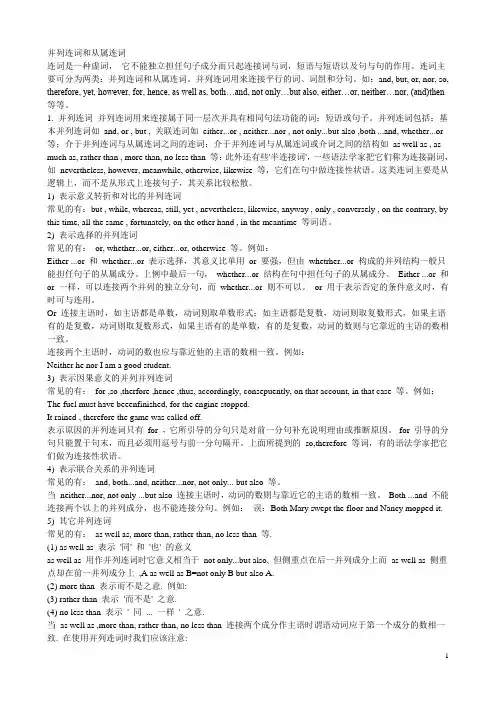
并列连词和从属连词的用法归纳
在语言表达中,连词起着连接不同部分和句子的重要作用。其中,并列连词和从属连词是两类常见的连词。本文将对并列连词和从属连词的用法进行归纳和总结,并给出一些例子,以帮助读者更好地理解和应用。
一、并列连词
并列连词用于连接同等重要的词、短语或句子,使它们具有平等的地位。下面是一些常见的并列连词及其用法:
1. and:表示并列关系,连接两个相同或相似的事物或概念。
例如:
- I like apples and oranges.
- He is tall and handsome.
2. but:表示转折关系,连接两个相对或相对立的事物或概念。
例如:
- She is rich, but she is not happy.
- The weather is cold, but I still want to go out.
3. or:表示选择关系,连接两个或多个选项中的一个。
例如:
- Would you like tea or coffee? - You can travel by train or by bus.
4. nor:用于否定并列句子中,表示前面所述的情况在此处也不适用。
例如:
- He neither drinks nor smokes.
- She did not work, nor did she study.
5. for:表示因果关系或解释原因,连接因果关系或解释性的句子。
例如:
- He studied hard, for he wanted to pass the exam.
- She is tired, for she worked all day.
二、从属连词
从属连词用于连接两个句子或从句,表示主从关系,其中一个从句在逻辑上依赖于另一个。下面是一些常见的从属连词及其用法:
1. that:用于引导一个宾语从句,作为动词或形容词的宾语。
例如:
- I know that he is coming.
- She said that she was tired.
2. if:表示条件关系,引导一个条件从句。
例如: - If it rains, we will stay at home.
- I will go to the party if I have time.
3. because:表示原因或解释,引导一个原因从句。
例如:
- He failed the exam because he didn't study.
- She stayed at home because she was sick.
4. although:表示让步关系,引导一个让步从句。
例如:
- Although it's raining, I will go out.
- She went out although she was tired.
5. when:表示时间关系,引导一个时间从句。
例如:
- I will call you when I arrive.
- He was reading a book when the phone rang.
总结:并列连词和从属连词在句子中起着不同的连接作用。并列连词用于连接同等重要的部分,表示并列、转折或选择关系;而从属连词用于连接主从关系,表示条件、原因、让步或时间关系。正确运用这些连词,可以使句子结构更加丰富、准确,增强语言表达的清晰度和连贯性。 通过以上的归纳和总结,希望读者能够更好地理解并列连词和从属连词的用法,提升自己的写作和表达能力。在实际应用中,我们应根据具体语境和需要选择合适的连词,以达到更准确、流畅的表达效果。