
英语人教版九年级全册lie与lay的区别
- 格式:pptx
- 大小:1.24 MB
- 文档页数:7


l i e_l i e_l a y的区别动词lie,lie,lay的区别1)lie用作规则动词(lie,lied,lied)时意为“说谎”。
如:①He wasn't telling the truth. He lied again/He was lying.他没讲实话,他又撒谎了。
/他在撒谎。
②She lied to us about her job. 她就她的工作对我们撒了谎。
③Your watch must be lying. 你的表肯定不准。
【注意】表示这一意思时,lie可用作名词。
我们一般说tell a lie或tell lies,而不说say/talk/speak a lie(或lies)。
再如:Lies cannot cover up facts.(谎言掩盖不了事实。
)如要说“我痛恨说谎话”,可以说I hate lying或Ihate telling lies,一般不说I hate lie或I hate to lie。
hate to lie尽管句法正确,但似乎含有“虽然不愿,但仍不得不说谎”之意。
2)lie用作不规则动词(lie,lay,lain)时,表示“躺”,“(东西)平放”,“位于”等意。
如:①He's still lying in bed. 他还躺在床上。
②He felt tired, so he went and lay down for a rest.他感到疲劳,所以去躺下休息了。
③His books lay open on the desk when I went in.我进去时,发现他的书平摊在书桌上。
④Snow lay thick on the fields.田野里覆盖着厚厚的一层雪。
⑤Don't leave your things lying about. 别把东西四处乱丢。
⑥The city lies in the north of China. 那座城市位于中国的北部。

lie与lay的用法辨析一、概念介绍lie和lay是英语中常被误用或混淆的两个动词。
这两个动词都与"躺"的意思有关,但在使用上有明显的区别。
本文将详细介绍lie和lay的用法辨析,帮助读者正确理解并运用这两个动词。
二、lie的用法1. lie表示“躺着”,作为不及物动词使用。
例:He lies on the beach for hours every day. (他每天在海滩上躺几个小时。
)2. lie还可表示"位于"、“存在于”等含义。
例:The town lies at the foot of the mountain. (该城镇位于山脚下。
)三、lay的用法1. lay表示“放置”,作为及物动词使用,通常需要指定宾语。
例:She lays the book on the table. (她把书放在桌子上。
)2. lay另外有一个特殊的过去式和过去分词形式,即laid。
例:Yesterday, he laid the foundation for his new house.(昨天,他为新房子打地基了。
)四、lie和lay区别总结1. 主动与被动:lie是主动行为,即自己躺下;而lay是被动行为,即将某物放置到某处。
2. 及物与不及物:lie作为不及物动词,后面不需要接宾语;而lay作为及物动词,需要接宾语。
3. 时态变化:lie的过去式和过去分词形式与其现在式相同,都是lay;而lay 的过去式和过去分词形式是laid。
五、用法示例1. 我们经常说“我要躺下休息”应该是"Lie down for a rest." 而不是"Lay down fora rest."2. 当你要描述别人将一本书放在桌子上时,你可以说"She lays the book on the table."。
3. “昨天他躺在床上睡觉。

lay和lie的区别
lay是及物动词,直接加宾语,有被动;lie是不及物动词,要加介词,没有被动。
lay的过去式,过去分词,现在分词分别是:laid,laid,laying;lie的过去式,过去分词,现在分词分别是:lay,lain,lying。
y通常用作及物动词,意为“摆、放、下蛋或产卵”等,过去式、过去分词和现在分词分别为laid,laid,laying。
如:
①He laid the papers on the desk and then went out. 他把文件放在桌上,然后出去了。
②They were laying the foundation of the house. 他们在给房子打地基。
2.lie一般作不及物动词用,作“躺;平放”解时,其过去式和过去分词分别为lay,lain;作“撒谎”解时,其过去式和过去分词均为lied,现在分词均为lying。
如:
①She lay on the beach all morning. 她整个上午都躺在沙滩上。
②How long has he lain there like that? 他像那样躺在那儿有多久了?。
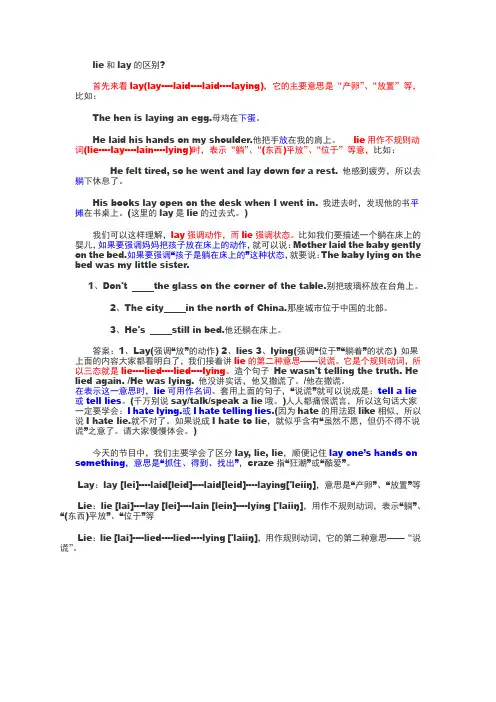
lie和lay的区别?首先来看lay(lay----laid----laid----laying),它的主要意思是“产卵”、“放置”等,比如:The hen is laying an egg.母鸡在下蛋。
He laid his hands on my shoulder.他把手放在我的肩上。
lie用作不规则动词(lie----lay----lain----lying)时,表示“躺”、“(东西)平放”、“位于”等意,比如:He felt tired, so he went and lay down for a rest. 他感到疲劳,所以去躺下休息了。
His books lay open on the desk when I went in. 我进去时,发现他的书平摊在书桌上。
(这里的lay是lie的过去式。
)我们可以这样理解,lay强调动作,而lie强调状态。
比如我们要描述一个躺在床上的婴儿,如果要强调妈妈把孩子放在床上的动作,就可以说:Mother laid the baby gently on the bed.如果要强调“孩子是躺在床上的”这种状态,就要说:The baby lying on the bed was my little sister.1、Don't the glass on the corner of the table.别把玻璃杯放在台角上。
2、The city in the north of China.那座城市位于中国的北部。
3、He's still in bed.他还躺在床上。
答案:1、Lay(强调“放”的动作) 2、lies 3、lying(强调“位于”“躺着”的状态) 如果上面的内容大家都看明白了,我们接着讲lie的第二种意思——说谎。
它是个规则动词,所以三态就是lie----lied----lied----lying。
造个句子He wasn't telling the truth. He lied again. /He was lying. 他没讲实话,他又撒谎了。