水利水电工程英文词汇
- 格式:docx
- 大小:11.61 KB
- 文档页数:4
水利水电工程英文词汇
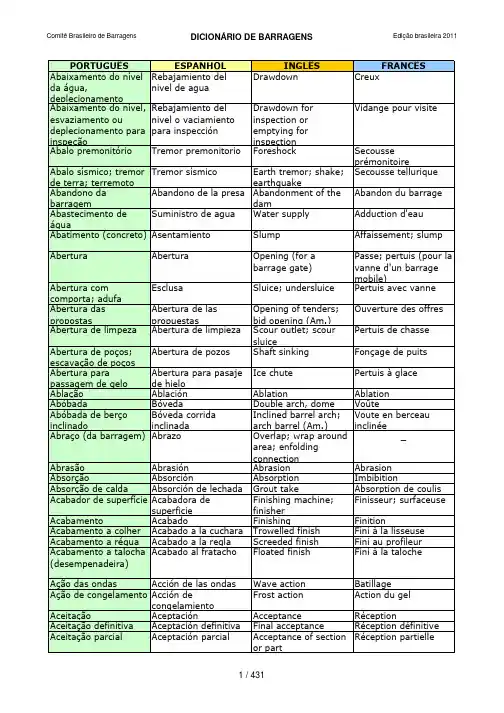
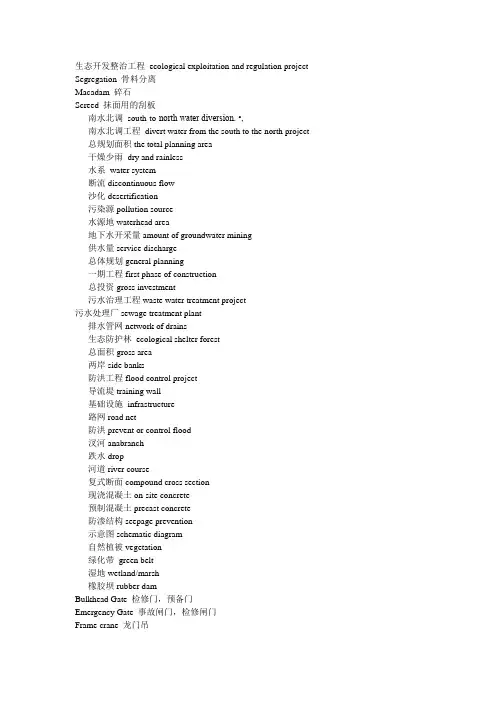
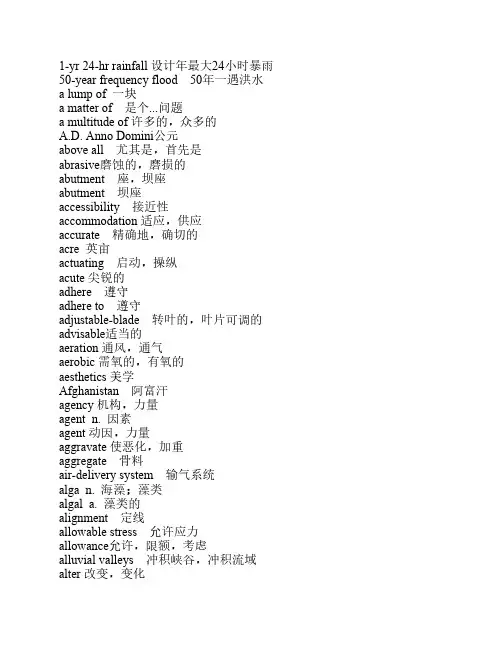
Water conservancy and hydropower engineering is an
important infrastructure in our daily life, which includes a variety
of projects such as dams, reservoirs, hydroelectric power stations,
water supply systems, and irrigation systems. The following is a
comprehensive list of water conservancy and hydropower
engineering English vocabulary related to construction, operation,
maintenance and management.
1. Dam: a barrier that holds back water and raises its level,
typically used to create a reservoir
2. Reservoir: a large natural or artificial lake used as a source
of water supply.
3. Hydroelectric power station: a power station that
generates electricity by using the kinetic energy of flowing water
to turn turbines
4. Water supply system: a system that distributes water to
households and businesses
5. Irrigation system: a system that supplies water to crops
6. Hydraulic engineering: the study of the flow and control of
water 7. River training: the process of maintaining or modifying the
course, width, depth, or bed of a river channel
8. Erosion control: methods used to prevent the loss of soil
caused by water, wind, or other factors, typically by planting
vegetation or constructing structures
9. Flood control: measures taken to prevent or mitigate the
damage caused by floods
10. Dredging: the process of removing sediment or debris
from the bottom of a body of water using a special excavating
machine
11. Water quality: the chemical, physical, and biological
characteristics of water, which can affect human health and
aquatic life
12. Water resources: natural sources of water used for
drinking, irrigation, power generation, and other uses
13. Aquifer: a layer of permeable rock or sediment that
stores and transmits groundwater
14. Groundwater: water that is stored underground in soil or
rock layers and that can be extracted for human use
15. Water treatment: the process of purifying water to
remove contaminants, such as bacteria, viruses, and chemicals 16. Desalination: the process of removing salt and other
minerals from seawater or brackish water to make it usable for
human consumption
17. Hydraulics: the branch of science and engineering
concerned with the mechanical properties of fluids, especially
water
18. Water use efficiency: the ability to use water efficiently
and sustainably, minimizing waste and optimizing productivity
19. Water conservation: the act of using water wisely and
reducing unnecessary water use
20. Water reuse: the process of treating and using
wastewater for other purposes, such as irrigation, industrial
processes, or toilet flushing
21. Hydrology: the study of the movement, distribution, and
quality of water on Earth
22. Seepage: the movement of water through soil or porous
rock
23. Water balance: the relationship between the amount of
water added to a system and the amount of water lost, usually
expressed as an equation
24. Streamflow: the flow of water in a river or stream
25. Turbine: a machine that converts the kinetic energy of
water, steam, or wind into mechanical energy In conclusion, the water conservancy and hydropower
engineering is a complex and important field that provides
essential services to individuals and communities around the
world. This list provides basic vocabulary useful for anyone
interested in the industry.