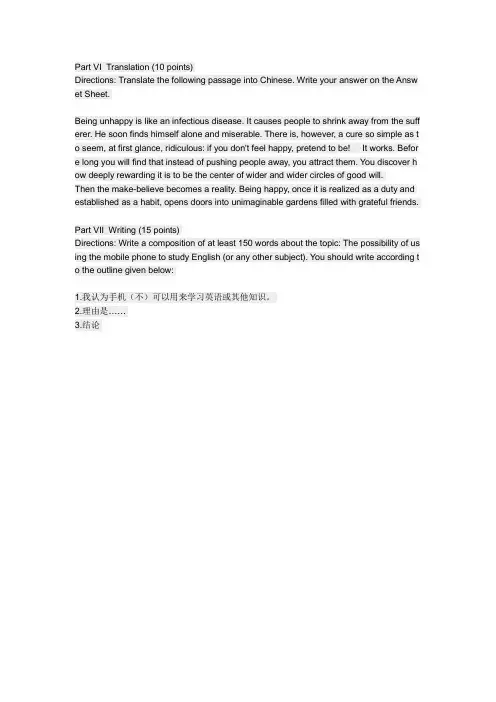
研究生英语考试作文范文
- 格式:docx
- 大小:37.06 KB
- 文档页数:2
研究生英语考试作文范文
In the modern era, technology has become an integral part of
our daily lives, and its influence on education is no
exception. The advent of the internet, smartphones, and
various educational software has revolutionized the way we
learn and teach. This essay will explore the positive and
negative impacts of technology on education and argue that,
when used judiciously, technology can significantly enhance
the learning experience.
Firstly, one of the most significant advantages of technology
in education is the accessibility it provides. With online
courses and digital libraries, students from all over the
world can access a wealth of information and learning
materials that were previously unavailable to them. This
democratization of knowledge has the potential to bridge
educational gaps and provide equal opportunities for learners
regardless of their geographical location.
Secondly, technology facilitates personalized learning.
Adaptive learning software can tailor educational content to
the individual needs of each student, ensuring that they are
challenged at a level appropriate to their abilities. This
approach can help students to maintain a high level of
engagement and motivation, as they are not left behind or
bored by content that does not match their learning pace.
However, the integration of technology into education is not without its challenges. One of the primary concerns is the
potential for distraction. With the plethora of online
distractions, from social media to video games, it can be
difficult for students to maintain focus during study time.
This requires a concerted effort from educators to guide
students on how to use technology responsibly and effectively.
Another issue is the digital divide, where students from less
affluent backgrounds may not have the same access to
technology as their more privileged peers. This can
exacerbate existing inequalities in education if not
addressed properly. Schools and policymakers must work
together to ensure that all students have equal access to
technological resources.
In conclusion, technology has the potential to greatly
enhance the educational experience when used appropriately.
It can provide access to a vast array of information, enable
personalized learning, and facilitate interactive and
engaging educational experiences. However, it is crucial to
address the challenges of distraction and the digital divide
to ensure that technology benefits all students equally. As
educators and learners alike adapt to this new landscape, the
goal should be to harness the power of technology to create a
more inclusive and effective educational environment.