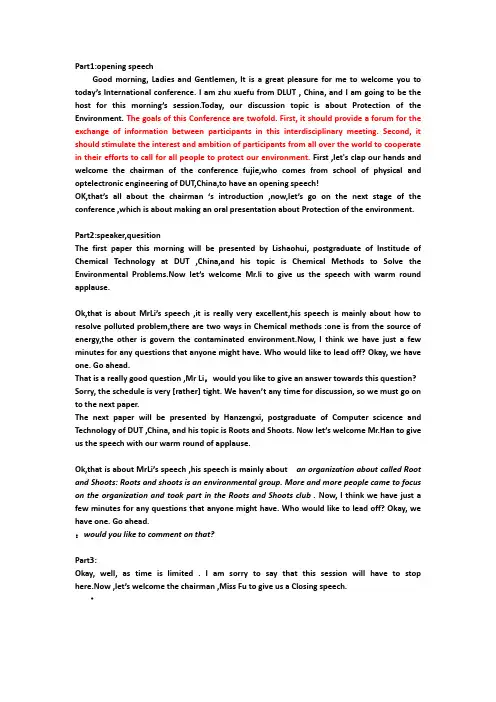
如何用英语主持会议
- 格式:docx
- 大小:38.89 KB
- 文档页数:6
如何用英语主持会议
How to Conduct a Meeting in English
Introduction:
Meetings are an integral part of any professional setting. Whether
it is a small team meeting or a large boardroom gathering, effective
communication is key to ensuring that the meeting is successful.
Conducting a meeting in English can be challenging for non-native
English speakers, but with proper preparation and practice, it can
be accomplished with ease. In this article, we will outline a step-by-step guide on how to conduct a meeting in English.
1. Pre-meeting Preparation:
Before the meeting, it is important to spend some time preparing.
This includes setting clear objectives, creating an agenda, and
distributing it to all participants in advance. Additionally, it is
crucial to familiarize yourself with the vocabulary and phrases
relevant to the topic of discussion. This will help you convey your
ideas effectively during the meeting.
2. Begin with Greetings and Introductions:
When the meeting starts, begin by greeting the participants and
introducing yourself. Make sure to mention your role in the
organization and briefly explain the purpose of the meeting. This
will set the tone and create a welcoming environment.
3. State the Agenda:
After introductions, clearly state the agenda for the meeting. Go
through each item on the agenda and briefly explain what will be
discussed. This will help the participants stay focused and give them an understanding of what to expect.
4. Encourage Participation:
During the meeting, it is important to encourage active
participation from all participants. Engage them by asking for their
opinions and ideas. Use open-ended questions such as "What are
your thoughts on this?" or "How do you think we can improve this
situation?". This will create a collaborative environment and
encourage everyone to contribute.
5. Use Visual Aids:
To enhance understanding, consider using visual aids such as
slides or charts. These can help present complex information in a
simple and concise manner. Make sure the visuals are well-organized and easy to follow. If necessary, provide a copy of the
visuals to the participants so they can refer to them during the
meeting.
6. Use Clear and Concise Language:
When conducting a meeting in English, it is important to use clear
and concise language. Avoid using jargon or technical terms that
might confuse non-native speakers. Speak slowly and enunciate
your words clearly. If necessary, repeat important points or ask for
clarification from participants to ensure everyone is on the same
page.
7. Summarize and Conclude:
As the meeting comes to a close, summarize the main points of
discussion and any decisions that were made. This will help
reinforce key takeaways and ensure everyone is aligned. Allow time for participants to ask questions or express any concerns they
may have.
8. Follow-up and Documentation:
After the meeting, follow up with participants by sending a
summary email. This email should include a recap of the meeting,
any action items or tasks that were assigned, and a timeline for
completion. By documenting the proceedings of the meeting,
everyone will have a clear understanding of what was discussed
and what needs to be done.
Conclusion:
Conducting a meeting in English may seem daunting at first, but
with practice and preparation, it can be done effectively. By
following the steps outlined in this article, you can ensure that your
meetings are productive and conducive to collaboration.
Remember to be confident, use clear language, and encourage
participation from all participants. With these tips, you will be able
to conduct successful meetings in English.继续写相关内容,1500字
9. Manage Time Effectively:
One crucial aspect of conducting a meeting in English is managing
time effectively. Start and end the meeting on time to respect
participants' schedules. Set specific time limits for each agenda
item to ensure that all topics are covered within the designated
time. If a discussion is taking longer than anticipated, gently steer
the conversation back on track or suggest tabling the topic for
further discussion.
10. Active Listening:
As the meeting leader, it is essential to practice active listening.
This involves giving your full attention to speakers, maintaining
eye contact, and acknowledging their contributions. Avoid
interrupting or dominating the conversation and instead, encourage
others to express their thoughts. Take brief notes during the
meeting to help you remember important points and refer back to
them as needed.
11. Manage Conflicts and Disagreements:
In any meeting, conflicts or disagreements may arise. It's important