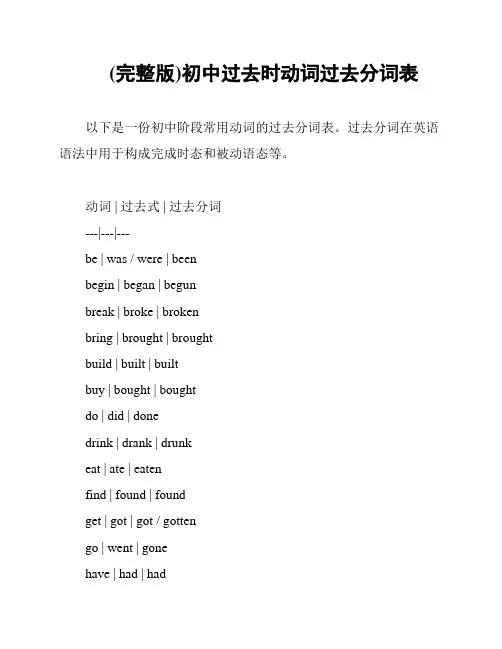
初二上册英语动词的过去式和过去分词规则表
- 格式:doc
- 大小:107.50 KB
- 文档页数:15
动词的过去式和过去分词规则表一、过去式和过去分词相同。
动词原形过去式过去分词含义brought brought带来built built建brunt(bruned)brunt(burned)燃烧bought bought买caught caught抓dug dug挖felt felt感觉fought fought打架found found发现got got得到hung hung悬挂hanged hanged绞死had had有heard heard听到held held握kept kept保持learnt(learned)learnt(learned)学习left left离开lent lent借出lost lost丢失made made制造meant meant意思是met met遇到paid paid付款said said说sold sold卖sent sent送shone(shined)shone(shined)发光sat sat坐slept slept睡smelt(smelled)smelt(smelled)嗅spent psent花费stood stood站swept swept扫taught taught教told told告诉thought thought想understood understood理解won won赢二、动词的过去分词是在动词原形后加n或者en.动词原形过去式过去分词含义beat beaten打blew blown吹drew drawn拉drove driven驾驶ate eaten吃fell fallen下落gave given给grew grown生长knew known知道mistook mistaken弄错rode ridden乘、骑rose risen升saw seen看见showed shown出示,表现took taken拿走threw thrown抛、掷wrote written写三、原形、过去式和过去分词相同。
动词原形过去式过去分词含义cost cost值(多少)钱cut cut切、割hit hit打hurt hurt伤害、伤痛let let让put put放read read读四、原形中的i, 过去式改为a, 过去分词改为u。
动词原形过去式过去分词含义began begun开始drank drunk饮rang rung响sang sung唱swam swum游泳五、动词的过去分词是在过去式后加n或en.动词原形过去式过去分词含义broke broken打碎chose chosen选择forgot forgotten忘记spoke spoken讲woke woken醒六、动词原形、过去式和过去分词都各不相同。
动词原形过去式过去分词含义became become成为came come来ran run跑七、动词原形、过去式和过去分词都各不相同。
动词原形过去式过去分词含义,is was been是were been是did done做flew flown飞went gone去lay lain躺wore worn穿八、动词的过去分词是在动词原形后加n或者en.动词原形过去式过去分词含义could能might可以must必须should将要would愿、要、将、会请把下列动词选填到各题空格处并改为适当的形式(可以重复选用)。
(be,break,come,do,drive,enjoy,fall,get,go,have,leave,lose,rain,run,seem,stay,stop,take,teach,tell,write)1.How many people (1) ______ there at the party last Saturday afternoon2.He (2) ______ hungry because he not (3) his breakfast this morning.4.They say the train (13) ______ faster and safer than the bus does,so we (14) ______ the train to Kaohsiung yesterday.5.Because I (15) ______ ill I not (16) to school the day before.6.Have you found the bicycle you (17) ______ the other day7.There (18) ______ few schools in those days.8.Usually my father (19) ______ to work,but he (20) ______ the bus this morning,for his car (21)______ down on his way home yesterday.1.一般过去时表示过去某个时间发生的动作或存在的状态,常和表示过去的时间状语连用。
一般过去时也表示过去经常或反复发生的动作感谢。
2.Be动词在一般过去时中的变化:⑴am 和is在一般过去时中变为was。
(was not=wasn’t)⑵are在一般过去时中变为were。
(were not=weren’t)⑶带有was或were的句子,其否定、疑问的变化和is, am, are一样,即否定句在was或were后加not,一般疑问句把was或were调到句首。
3.句中没有be动词的一般过去时的句子否定句:didn’t +动词原形,如:Jim didn’t go home yeste rday.一般疑问句:在句首加did,句子中的动词过去式变回原形。
如:Did Jim go home yesterday特殊疑问句:⑴疑问词+did+主语+动词原形如: What did Jim do yesterday⑵疑问词当主语时:疑问词+动词过去式如:Who went to home yesterday①一般过去时,表示过去发生的动作或存在的状态。
②一般过去时的时态,标志为过去时间点。
常见的过去时时间有:yesterday、last night(昨天晚上)1981等等。
③一般过去时中的谓语动词要用过去式。
④一般过去时态的句子没有第三人称的用法,不管主语是第几人称,动词都可用过去式。
⑤没有do does 之分,全部用did变否定句:I went to the zoo yesterday.——I didn’t go to the zoo yesterday.划线部分提问:I went to the zoo yesterday.——When did you go to the zoo一般过去时态表示过去某一时间或某一段时间内发生过的动作或存在的状态。
1. be动词的过去式:amwasbe isare were否定式:wasn’t, weren’t一般疑问句:将was和were提到句首。
2. 规则动词的过去式的变化规则及读音:(1)一般情况在动词原形后加-ed wantanswer wantedanswered(2)以字母e 结尾的动词,只加-d movedie moveddied(3)以“ 辅音字母+y ”结尾的动词,把y 改为i,再加-ed carrycry carriedcried(4)以重读闭音节结尾,末尾只有一个辅音字母,先双写该辅音字母,再加-ed。
如:stopstopped, plan, planned加ed之后的读音规则:1) 清念 /t/ ,即 ed 在清辅音后面念 /t/例如: finished, helped, passed, cooked2) 元浊 /d/ ,即 ed 在元音,浊辅音后面念/d/例如:enjoyed, called, moved, borrowed3) /t/ /d/ 之后念 /id/ , 即 ed 在 /t/ /d/ 音后面念 /id/例如:wanted,shouted, needed, counted3. 常用的一般过去时的时间状语:yesterday/ the day before(在...之前) yesterdaylast year/ month/ spring/ week/ Monday/ nightyesterday morning/ afternoon/ eveningat that time/ just now = a moment agotwo days ago/ 3 years ago/ 5 months ago/ a week agoin 1990/ 2000/ 1988/ 1949in the old days/ in those daysWhat did you do last Sunday你上一个星期天做什么了(1)一般过去时①一般过去时,表示过去发生的动作或存在的状态。
②一般过去时的时态,标志为过去时间点。
常见的过去时时间有:yesterday、last night(昨天晚上)1981等等。
③一般过去时中的谓语动词要用过去式。
④一般过去时态的句子没有第三人称的用法,不管主语是第几人称,动词都可用过去式。
⑤没有do does 之分,全部用did变否定句:I went to the zoo yesterday.——I didn’t go to the zoo yesterday.划线部分提问:I went to the zoo yesterday.——When did you go to the zoo翻译:昨天晚上我在家里变否定句:He does his home work last night.变成一般疑问句:I bought some fish yesterday.划线部分提问:He does his homework last night.翻译:你昨天晚上在家里看电视了吗是的,我在/不,我没有。
你昨天在家吗是的,我在/不,我没有。
What did you do last Sunday你上一个星期天做什么了(1)一般过去时①一般过去时,表示过去发生的动作或存在的状态。
②一般过去时的时态,标志为过去时间点。
常见的过去时时间有:yesterday、last night(昨天晚上)1981等等。
③一般过去时中的谓语动词要用过去式。
④一般过去时态的句子没有第三人称的用法,不管主语是第几人称,动词都可用过去式。
⑤没有do does 之分,全部用did变否定句:I went to the zoo yesterday.——I didn’t go to the zoo y esterday.划线部分提问:I went to the zoo yesterday.——When did you go to the zoo翻译:昨天晚上我在家里变否定句:He does his home work last night.变成一般疑问句:I bought some fish yesterday.划线部分提问:He does his homework last night.翻译:你昨天晚上在家里看电视了吗是的,我在/不,我没有。